Earthquake Strikes Central West NSW, Sending Shockwaves Hundreds of Kilometres Across the State
- A powerful 4.5-magnitude earthquake hits central west NSW, with tremors felt as far as hundreds of kilometres away
- Geoscience Australia receives over 2000 reports of the quake, with a senior seismologist describing it as ‘large’ for the area
- The quake strikes at 8.19pm AEST on Tuesday, with aftershocks expected but likely to be much lighter
- The region is not typically known for significant seismic activity, with only five quakes of a similar scale recorded in the area since 1977
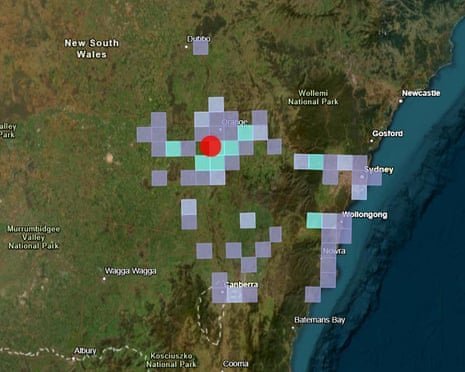
The usually quiet region of central west NSW was rocked by a significant earthquake on Tuesday night, sending shockwaves hundreds of kilometres across the state. The 4.5-magnitude quake struck at 8.19pm AEST, with its epicentre located about 30km southwest of Orange at a depth of 5km.
According to Geoscience Australia, more than 2000 reports of tremors were received from the region, with the quake felt as far as hundreds of kilometres southeast in Batemans Bay.
Senior seismologist Dr Phil Cummins described the quake as ‘weak to light’ but noted that it was still a significant event for the area.
“This is a large earthquake for this area,” Dr Cummins said.
“Only five quakes of a similar scale have been recorded within 50km of the quake site since 1977, the previous one being of a 4.3 magnitude in 2017.”




So, why did this earthquake occur in an area not typically known for significant seismic activity? To understand this, it’s essential to look at the broader geological context.
NSW is located near the boundary between the Australian and Pacific tectonic plates, which can lead to increased seismic activity in certain areas.
However, the region around Orange is not typically considered a high-risk area for earthquakes.
This has led some experts to speculate that the quake may have been triggered by other factors, such as the movement of fluids in the Earth’s crust.
Analysis: What This Means for Australia
The earthquake is a timely reminder of the importance of being prepared for natural disasters.
While the quake was not strong enough to cause significant damage or injuries, it highlights the need for Australians to be aware of the risks and take steps to mitigate them.
Security analysts say that the quake also raises concerns about the country’s disaster response capabilities. “Australia needs to be better prepared for natural disasters, including earthquakes,” said one expert.
“This quake is a wake-up call for the government and emergency services to review their response plans and ensure that they are adequate.”
Law enforcement insiders also warn that the quake could have been used as a distraction for other malicious activities. “We need to be vigilant and ensure that our emergency services are prepared to respond to any situation,” said one insider.
Industry observers believe that the quake will have a minimal impact on the local economy, but it may lead to increased investment in disaster preparedness and response.
“The quake is a reminder that natural disasters can occur at any time, and businesses need to be prepared,” said one observer.