Northern Territory’s Road to Ruin: Industry Leaders Demand Federal Intervention as Flood-Damaged Roads Threaten Economy
- Peak bodies for road-reliant industries in the Northern Territory are calling on the federal government to fast-track road repairs after severe weather events left roads in a state of disrepair.
- Agricultural businesses are cut off from markets, while transport groups are losing money to vehicle repairs, sparking urgent calls for federal intervention.
- The Northern Territory’s economy is heavily reliant on roads, with key industries such as cattle, tourism, defence, and mining and energy all impacted by the damaged road network.
- Industry leaders are warning that the financial and social impacts of the damaged roads are far-reaching, with some businesses facing clean-up costs in the hundreds of thousands and others lost entirely.
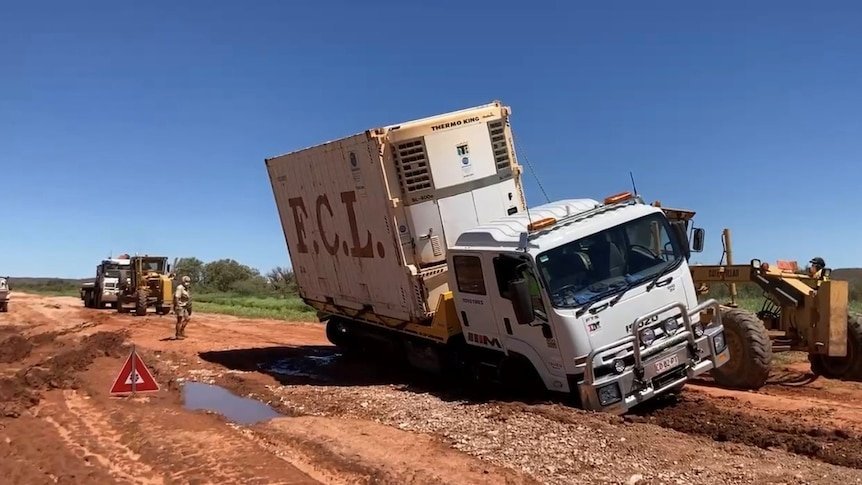
The recent string of severe weather events in the Northern Territory has left the region’s road network in a state of disrepair, with industry leaders calling on the federal government to fast-track repairs.
The damaged roads are not only causing safety risks for truck drivers but also having a significant impact on the economy, with key industries such as cattle, tourism, defence, and mining and energy all reliant on the road network.
The Northern Territory Cattlemen’s Association chief executive Romy Carey said the road repairs were not happening fast enough, with pastoralists struggling to fix flood damage due to delayed freight deliveries.
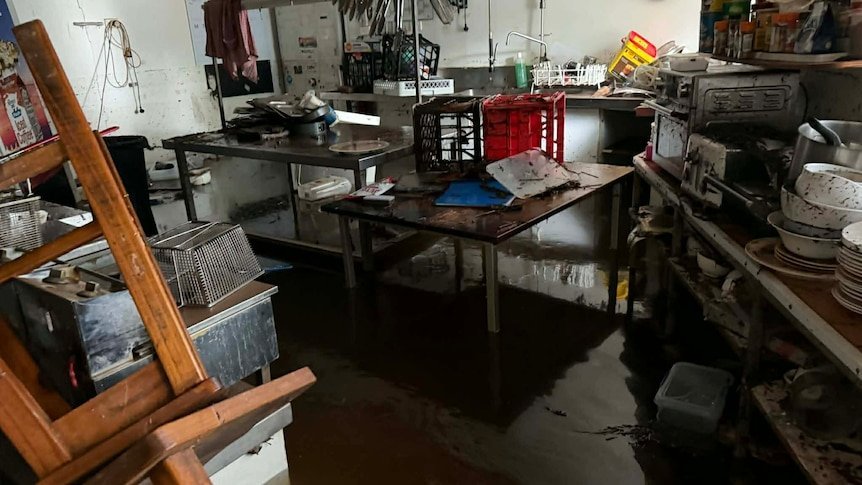
“We’ve got people recovering from weather events who are trying to get freight and essential critical goods in through those road networks,” she said. “That drags out the recovery process, importantly and heartbreakingly, for people who have lost their homes in these events.”
The recent weather events have had a significant impact on the industry from both a national and global export perspective, with cattle unable to be transported to markets.



“Simply speaking, [we’re] not being able to get our cattle off our properties into markets, into those supply chains, through our domestic market production,” Carey said.
The Chamber of Commerce NT chief executive Glen Hingley said the financial and social impacts related to the region’s damaged roads had been far-reaching.
“If we think about our four biggest industries: we’ve got cattle, a billion dollars; we’ve got tourism, 2.5 billion dollars; we’ve got the defence sector [adding] to the Northern Territory economy, 3.5 billion dollars; and 6 billion dollars in mining and energy,” he said.
“Every one of those top four sectors of our economy depends on roads.”
Hingley backed industry calls for federal assistance, saying the extra support was long overdue. “This is absolutely no surprise coming,” he said.
“We are grateful that we have [fuel] ships arriving in the harbour, that’s a terrific thing, that we’re not reliant upon getting it up from Brisbane or South Australia, otherwise we would be in a world of pain.”
The NT Road Transport Association (NTRTA) executive officer Louise Bilato said every trip on the damaged roads presented a safety risk for truck drivers as well as financial impacts.
“And yet what we’re seeing is our industry, that’s already experiencing this fuel crisis, having to pay a lot more to repair their vehicles on our national highways,” she said.
NTRTA president Christian Cornell said the damaged roads were another significant hit to the industry, which had already paused operations for weeks during the floods. “We’ve had to force operators to travel a lot slower, causing more travel time and more time away from home,” he said.
Analysis: What This Means for Australia
The damaged roads in the Northern Territory are not only having a significant impact on the local economy but also have broader implications for Australia’s economy and national security.
The region’s reliance on roads for key industries such as cattle, tourism, defence, and mining and energy makes it a critical part of the country’s economic infrastructure.
Security analysts say the damaged roads are a vulnerability that could be exploited by malicious actors, posing a risk to Australia’s national security. “The Northern Territory’s road network is a critical piece of infrastructure that requires urgent attention,” said one analyst.
“The federal government must take immediate action to repair and upgrade the roads to ensure the region’s economic and national security interests are protected.”
Law enforcement insiders warn that the damaged roads are also having an impact on the region’s crime rate, with some areas becoming inaccessible to police and emergency services.
“The damaged roads are making it difficult for us to respond to emergencies and patrol the region,” said one insider. “It’s a challenge that we’re working to overcome, but it’s a significant one.”
Industry observers believe that the federal government’s response to the damaged roads will be critical in determining the region’s economic future.
“The Northern Territory’s economy is heavily reliant on roads, and the federal government must take immediate action to repair and upgrade the roads,” said one observer.
“If they don’t, the region’s economy will continue to suffer, and the consequences will be felt across Australia.”