Australian Space Dreams Soar: University of Sydney’s Student Rocketry Team Reaches New Heights in Outback Launch
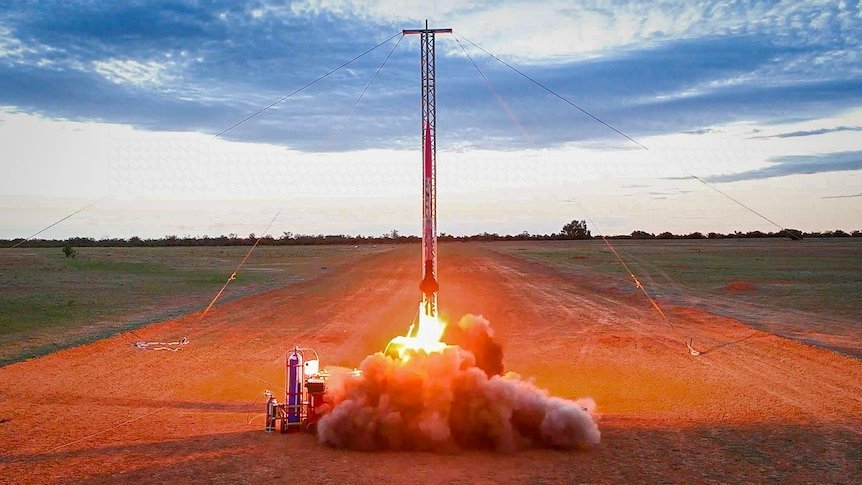
- A team of 27 engineering students from the University of Sydney successfully launched a hybrid research rocket named Galah to an altitude of 10,000 feet in the outback of New South Wales.
- The achievement marks a major milestone for the university’s student rocketry team, which has been participating in the annual launch event at Tolarno Station since 2022.
- The team’s hard work and dedication have paid off, with two of their previous rockets winning international competitions and the latest effort, Galah, reaching a peak height of 10,200 feet.
- The students’ success has significant implications for Australia’s space industry, with the team’s project manager, Michael Bogeholz, citing the importance of hands-on experience and real-world application in preparing the next generation of engineers.
In a remote corner of New South Wales, a team of University of Sydney students embarked on a thrilling adventure, launching a hybrid research rocket named Galah to dizzying heights.
The successful launch marked the culmination of months of tireless work, as nearly 90 students from various disciplines came together to design, build, and test the rocket.
The team’s journey began with a 12-hour road trip to Tolarno Station, a sheep station nestled between Mildura and Broken Hill. Upon arrival, they meticulously reassembled the rocket, carefully calibrating every component to ensure a precise launch.
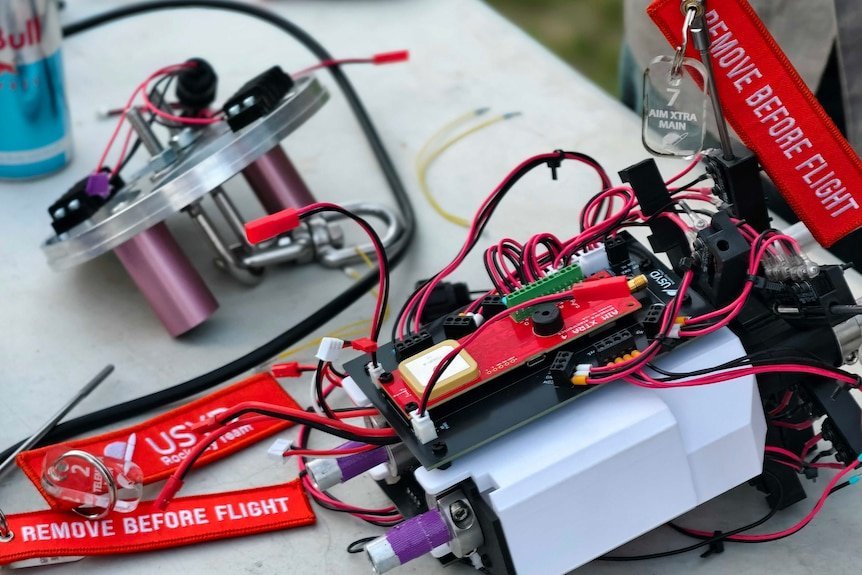
The students had designed every part of the rocket, from the propulsion system to the payload, and were determined to reach their target altitude of 10,000 feet.
The University of Sydney’s student rocketry team has been making waves in the space industry, with two of their previous rockets winning international competitions. Pardalote, launched last year, reached an impressive 10,342 feet, while Silvereye, launched in 2019, soared to 10,027 feet.




The team’s latest effort, Galah, managed a peak height of 10,200 feet, a testament to their growing expertise and dedication.
According to project manager Michael Bogeholz, the rocketry program offers students an unparalleled opportunity to gain hands-on experience and develop real-world skills. “It’s not just about building a rocket; it’s about understanding every aspect of the system, from design to launch,” he explains.
“These competitions want to see that we have a deep understanding of every part of the system, and that’s hard to come by, even in industry.”
For students like Lillie Mellin, a fifth-year mechatronic engineering and law student, the experience has been life-changing. As the systems engineer for the Galah project, Mellin has developed a passion for the engineering component of her degree.
“Since joining rocketry, I’ve realized that my passion lies in engineering, and I’m leaning towards that side of my degree,” she says.
The team’s success has significant implications for Australia’s space industry, with the program providing a pipeline of talented and skilled engineers. According to Bogeholz, the experience gained through the rocketry program gives students the best opportunity to enter the industry.
“These competitions are about how accurately you can simulate the rocket, how accurately you can make sure it slows down in time to hit that 10,000-foot number right on the dot,” he explains.
“By targeting that through the student level of the workforce, you’re setting up very well for the future of engineers in Australia.”
Analyzing the impact of the student rocketry team’s success on Australia’s space industry, experts say that the country is well-positioned to capitalize on the growing demand for space technology and exploration.
With the government investing heavily in the sector, the University of Sydney’s rocketry program is providing a much-needed pipeline of skilled engineers and researchers.
As the team prepares to compete in the International Rocket Engineering Competition, they are confident that their skills and expertise will serve them well in the years to come.
Strong industry partnerships and government support are crucial in nurturing the next generation of engineers and researchers.
By providing students with hands-on experience and real-world application, programs like the University of Sydney’s rocketry team are helping to drive innovation and growth in the space industry.
As Australia looks to the stars, the success of this student team is a shining example of what can be achieved through dedication, hard work, and a passion for engineering.
Analysis: What This Means for Australia
The University of Sydney’s student rocketry team’s success has significant implications for Australia’s space industry. With the government investing heavily in the sector, the program is providing a much-needed pipeline of skilled engineers and researchers.
The team’s success demonstrates the importance of hands-on experience and real-world application in preparing the next generation of engineers.
As Australia looks to the stars, the student rocketry team’s achievement is a shining example of what can be achieved through dedication, hard work, and a passion for engineering.
Security analysts say that the development of Australia’s space industry is crucial for the country’s national security and economic growth. The industry has the potential to create thousands of jobs and drive innovation, but it requires a skilled and educated workforce.
Programs like the University of Sydney’s rocketry team are helping to meet this demand, providing students with the skills and expertise needed to succeed in the industry.
Law enforcement insiders warn that the growth of the space industry also raises concerns about the potential for cyber threats and security breaches. As the industry expands, it will be essential to develop robust security protocols to protect sensitive information and prevent malicious attacks.
Industry observers believe that the University of Sydney’s rocketry team’s success is a testament to the country’s growing capabilities in the space sector. With the right investment and support, Australia can become a major player in the global space industry, driving innovation and growth for years to come.