Australia Pours $30 Million into Fiji’s Fuel Crisis as Pacific Region Teeters on the Brink of Chaos
- Fiji receives $30 million in “targeted budget support” from Australia to combat rising fuel prices
- Talks between Australia and Fiji on the “Vuvale Union” strategic pact are nearing completion, with a possible signing within months
- Pacific nations are bracing for potential fuel shortages and supply shocks, with regional leaders set to meet next week to trigger the Biketawa Declaration
- Australia’s commitment to Fiji comes as tensions simmer over the long-delayed Nakamal Agreement with Vanuatu, with China pushing for its own pact with Port Vila
The Australian government has announced a $30 million aid package to help Fiji cope with the escalating fuel crisis, as the Pacific region teeters on the brink of chaos.
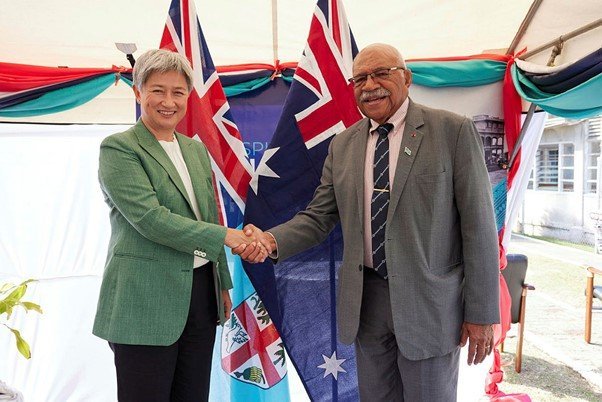
Foreign Minister Penny Wong revealed the funding after meeting with Fijian Prime Minister Sitiveni Rabuka in Suva, emphasizing that the support would “reinforce” Fiji’s role as a key fuel hub for the Pacific.
The financial commitment comes as Pacific economies struggle to absorb the shock of rising oil prices, with regional leaders warning of possible fuel shortages and supply disruptions as early as July.
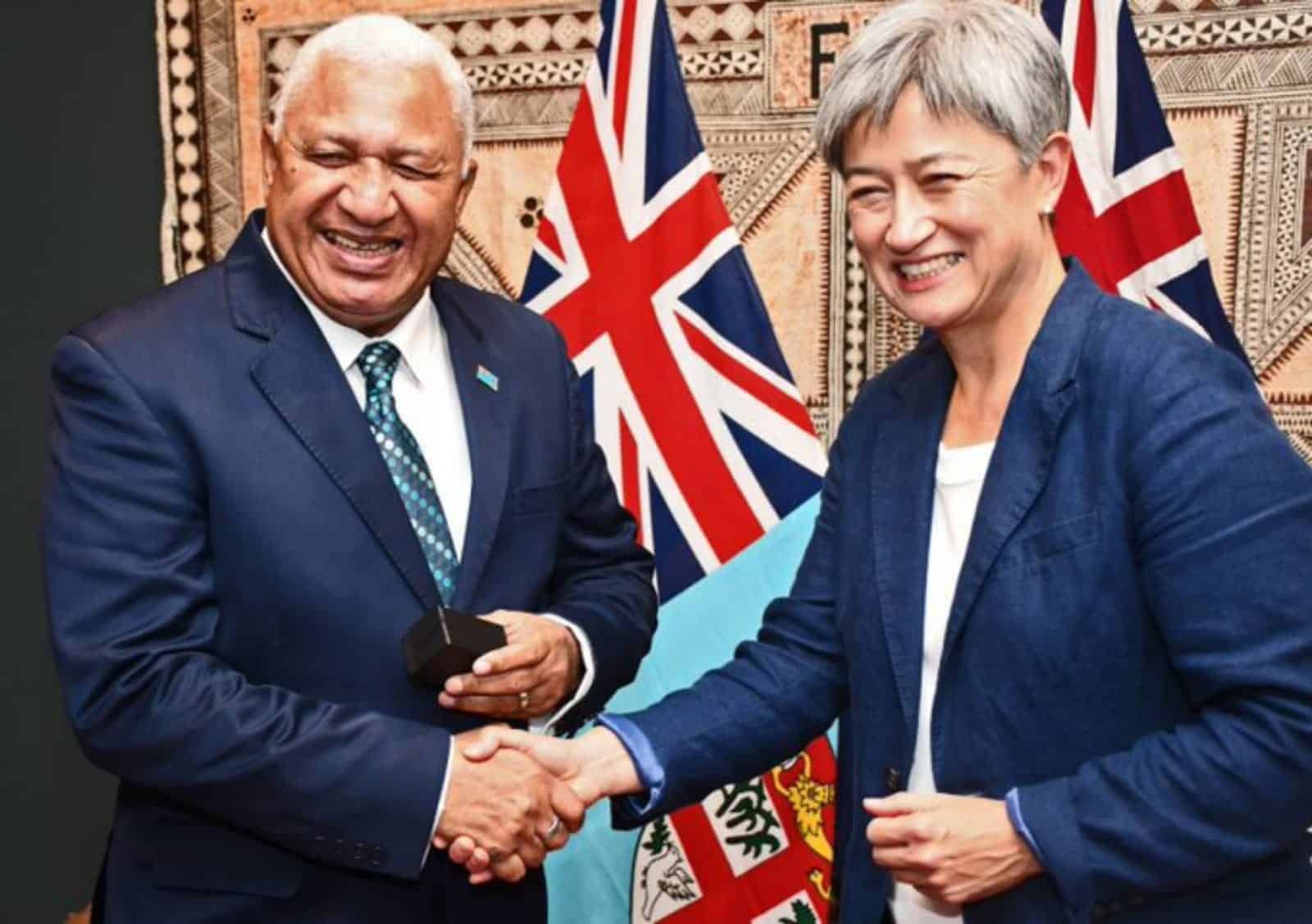
Fiji, in particular, has been hit hard, with fuel prices skyrocketing since the Strait of Hormuz closure. The $30 million package is the first public financial commitment by Australia to help Pacific nations cope with the crisis.
Australia’s move is part of a broader push to strengthen its strategic ties with Pacific nations, as China seeks to expand its influence in the region.



The Vuvale Union, a proposed strategic pact between Australia and Fiji, is nearing completion, with officials pressing on with finalizing negotiations. The agreement is expected to have “three pillars” – security, economic, and people – and will include bolstered assistance on tackling drug smuggling, including through intelligence sharing.
The fuel crisis has exposed the vulnerability of Pacific nations to global shocks, and Australia is seeking to support its regional partners in responding to these challenges.
Senator Wong emphasized that Australia wants a “Pacific-led response” to global shocks, and that the Biketawa Declaration – the Pacific’s major crisis response mechanism – would be triggered to coordinate a regional response to supply shocks.
However, confusion and frustration remain among Pacific leaders over the invocation of the Biketawa Declaration, with some nations blindsided by the announcement. The declaration’s trigger is a key issue, with some leaders questioning whether the threshold for activation has been met.
Meanwhile, Australia’s negotiations with Vanuatu over the Nakamal Agreement have stalled, with reports of a security agreement between Vanuatu and China drawing a fierce response from Port Vila.
The fate of the Nakamal Agreement remains uncertain, with a source in the Vanuatu government indicating that both pacts are still being finalized, but it is unclear when they will be signed.
Analysis: What This Means for Australia
The fuel crisis in the Pacific has significant implications for Australia’s national security and regional influence. As China seeks to expand its presence in the Pacific, Australia must navigate a complex web of strategic relationships and competing interests.
The Vuvale Union with Fiji is a critical component of Australia’s regional strategy, and the $30 million aid package demonstrates Canberra’s commitment to supporting its Pacific partners in times of crisis.
However, the stalled Nakamal Agreement with Vanuatu raises concerns about Australia’s ability to secure its strategic interests in the region.
China’s push for a security agreement with Vanuatu has sparked tensions, and Australia must carefully manage its relationships with Pacific nations to prevent Beijing from gaining a foothold.
Security analysts say that the fuel crisis highlights the need for a coordinated regional response to global shocks.
“The Pacific region is vulnerable to external disruptions, and Australia must work closely with its partners to build resilience and respond to emerging challenges,” said one analyst.
Law enforcement insiders warn that the fuel crisis has also created opportunities for organized crime to exploit, particularly in the realm of drug smuggling.
“The Pacific region is a critical transit point for illicit drugs, and Australia must work with its partners to strengthen border security and disrupt supply chains,” said a law enforcement source.
Industry observers believe that the Vuvale Union and other strategic agreements will be critical in shaping the future of the Pacific region.
“The agreements will determine the balance of power in the region and have significant implications for Australia’s national security and economic interests,” said an industry expert.