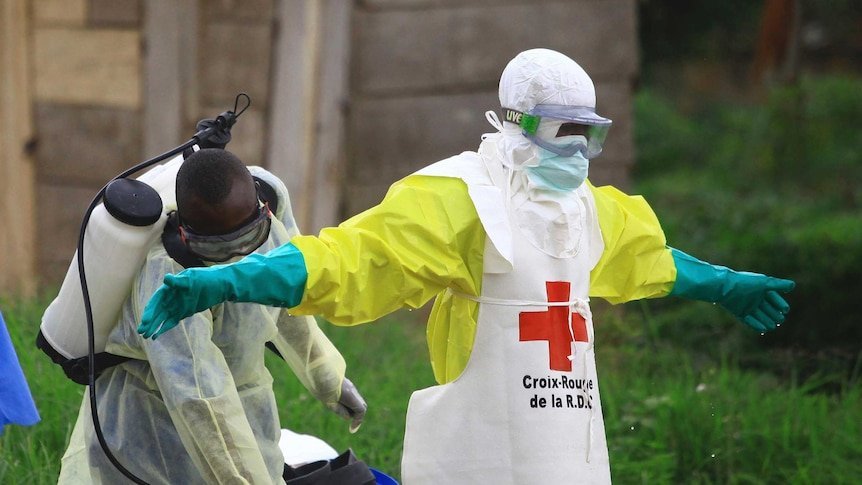
American Doctor Infected with Rare Ebola Strain in Congo as Death Toll Surges Past 118 and Uganda Reports First Case
- An American doctor has contracted a rare and deadly strain of Ebola in Congo, where over 118 people have died and 300 are suspected to be infected.
- The doctor, who was treating patients in Bunia, is among a team of seven Americans being transported to Germany for monitoring, sparking fears of a global outbreak.
- The World Health Organisation has declared the outbreak a public health emergency of international concern, with cases confirmed in multiple provinces and neighboring Uganda.
- Experts warn that the number of cases is likely to rise as health officials conduct more surveillance, and that the virus may have spread undetected for weeks due to inadequate testing.
The situation in Congo is rapidly deteriorating, with a rare and deadly strain of Ebola spreading rapidly across the eastern region.
An American doctor, who was treating patients in Bunia, has contracted the virus, and is among a team of seven Americans being transported to Germany for monitoring.
As of Monday, there were over 118 deaths and 300 suspected cases in Ituri and North Kivu provinces, and one death and one suspected case in neighboring Uganda.
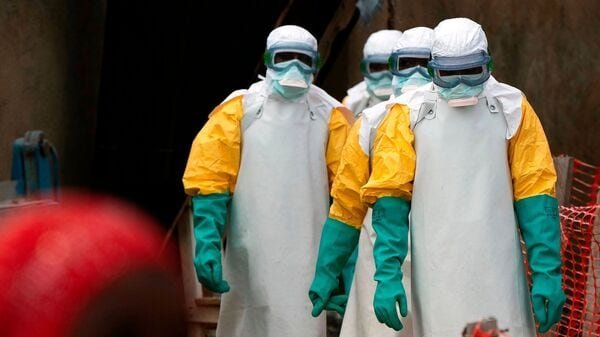
The World Health Organisation has declared the outbreak a public health emergency of international concern, citing the risk of further spread to other countries.
The outbreak is believed to have started in late April, when a person died from the virus in Bunia. However, due to inadequate testing, the virus was not detected until mid-May, by which time it had already spread to multiple provinces.



“Because early tests looked for the wrong strain of Ebola, we got false negatives and lost weeks of response time,” said Matthew M. Kavanagh, director of the Georgetown University Center for Global Health Policy and Politics.
The Bundibugyo strain of Ebola is a rare and deadly variant, which has only been detected twice before in Congo and Uganda. It causes fever, headache, muscle pain, weakness, diarrhea, vomiting, stomach pain, and unexplained bleeding or bruising.
The virus is highly contagious and can be contracted via bodily fluids such as vomit, blood, or semen.
Analysis: What This Means for Australia
The outbreak in Congo poses a significant risk to global health security, and Australia is not immune to the threat.
With the virus spreading rapidly across eastern Congo and into neighboring Uganda, there is a risk of it being carried to other countries, including Australia, by travelers or aid workers.
Australia has a strong track record of responding to global health emergencies, and the government has already issued travel advisories urging Australians traveling in Congo and Uganda to avoid people with symptoms like fever, muscle pain, and rash.
However, more needs to be done to ensure that the country is prepared to respond to a potential outbreak.
Security analysts say that the outbreak highlights the need for increased investment in global health security, particularly in regions with fragile healthcare systems. “The Ebola outbreak in Congo is a wake-up call for the international community,” said one analyst.
“We need to invest more in global health security, and work together to prevent and respond to outbreaks before they spread.”
Law enforcement insiders also warn that the outbreak could have implications for border control and national security. “The risk of Ebola being carried into Australia by travelers or aid workers is real,” said one insider.
“We need to ensure that our border controls are robust, and that we have the necessary measures in place to detect and respond to potential cases.”
Expert commentary from aid workers and health officials on the ground in Congo suggests that the situation is dire, and that more resources are needed to respond to the outbreak.
“The situation is quite worrying and is evolving pretty quickly,” said Esther Sterk with the Medecins Sans Frontieres aid group. “We need more resources, more funding, and more support to respond to this outbreak.”
As the situation in Congo continues to deteriorate, it is clear that the international community needs to come together to respond to this outbreak.
Australia must play its part in supporting the response efforts, and ensuring that it is prepared to respond to a potential outbreak on its own soil.