
‘I’ll Face It Head-On’: Aussie Football Legend Bryan Cousins Reveals Devastating Motor Neurone Disease Diagnosis
- Western Australian football great Bryan Cousins, 72, has gone public with his motor neurone disease diagnosis
- The father of Brownlow medallist Ben Cousins was diagnosed a year ago but only revealed the news at an MND fundraiser
- Cousins paid tribute to Neale Daniher, who lost his 13-year battle with MND just days earlier, calling him a ‘fighter’ and an ‘inspiration’
- The Aussie sports icon vowed to ‘face it head-on’ and remain independent despite the debilitating illness
Bryan Cousins, a name synonymous with Australian football, has revealed he is fighting a new and formidable opponent – motor neurone disease (MND).
The 72-year-old Western Australian football great made the emotional announcement at an MND fundraiser in Perth on Saturday, just days after the passing of beloved AFL icon Neale Daniher, who lost his 13-year battle with the same illness.
Cousins, who played 67 games for Geelong in the 1970s and 240 games for Perth in the WAFL, was diagnosed with MND a year ago. However, he chose to keep the news private, only sharing it with his family and closest friends.
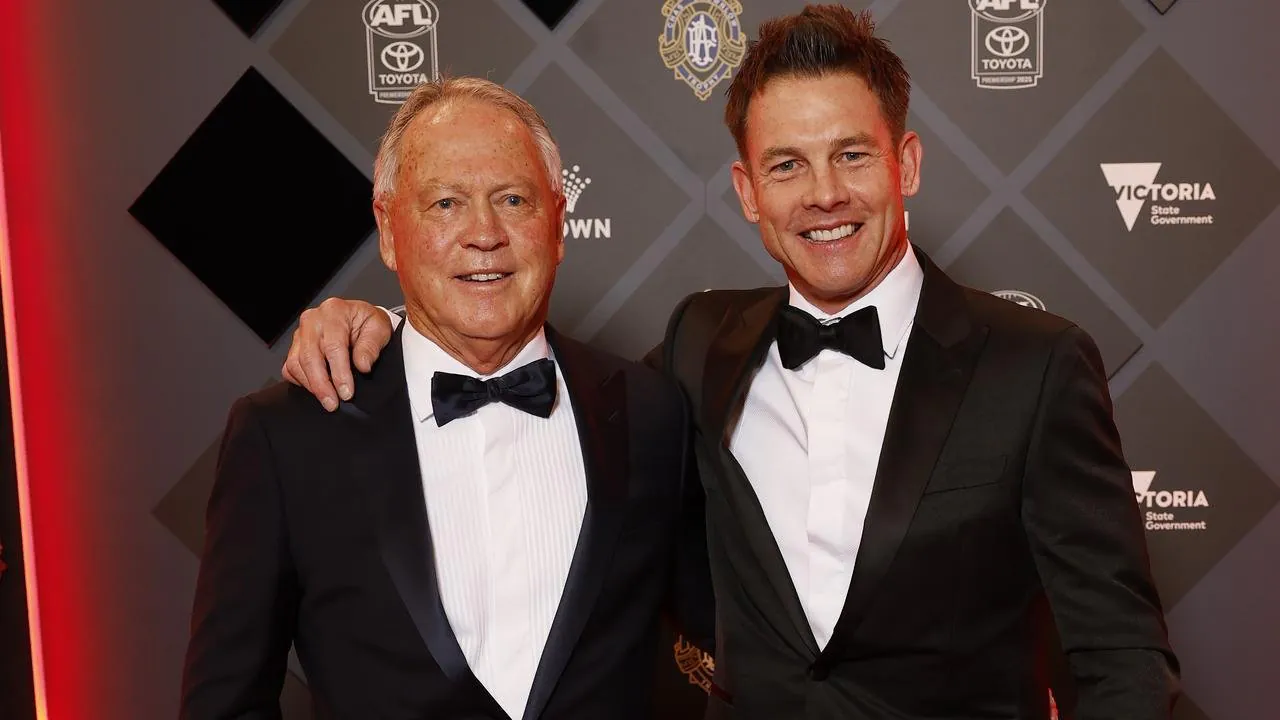
The decision to go public was not taken lightly, but Cousins felt compelled to speak out after Daniher’s tragic passing.
“I was running along the beach and starting to struggle – a bloke stopped me and asked me if I was OK,” Cousins recalled, his voice cracking with emotion.
“I went to a neurologist and I started looking at what I might have, and I got the one thing I didn’t want, which was MND.”
Cousins had been in close contact with Daniher since his diagnosis and was deeply moved by the former Essendon coach’s courage and resilience in the face of adversity.
“The way he approached it and his attitude, one word kept coming to my mind – he’s a fighter, and continued to fight till the day he died,” Cousins said.
“He’s an amazing individual, and whether you’re connected to MND or not, he is an inspiration to how you face up to adversity.”
As Cousins navigates his own MND journey, he is drawing strength from Daniher’s example and the outpouring of support from the public.
“Telling my family was one of the hardest moments of my life, but the support I’ve had, quite frankly, in my life from the public over a number of issues is basically what keeps you going,” he said.
“And I don’t fear what lies ahead because I’ll just face it as best I can.”
For Cousins, the road ahead will be challenging, but he remains optimistic about the prospect of finding a cure.
“I’m getting along, I’m still independent, but I’m looking at everything that Neale said, and every six months is worse than the previous, and you notice the little things in life,” he acknowledged.
“But, because of all the amazing things that people are doing, I do believe we will find a cure.”
Analysis: What This Means for Australia
The revelation of Bryan Cousins’ MND diagnosis serves as a poignant reminder of the devastating impact of this debilitating illness on Australian families and communities.
As the nation mourns the loss of Neale Daniher, Cousins’ bravery in sharing his own story highlights the urgent need for increased awareness, research, and support for those affected by MND.
With the ice bucket challenge and other awareness campaigns, Australians have shown their willingness to rally behind a cause – now, it’s time to turn that momentum into tangible action.
Law enforcement insiders warn that the diagnosis of high-profile individuals like Cousins and Daniher can help raise awareness and drive funding for research, but more needs to be done to support those living with MND.
“We need to see a sustained effort to address the lack of funding and resources for MND research and care,” said one expert.
“The courage of individuals like Bryan Cousins and Neale Daniher should inspire us to take action and make a meaningful difference in the lives of those affected by this devastating disease.”
As the Australian community comes together to support Cousins and others affected by MND, it’s essential to acknowledge the profound impact of this illness on families, friends, and caregivers.
By sharing his story, Cousins has given a voice to those who may be struggling in silence, and his bravery will undoubtedly inspire others to do the same.