
Abortion Row Erupts as One Nation’s Barnaby Joyce Demands Stricter Controls Amid Fears of Sex Selection Practices
- One Nation recruit Barnaby Joyce calls for tighter abortion controls at a demonstration outside NSW parliament, sparking heated debate on the issue
- A private member’s bill to ban abortions for sex selection purposes is set to be debated in NSW parliament, with politicians bracing for a conscience vote
- Despite NSW Health policy already banning the practice, Libertarian MP John Ruddick’s bill seeks to introduce penalties for medical practitioners who perform sex-selective abortions
As the New South Wales state election campaign looms, a contentious debate over abortion has erupted, with One Nation recruit Barnaby Joyce throwing his weight behind a push for stricter controls.
The former Deputy Prime Minister appeared at a demonstration outside NSW parliament on Tuesday, declaring that politicians are fearful of losing their jobs and urging the crowd to “keep the fire burning” on the issue.
The catalyst for the debate is a private member’s bill introduced by Libertarian MP John Ruddick, which seeks to ban abortions for the purpose of sex selection and introduce penalties for medical practitioners who perform them.
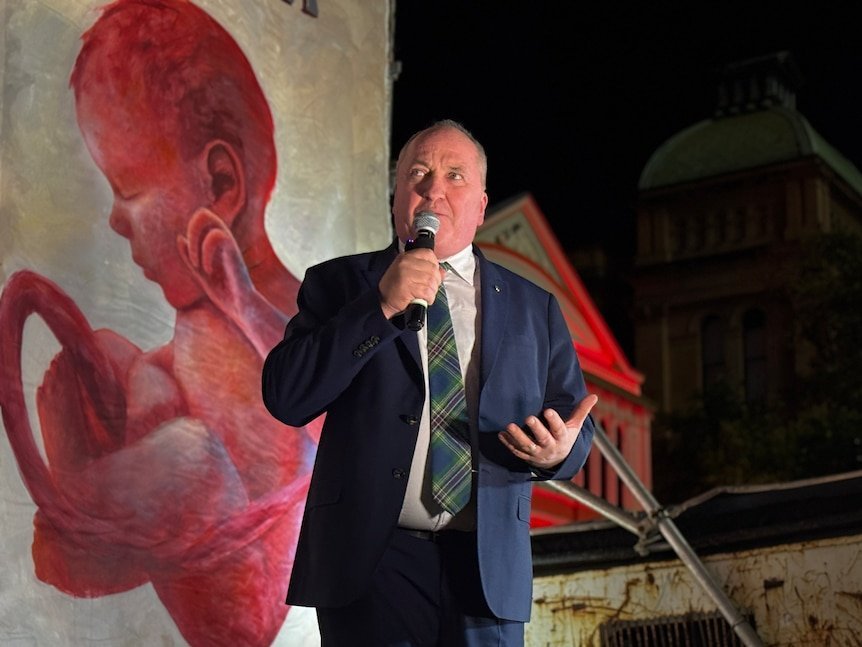
The bill is due to be debated in parliament on Wednesday, with both government and opposition MPs allowed a conscience vote.
Health Minister Ryan Park has already indicated he will not support the bill, citing concerns that it could lead to abortion being “back in the criminal code and back in criminal legislation.”
However, supporters of the bill point to a study by Edith Cowan University, which suggested a link between sex-selective abortion practices and higher-than-expected rates of male births in some migrant populations.
The study, which examined birth data from 1994 to 2015, found “patterns consistent with male biased [sex birth ratio] among certain immigrant groups in Australia, particularly from countries with a strong son preference, such as India and China.” While the study’s authors cautioned that their findings did not establish causality, proponents of the bill argue that it provides evidence of a problem that needs to be addressed.
NSW Health has maintained that sex-selective abortions are not widespread in the state, citing a 2020 review that found only 13 reported cases of terminations for the “sole purpose of sex selection” out of 15,973 total terminations.
However, 10 of those cases were likely to be reporting errors, and the review acknowledged that there was “no readily available and reliable way of determining gender” during the early stages of pregnancy.
Analysis: What This Means for Australia
The debate over sex-selective abortions has significant implications for Australia’s abortion laws and policies.
If the bill is passed, it could set a precedent for other states to follow, potentially leading to a patchwork of different laws and regulations across the country.
Furthermore, the introduction of penalties for medical practitioners who perform sex-selective abortions could have a chilling effect on the provision of abortion services, particularly in rural and regional areas where access is already limited.
Security analysts say that the bill’s focus on sex-selective abortions also raises concerns about the potential for discrimination against certain cultural and ethnic groups.
“While the intention behind the bill may be to prevent sex-selective abortions, it could have unintended consequences that disproportionately affect migrant communities,” one analyst noted.
“It’s essential to consider the broader social and cultural context in which these decisions are made.”
Law enforcement insiders warn that the bill’s introduction of penalties for medical practitioners could also create new challenges for policing and prosecution. “It’s already difficult to investigate and prosecute cases of sex-selective abortion, given the sensitive and complex nature of the issue,” one insider said.
“The introduction of penalties could make it even harder to ensure that the law is enforced fairly and effectively.”
Ultimately, the debate over sex-selective abortions highlights the need for a nuanced and evidence-based approach to abortion policy in Australia.
As the NSW parliament prepares to debate the bill, it’s essential to consider the potential consequences of any changes to the law and to prioritize the health, safety, and well-being of all individuals involved.