
Putin’s Rejection of Zelenskyy’s Peace Overture Sparks Fears of Escalating Ukraine War as Drone Incidents Threaten Eastern Europe
- Russian President Vladimir Putin dismisses Ukrainian President Volodymyr Zelenskyy’s proposal for a meeting as “boorish” and “pointless”
- A Ukrainian naval drone explodes in Romania’s Black Sea port of Constanta, prompting evacuations and sparking concerns about cross-border threats
- EU leaders warn that the war in Ukraine is becoming a “direct threat” to countries along the bloc’s eastern border as drone incidents increase
- Russia’s intensified aerial campaign against Ukraine raises fears of a wider conflict in Eastern Europe
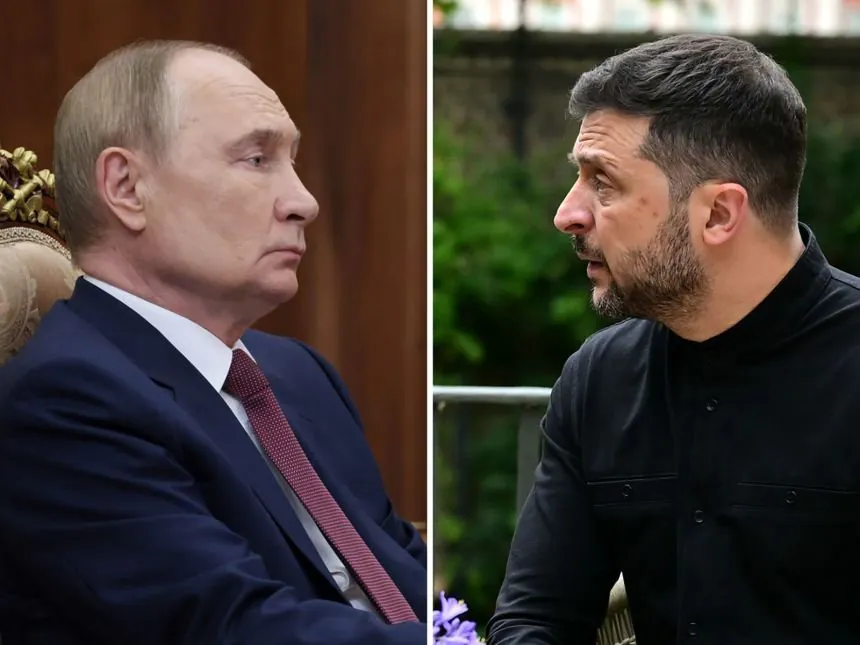
The war in Ukraine has taken a deadly turn, with Russian President Vladimir Putin rejecting a proposal from Ukrainian President Volodymyr Zelenskyy for a meeting to discuss a potential peace agreement.
In a speech to the annual St Petersburg International Economic Forum, Putin described Zelenskyy’s open letter proposing the meeting as “boorish” and stated that he saw “no point” in meeting with the Ukrainian leader.
The rejection comes as tensions between Russia and Ukraine continue to escalate, with a Ukrainian naval drone exploding in Romania’s Black Sea port of Constanta on Friday.
The incident prompted evacuations and raised concerns about the potential for cross-border threats in Eastern Europe.
Romania’s Defence Ministry reported that the drone self-detonated in the port after the area had been secured and isolated by authorities, with no casualties reported.
The incident is the latest in a series of drone incursions to hit a NATO member since the war began in 2022.
European leaders have warned that the war in Ukraine is becoming a “direct threat” to countries along the bloc’s eastern border, with EU Commission President Ursula von der Leyen stating that the conflict is “increasingly becoming a direct threat to countries on our Eastern border”.
Analysis: What This Means for Australia
The escalating conflict in Ukraine has significant implications for Australia’s national security and international relations.
As a member of the Five Eyes intelligence alliance, Australia has a vested interest in the stability of Eastern Europe and the security of NATO member states.
The increasing frequency of drone incursions into NATO territory raises concerns about the potential for a wider conflict in the region, which could have far-reaching consequences for global security and trade.
Security analysts say that the situation in Ukraine highlights the need for Australia to strengthen its own national security and defence capabilities, particularly in the face of growing threats from state and non-state actors.
The Australian government has been investing in its defence capabilities, including the acquisition of new naval vessels and the development of its cyber warfare capabilities.
Law enforcement insiders warn that the conflict in Ukraine also has implications for Australia’s domestic security, with the potential for extremist groups to exploit the conflict for their own purposes.
The Australian government has been working to strengthen its counter-terrorism laws and increase cooperation with international partners to address these threats.
Industry observers believe that the conflict in Ukraine will also have significant economic consequences for Australia, particularly in the areas of trade and energy. The conflict has already disrupted global energy markets, with Australia’s energy exports potentially impacted by the instability in the region.
The situation in Ukraine serves as a stark reminder of the need for Australia to remain vigilant and proactive in addressing the complex security challenges of the 21st century.
By strengthening its national security and defence capabilities, and working closely with international partners, Australia can help to promote stability and security in the region and protect its own interests.