
China’s Automotive Empire: How the Rise of Chinese-Made Cars is Redefining Australia’s New-Vehicle Market
- Chinese-manufactured vehicles now account for over one-third of all new-vehicle sales in Australia, with a record 37,229 units sold in May 2026.
- The Shanghai-built Tesla Model Y has dethroned the Ford Ranger as Australia’s best-selling vehicle, with 5605 sales in May.
- Chinese brands now occupy four of the top 10 best-selling marques in Australian showrooms, with BYD leading the charge.
- The surge in Chinese-made vehicle sales has come at the expense of Japan, with Japanese-made vehicles experiencing a 28.9% decline in sales year-on-year.
The Australian new-vehicle market has witnessed a seismic shift in recent years, and the latest sales figures have confirmed the astonishing rise of Chinese-made cars.
In May 2026, Chinese-manufactured vehicles accounted for a staggering 34.8% of all new-vehicle sales, with a record 37,229 units sold. This represents a significant increase from the 21,381 Chinese-made vehicles sold in May 2025, which accounted for 19.5% of the market.
The figures are a testament to the growing popularity of Chinese brands, with BYD, GWM, Chery, and MG all featuring in the top 10 best-selling marques in Australian showrooms.
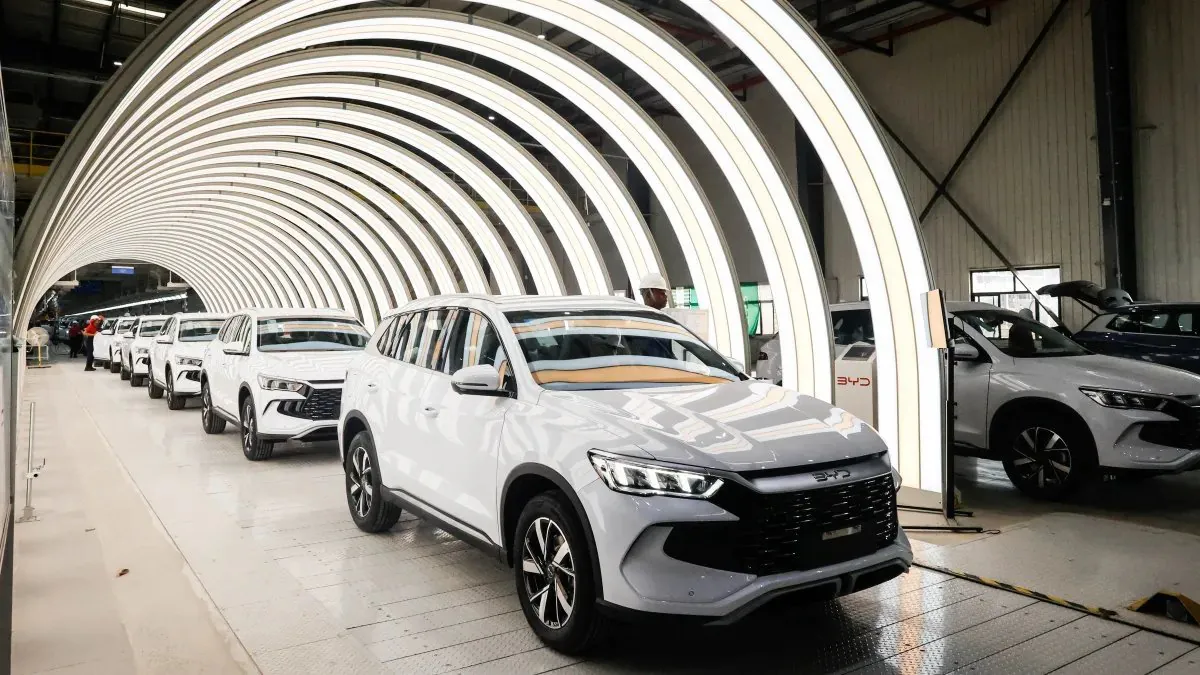
The Shanghai-built Tesla Model Y has become the nation’s best-selling vehicle, with 5605 sales in May, while the BYD Sealion 7 electric SUV and Shark 6 plug-in hybrid ute have also proven to be top performers.
So, what’s driving this surge in Chinese-made vehicle sales? Industry insiders point to a combination of factors, including record fuel prices, which have increased demand for electric and hybrid vehicles.
Chinese manufacturers have been quick to capitalize on this trend, with BYD, in particular, experiencing a 154.6% year-on-year increase in Australian sales.
But the rise of Chinese-made cars has not been without its challenges. The increase in sales has come largely at the expense of Japan, which remains the second-largest source of new vehicles sold in Australia.
Japanese-made vehicles accounted for 22,832 sales in May, down from 32,110 in May 2025, representing a decline of 28.9%.
Analysis: What This Means for Australia
The shift towards Chinese-made vehicles has significant implications for Australia’s automotive industry. As the world’s largest automotive manufacturing nation, China’s influence on the global market is undeniable.
The rise of Chinese brands in Australia is likely to continue, driven by increasing demand for affordable, feature-packed vehicles.
Security analysts say that the growing reliance on Chinese-made vehicles raises concerns about the potential for cyber security breaches and the impact on Australia’s national security.
With many Chinese brands partnering with Australian companies to establish local manufacturing facilities, the risk of intellectual property theft and data compromise is a looming concern.
Law enforcement insiders warn that the influx of Chinese-made vehicles also raises concerns about the potential for counterfeit parts and the impact on road safety.
As the market continues to evolve, it’s essential that regulatory bodies and law enforcement agencies remain vigilant to ensure that safety standards are maintained.
Industry observers believe that the rise of Chinese-made vehicles will drive innovation and competition in the Australian market, leading to better value for consumers. However, there are also concerns about the impact on local manufacturing and the potential for job losses in the industry.
As the Australian new-vehicle market continues to evolve, one thing is clear: the rise of Chinese-made cars is here to stay.
With their affordable prices, impressive features, and growing popularity, Chinese brands are set to play an increasingly dominant role in shaping the future of the Australian automotive industry.
Australian automotive industry
Australian Bureau of Statistics