
China’s Military Build-Up: The Growing Threat to Australia’s National Security and How Our Country is in the Crosshairs
- China’s military can already hit Australia’s trade routes, subsea cables, and critical infrastructure with its DF-26 missile system
- Australia’s mainland is under threat from China’s growing ability to project power, with Beijing developing a “real and growing” capability to strike the country with missiles
- China’s military build-up is a “historic shift” with sharp consequences for Australia’s security, with experts warning of a “dramatic” escalation if Beijing secures a military base in the Pacific
- Australia’s security is under threat from China’s growing naval power, with Beijing rapidly building up its capabilities and increasingly projecting power further afield
Australia’s national security is under threat from China’s growing military power, with experts warning that Beijing’s ability to project force in the region is a “historic shift” with sharp consequences for our country.
The Lowy Institute’s latest report has tracked the “dramatic” scale of China’s military build-up, which is being driven by a desire to secure a military base in the Pacific and develop long-range bombers and drones that can reach Australia.
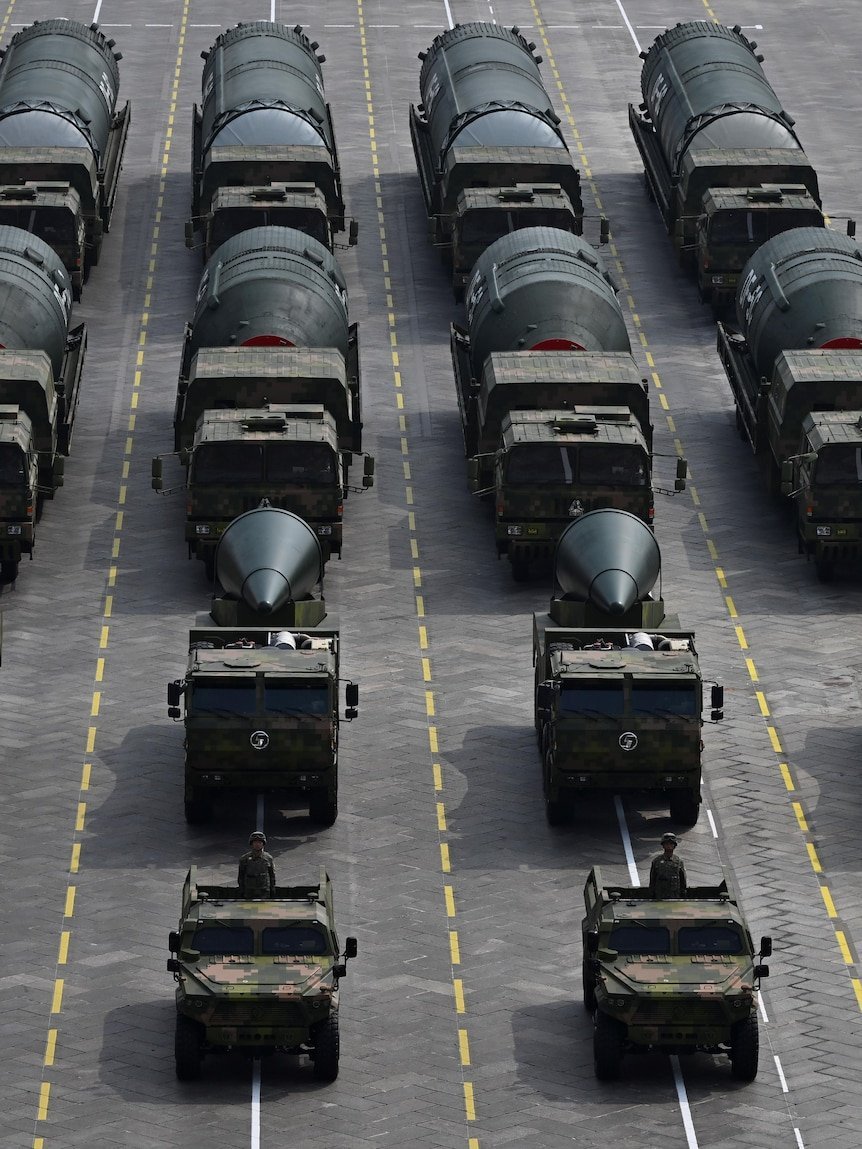
At the heart of the threat is China’s DF-26 missile system, which can already hit northern Australia if fired from its artificially built islands in the South China Sea.
China can also block Australia’s trade routes through the Indonesian archipelago, sever undersea cables that Australian communications and commerce depend on, and conduct sophisticated cyber operations against our critical infrastructure.
But the authors of the report warn that the threat to Australia would escalate “dramatically” if China secured a military base in the Pacific or successfully developed a new long-range bomber or drone with the size and range to reach our country.
According to Sam Roggeveen, one of the report’s co-authors, China’s ability to strike Australia directly is “limited” but “growing in a worrying fashion”.
“I’d argue that for a military force of China’s size, that direct strike capability is still fairly modest, as China’s focus has been closer to home,” he said.
However, the report points out that China may have developed a new missile with a range that can reach Australia, and speculation by the Pentagon suggests that Beijing has also built a new intercontinental ballistic missile armed with a non-nuclear warhead.
China’s military build-up is not just about developing new hardware, but also about projecting power further afield.
The People’s Liberation Army (PLA) Navy’s circumnavigation of Australia last year showed how it is increasingly able to project power further afield, and it is clearly intent on building more aircraft carriers that would allow it to push further into the Pacific.
“They’re learning to operate those carriers in an efficient manner and developing real military capabilities,” Mr Roggeveen said.
Analysis: What This Means for AustraliaThe implications of China’s growing military power for Australia are stark.
Our country’s security is under threat from Beijing’s ability to project force in the region, and the risk of conflict is growing.
The report warns that states in South-East Asia face growing pressure to accommodate Chinese preferences as the balance shifts, even where they resist doing so openly.
This undermines Australia’s security because it reduces the credibility of US extended deterrence and the cohesion of US-led security arrangements. The PLA is thus helping China to construct a sphere of influence in Southeast Asia that excludes Australia and its partners.
This has significant implications for our country’s national security, and experts warn that we need to be aware of the growing threat.
“So Australia needs to keep a laser-like focus on China’s capabilities because, however good our relationship with China, we can never know how the world will change,” Mr Roggeveen said.
The report’s authors also point out that the threat to Australia is not just about China’s military power, but also about its economic influence.
Beijing’s Belt and Road Initiative is a key part of its strategy to project power in the region, and it has already invested heavily in infrastructure projects in Pacific Island nations.
This has significant implications for Australia’s economic security, and experts warn that we need to be aware of the risks.
In terms of what this means for Australia’s defence and national security, the report’s authors argue that we need to be prepared to respond to the growing threat.
This includes investing in our military capabilities, particularly in areas such as cybersecurity and missile defence. We also need to work closely with our allies, particularly the US, to ensure that we are able to respond effectively to any potential threats.
Ultimately, the report’s authors argue that Australia needs to be aware of the growing threat from China’s military power and take steps to protect our national security.
This includes investing in our military capabilities, working closely with our allies, and being prepared to respond to any potential threats.
As Mr Roggeveen said, “Australia needs to keep a laser-like focus on China’s capabilities because, however good our relationship with China, we can never know how the world will change.”
Australia’s national security is under threat from China’s growing military power, with experts warning that Beijing’s ability to project force in the region is a “historic shift” with sharp consequences for our country. The Lowy Institute’s latest report has tracked the “dramatic” scale of China’s military build-up, which is being driven by a desire to secure a military base in the Pacific and develop long-range bombers and drones that can reach Australia.
At the heart of the threat is China’s DF-26 missile system, which can already hit northern Australia if fired from its artificially built islands in the South China Sea. China can also block Australia’s trade routes through the Indonesian archipelago, sever undersea cables that Australian communications and commerce depend on, and conduct sophisticated cyber operations against our critical infrastructure. But the authors of the report warn that the threat to Australia would escalate “dramatically” if China secured a military base in the Pacific or successfully developed a new long-range bomber or drone with the size and range to reach our country.
According to Sam Roggeveen, one of the report’s co-authors, China’s ability to strike Australia directly is “limited” but “growing in a worrying fashion”. “I’d argue that for a military force of China’s size, that direct strike capability is still fairly modest, as China’s focus has been closer to home,” he said. However, the report points out that China may have developed a new missile with a range that can reach Australia, and speculation by the Pentagon suggests that Beijing has also built a new intercontinental ballistic missile armed with a non-nuclear warhead.
China’s military build-up is not just about developing new hardware, but also about projecting power further afield. The People’s Liberation Army (PLA) Navy’s circumnavigation of Australia last year showed how it is increasingly able to project power further afield, and it is clearly intent on building more aircraft carriers that would allow it to push further into the Pacific. “They’re learning to operate those carriers in an efficient manner and developing real military capabilities,” Mr Roggeveen said.
The implications of China’s growing military power for Australia are stark. Our country’s security is under threat from Beijing’s ability to project force in the region, and the risk of conflict is growing. The report warns that states in South-East Asia face growing pressure to accommodate Chinese preferences as the balance shifts, even where they resist doing so openly. This undermines Australia’s security because it reduces the credibility of US extended deterrence and the cohesion of US-led security arrangements.
The PLA is thus helping China to construct a sphere of influence in Southeast Asia that excludes Australia and its partners. This has significant implications for our country’s national security, and experts warn that we need to be aware of the growing threat. “So Australia needs to keep a laser-like focus on China’s capabilities because, however good our relationship with China, we can never know how the world will change,” Mr Roggeveen said.
The report’s authors also point out that the threat to Australia is not just about China’s military power, but also about its economic influence. Beijing’s Belt and Road Initiative is a key part of its strategy to project power in the region, and it has already invested heavily in infrastructure projects in Pacific Island nations. This has significant implications for Australia’s economic security, and experts warn that we need to be aware of the risks.
In terms of what this means for Australia’s defence and national security, the report’s authors argue that we need to be prepared to respond to the growing threat. This includes investing in our military capabilities, particularly in areas such as cybersecurity and missile defence. We also need to work closely with our allies, particularly the US, to ensure that we are able to respond effectively to any potential threats.
Ultimately, the report’s authors argue that Australia needs to be aware of the growing threat from China’s military power and take steps to protect our national security. This includes investing in our military capabilities, working closely with our allies, and being prepared to respond to any potential threats. As Mr Roggeveen said, “Australia needs to keep a laser-like focus on China’s capabilities because, however good our relationship with China, we can never know how the world will change.”