Shark Attack Horror: NSW Government Lifts Drone Ban as Beaches Remain Closed After Woman’s Savage Mauling
- A 35-year-old woman is fighting for her life after being bitten by a 3-4 metre white shark at Coogee Beach, sparking a frantic response from authorities.
- The NSW government has temporarily lifted a ban on flying shark-spotting drones over Coogee Beach, despite its proximity to Sydney Airport, in a bid to keep the community safe.
- The state government is refusing to rule out shark culls as it works to prevent further attacks, with a minister admitting “nothing is off the table” to protect beachgoers.
- Surf Life Saving NSW has secured an urgent exemption from the Civil Aviation Safety Authority to allow drones to fly over Coogee Beach, with the government working to make the arrangement permanent.
In the aftermath of a devastating shark attack that has left a young woman critically injured, the NSW government has been forced to confront the harsh reality of its shark management strategy.
The attack, which occurred at Coogee Beach on Saturday, has sparked a frantic response from authorities, who are scrambling to prevent further incidents.
At the centre of the response is the use of shark-spotting drones, which have been temporarily cleared to fly over Coogee Beach despite a ban due to its proximity to Sydney Airport.
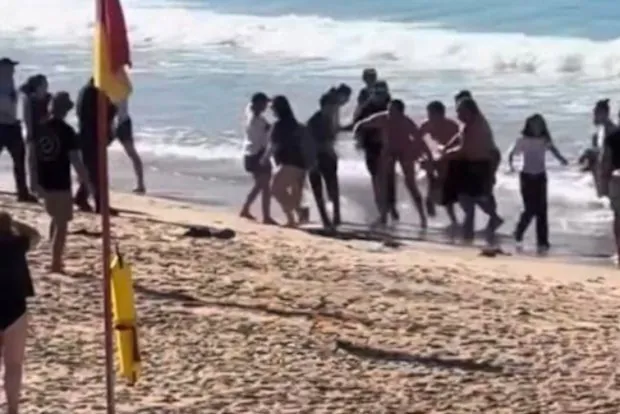
The victim, a 35-year-old woman, was swimming between the flags at Coogee Beach when she was bitten on the leg and arms by a white shark estimated to be 3-4 metres in length.
The attack has left her in a stable but critical condition, with her family and friends holding out hope for her recovery. The incident has sent shockwaves through the community, with many left wondering how such an attack could occur in a area deemed safe by authorities.


The NSW government has been quick to respond to the attack, with Minister Tara Moriarty announcing that the state would work with the Civil Aviation Safety Authority (CASA) to make the drone exemption permanent.
The move is a significant shift in the government’s approach to shark management, which has been criticised in the past for being too reactive rather than proactive.
Moriarty admitted that the government’s shark management strategy was not perfect, but said that the use of drones would provide an added layer of protection for beachgoers.
However, the government’s refusal to rule out shark culls has sparked controversy, with many experts arguing that such a move would be ineffective and potentially harmful to the marine ecosystem.
Moriarty said that “nothing is off the table” when it came to protecting the community, but experts warn that culls would only serve to drive sharks further into coastal areas.
Security analysts say that a more effective approach would be to invest in research and education, rather than resorting to culls.
Analysis: What This Means for Australia
The shark attack at Coogee Beach is a stark reminder of the risks associated with sharing our coastline with wild animals. For the NSW government, the incident highlights the need for a more proactive approach to shark management, one that prioritises education, research, and community engagement.
The use of drones is a welcome development, but it is only one part of a broader strategy that must be implemented to protect beachgoers.
As the government works to prevent further attacks, it must also consider the long-term implications of its actions, including the potential impact on the marine ecosystem.
Law enforcement insiders warn that the NSW government’s shark management strategy must be more than just a knee-jerk response to a single incident. “We need to take a step back and look at the bigger picture,” said one insider.
“We need to invest in research and education, and work with the community to develop a strategy that is effective and sustainable in the long term.” Industry observers believe that the government’s approach to shark management will have significant implications for the tourism industry, with many beachgoers likely to think twice before entering the water.
The Department of Primary Industries has been asked for urgent advice on how to increase the use of drones in shark management, with the government working to develop a more comprehensive strategy.
As the community comes to terms with the latest shark attack, one thing is clear: the NSW government must do more to protect beachgoers and prevent further incidents.