
‘Toxic Legacy’: Australia’s Chemical Regulator Imposes Tough New Rules on Controversial Parkinson’s-Linked Herbicide Paraquat, But Critics Say It’s Not Enough
- The Australian Pesticides and Veterinary Medicines Authority (APVMA) has imposed new limits and conditions on the use of paraquat, a herbicide linked to Parkinson’s disease, but critics say the measures don’t go far enough.
- The regulator’s decision follows a review that began in 1997 and comes despite warnings from top neurologists and Parkinson’s Australia that the chemical poses a significant risk to human health.
- Paraquat will no longer be permitted for use with backpack sprayers, and application rates will be reduced from 1,150 grams per hectare to 231 grams per hectare.
- Existing stock will be phased out over a two-year period, but farming groups are worried the restrictions could lead to greater herbicide resistance.
The Australian Pesticides and Veterinary Medicines Authority (APVMA) has finally handed down its decision on the future of paraquat, a herbicide that has been linked to Parkinson’s disease.
After a review that began in 1997, the regulator has imposed new limits and conditions on the use of the chemical, but critics say the measures don’t go far enough.
The decision is a blow to farming groups who had been concerned that the fast-acting weed killer would be banned due to concerns about risks to human health and the environment.
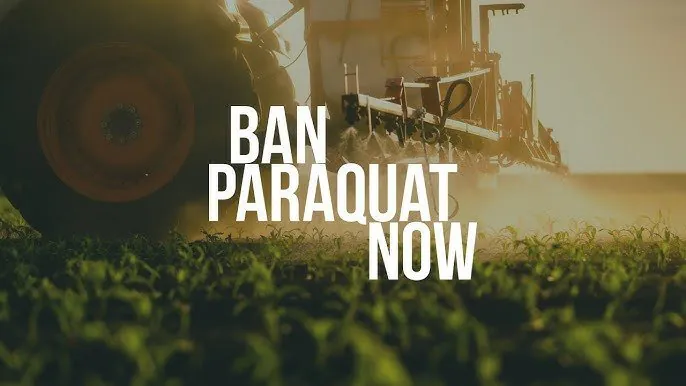
However, the APVMA has determined that paraquat can continue to be used safely with “significant” restrictions, including lower application rates.
Paraquat and diquat, another herbicide, will no longer be permitted for use with backpack sprayers, and enclosed mixing and loading systems will be required for all ongoing uses.
The maximum rate of application will be reduced from 1,150 grams per hectare to 231 grams per hectare.
The APVMA said there was an “unmanageable risk” to birds and mammals foraging in treated areas. The regulator received 171 submissions from scientists, doctors, the agricultural industry, and other interested parties during the review process.
New registration conditions will apply to the labels of all paraquat and diquat products manufactured from today. Existing stock will be phased out over a two-year period.
The decision has been slammed by Parkinson’s Australia, which said the control measures did not go far enough. The organization’s CEO, Olivia Nassaris, said the APVMA had failed not only farmers who use paraquat but all Australians exposed to the chemical.
“The incidence of Parkinson’s is projected to triple by 2050, posing pressure to the health system and economy,” Ms Nassaris said. “I am convinced that the science proves incidents of Parkinson’s increase with the use of paraquat.”
The National Farmers’ Federation (NFF) said it would consider the detail of the decision and its implications on Australia’s food and fiber production. The organization’s president, Hamish McIntyre, acknowledged community concerns around paraquat but emphasized the importance of safe and effective weed management practices.
Farmers are worried that reducing application rates could lead to greater herbicide resistance.
South Australian grain grower Mark Modra said, “That [reduced rate] works on small weeds and is useful for crop topping, but when you’ve got robust weeds, that will be probably half the rate I would need to kill them.”
Neurologist David Blacker, who has Parkinson’s disease, said the data on paraquat was overwhelming. “The science is clear: paraquat is a toxic substance that poses a significant risk to human health,” he said.
Analysis: What This Means for Australia
The APVMA’s decision on paraquat has significant implications for Australia’s agricultural industry and the wider community.
While the regulator has imposed new restrictions on the use of the chemical, critics argue that the measures do not go far enough to protect human health and the environment.
Security analysts say the decision highlights the need for more stringent regulations on the use of toxic substances in Australia. “The APVMA’s decision on paraquat is a step in the right direction, but it’s just the tip of the iceberg,” said one analyst.
“We need to take a closer look at the use of all toxic substances in our agricultural industry and ensure that we’re doing everything we can to protect human health and the environment.”
Law enforcement insiders warn that the decision could lead to increased black market activity, as farmers seek alternative and potentially more toxic substances to control weeds.
“We’re concerned that the restrictions on paraquat could drive the problem underground,” said one insider. “We need to ensure that we’re not creating a new set of problems by trying to solve an old one.”
Industry observers believe that the decision could have significant economic and social consequences for rural communities. “The APVMA’s decision on paraquat could have a major impact on the livelihoods of farmers and rural communities,” said one observer.
“We need to ensure that we’re supporting these communities and providing them with the resources they need to adapt to the new regulations.”