
Australia’s Hidden Threat: How Global Disease Outbreaks Could Spark a National Health Crisis
- Deadly diseases like Ebola, hantavirus, and diphtheria are spreading globally, with Australia at risk of outbreaks due to low vaccination rates and misinformation.
- The country’s largest diphtheria outbreak on record has prompted a $7.2 million vaccine blitz, but experts warn of a creeping complacency about vaccines.
- Measles, with one of the highest transmission rates, could see a resurgence in Australia, with experts warning of a “precarious position” due to declining vaccination rates.
- Australia’s ability to respond to outbreaks is being hindered by misinformation and a loss of public trust in health authorities, following the COVID-19 pandemic.
The Democratic Republic of Congo is currently battling a devastating Ebola outbreak, with over 1,000 cases and 260 deaths reported.
The World Health Organisation has declared the situation a “public health emergency of international concern.” But it’s not just Africa that’s at risk – Australia is also vulnerable to the spread of infectious diseases.
According to Professor Jodie McVernon, director of epidemiology at the Doherty Institute, the key to controlling outbreaks is community engagement and effective identification and case isolation.
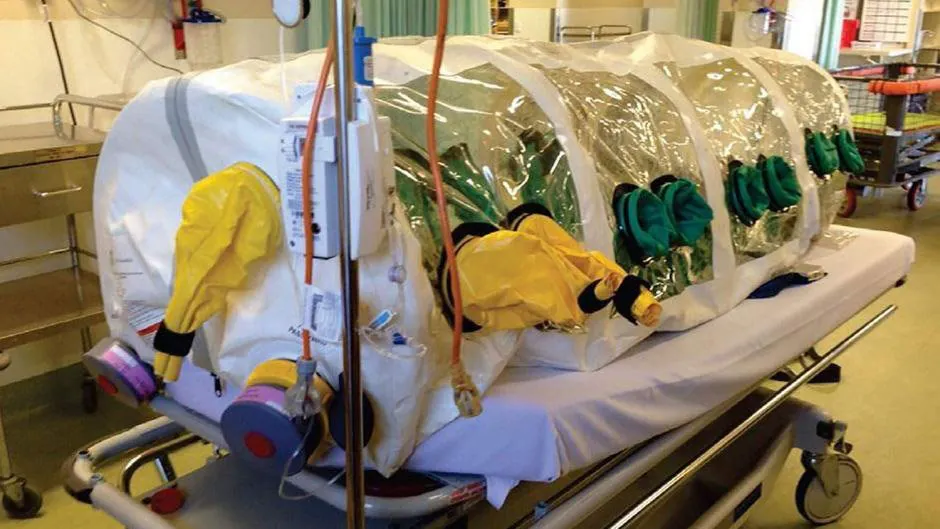
“With effective identification and case isolation, it’s a controllable disease from a public health perspective,” she says. However, conflict, mistrust of authorities, and unrest in affected regions can make containment much more complicated.
In Australia, the largest diphtheria outbreak on record has prompted the federal government to spend $7.2 million on a vaccine blitz. Professor McVernon attributes the emergence of diphtheria to structural disadvantage, racism, and poor living conditions.
“I’ve seen the term ‘biblical disease’ up on a whiteboard… really old diseases, you know, we don’t even think about them most of the time. But this is a re-emerging infectious disease.”
A recent report by the Global Preparedness Monitoring Board (GPMB) warns that the world is more vulnerable to pandemics and deadly disease outbreaks than it was before COVID-19.
Australia has not met its 95 per cent immunisation target for five-year-olds since 2020, and experts warn of a creeping complacency about vaccines.
Analysis: What This Means for Australia
Australia’s national security is at risk due to the potential spread of infectious diseases.
The country’s ability to respond to outbreaks is being hindered by misinformation and a loss of public trust in health authorities, following the COVID-19 pandemic.
Security analysts say that the government must take immediate action to address these issues and ensure the country is prepared for potential outbreaks.
Law enforcement insiders warn that the spread of misinformation about vaccines is a significant threat to public health.
“I’m really worried about our ability to be able to respond in the current climate where the reflex is to not believe or trust some of this messaging when it comes out,” says Professor Paul Griffin, an infectious diseases expert at the University of Queensland.
Industry observers believe that the government must invest in public health education and awareness campaigns to combat misinformation and promote vaccination. “We’ve been very successful at immunising in Australia, and we’ve maintained very high levels of vaccine coverage,” says Professor McVernon.
“But as those levels start to fall, this is what we start to see – you might have little outbreaks, they might be reasonably contained, but if coverage continues to fall, then you can have scope for larger outbreaks.”