
‘Tree Top Protester’ Removed by Emergency Services in Brisbane CBD as State Government Faces Backlash Over Controversial Land Sale
- A 23-hour standoff between a lone protester and authorities has ended with the woman’s safe removal from a tree in a disputed community garden near Brisbane’s CBD.
- The dramatic scenes unfolded at Kurilpa Common, a state-owned lot taken over by ‘guerilla gardeners’ during the COVID-19 pandemic, sparking a heated debate over urban development and public land use.
- The Queensland government’s plans to develop the site into housing have been met with fierce resistance from locals, who claim the land is contaminated and should be preserved as a community green space.
- The incident has raised questions about the state’s handling of public land, with some calling for the Brisbane City Council to buy back the site or for the government to prioritize social and affordable housing.
As the sun rose over Brisbane’s CBD on Tuesday, a sense of unease settled over the community garden at Kurilpa Common. For 23 hours, a lone protester, Sharai, had perched high up in a tree, refusing to budge as authorities attempted to coax her down.
The standoff ended peacefully, with emergency services using a cherry picker to escort Sharai to safety.
The drama unfolded just days after the Queensland government announced plans to develop the site into housing, sparking outrage among locals who have transformed the state-owned lot into a thriving community garden.
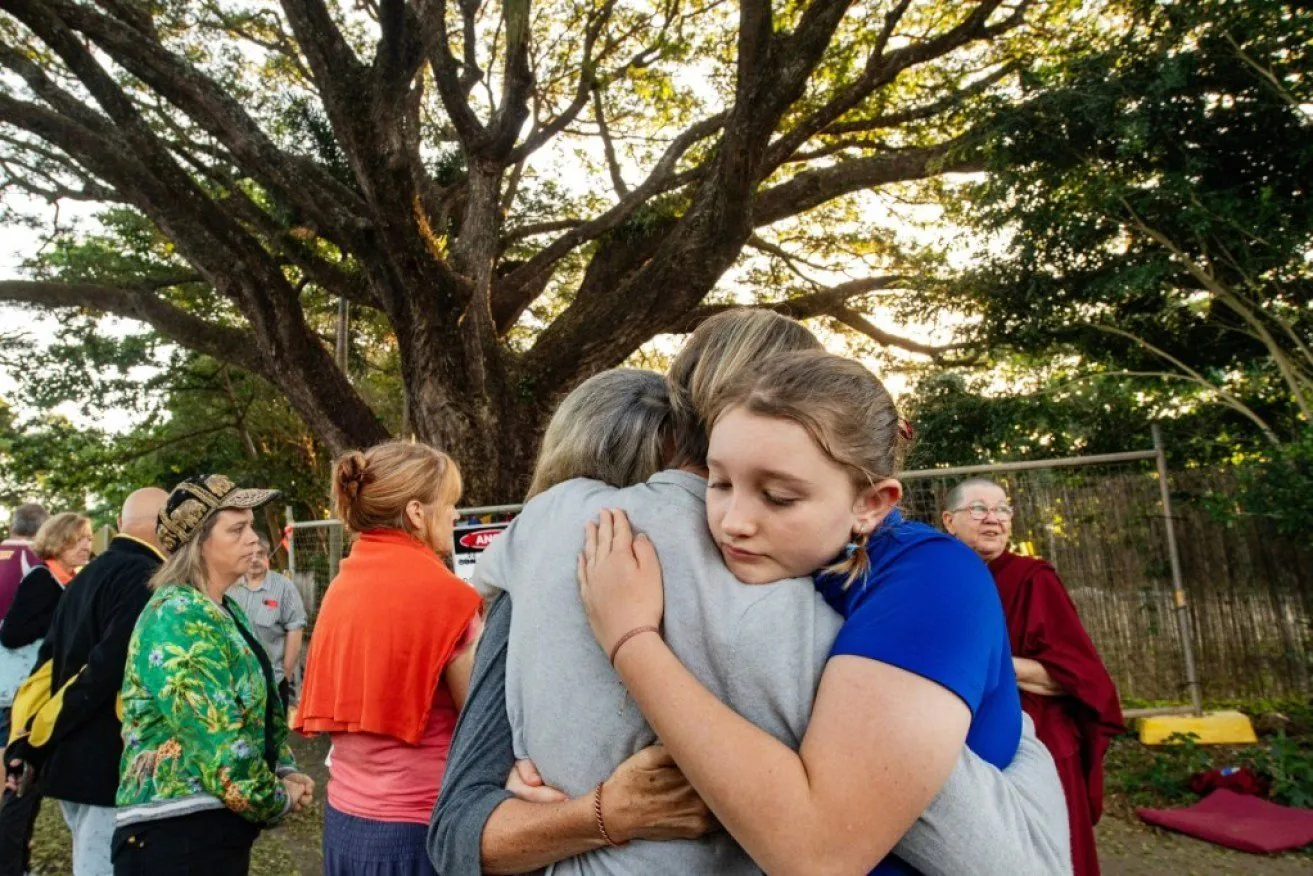
The land, which was previously owned by the Brisbane City Council, was sold to the state government and earmarked for development, despite concerns over contamination and the site’s cultural significance.
For Sharai, the decision to take a stand – or rather, a perch – was a desperate bid to save a space that holds deep emotional value.
“I’ve never climbed a tree in this kind of way, but I turned up when I heard what was happening,” she told the ABC, her voice shaking with emotion.
“This is a place that is really special to all of us and significant, so we’re going to fight to save it.”
The community garden, which was established in 2020, has become a beloved fixture in the neighborhood, with locals cultivating the land and creating a vibrant green oasis in the heart of the city.
However, the Queensland government has deemed the garden “unsanctioned,” citing concerns over contamination and the need to prioritize housing development.
Queensland Housing Minister Sam O’Connor defended the government’s decision, stating that the common “was never a sanctioned community garden.” However, critics argue that the government is prioritizing profits over people, and that the land should be preserved for community use.
Greens councillor Trina Massey, who represents the Gabba Ward, has called on the Brisbane City Council to buy back the land, arguing that it is essential for the community’s well-being.
“We are not going to solve the housing crisis by selling off public land and not delivering houses that everyday people can be in,” she said.
Analysis: What This Means for Australia
The controversy surrounding Kurilpa Common raises important questions about the future of urban development in Australia. As cities continue to grow and evolve, the need for green spaces and community areas has never been more pressing.
The Queensland government’s decision to prioritize housing development over community use has sparked a heated debate about the role of public land in our cities.
Security analysts say that the incident highlights the need for more effective communication and consultation between government and community groups. “When it comes to urban development, it’s essential that all stakeholders are heard and valued,” said one expert.
“The Kurilpa Common controversy is a prime example of what can happen when this doesn’t occur.”
Law enforcement insiders warn that the incident may set a precedent for future protests and demonstrations, as communities become increasingly frustrated with government decisions that impact their quality of life.
“The use of non-violent direct action, such as tree-sitting, is likely to become more common as people seek to make their voices heard,” said one source.
Industry observers believe that the controversy surrounding Kurilpa Common will have far-reaching implications for urban development in Australia. “The Queensland government’s decision to prioritize housing development over community use may be seen as a test case for other cities,” said one expert.
“If successful, it could pave the way for more aggressive development policies, potentially at the expense of community green spaces.”
As the dust settles on the Kurilpa Common controversy, one thing is clear: the battle for the future of urban development in Australia has only just begun.