
Heartless Eviction: Homeless Residents of Wilks Park Torn from Their Only Homes as Wagga Wagga Council Cracks Down
- Dozens of rough sleepers forcibly removed from Wilks Park in Wagga Wagga, NSW, despite claims of nowhere to go
- Community advocates slam council’s “heartless” actions, saying residents were given only short-term accommodation options
- Eviction comes as the city struggles to address its homelessness crisis, sparked by the tragic death of a stillborn baby on the riverbank in May
- Homelessness Minister Rose Jackson’s promises of action yet to materialize, leaving residents without a safety net
The sun had barely risen over Wilks Park in Wagga Wagga, NSW, when the council’s rangers arrived, armed with eviction notices and a mission to clear out the homeless camp.
The residents, who had called the park home for months, were given just two weeks’ notice to vacate the premises.
The deadline, set for July 7, was the culmination of a long-standing dispute between the council and the rough sleepers, who claimed they had nowhere else to go.
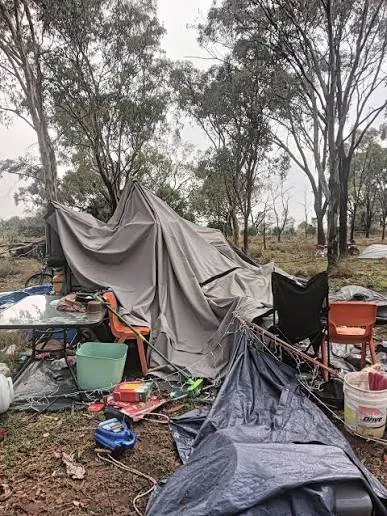
Among those affected was resident JJ, who had been living at the park for months. “I understand we have to go, but we have nowhere to go,” he said, his voice laced with desperation.
“All we need is more time.” Community advocates, who had been working tirelessly to support the residents, stood in solidarity with them, determined to fight for their rights.
“We have legal observers, we have a lawyer coming, and we have the Wagga community here to show their support,” said Leigh Swansborough, a vocal advocate for the homeless.
Despite claims by Homes NSW that accommodation had been offered to every rough sleeper, the residents disputed this, saying they had only been given short-term options of up to seven days.
The council, however, maintained that it had extended the timeframe to allow residents to engage with Homes NSW. The standoff ended in a dramatic showdown, with the council’s rangers removing what they deemed to be “an abandoned campsite” along the Murrumbidgee River.
Witnessing the removal, community advocate Angelo Tseros was visibly distressed. “I am just witnessing something that somebody called home be discarded and thrown into rubbish,” she said, her voice trembling.
“It’s all they had, and now it’s gone.” The scene was repeated at Oura Beach, where more notices were issued to rough sleepers, giving them until July 21 to leave before enforcement is initiated.
Local councillor Richard Foley defended the council’s actions, saying the notices were “inevitable” given the “long-term encampment along the riverbank with rising river levels.” However, his words were met with skepticism by community members, who pointed to the lack of action from the state government.
“The state government and minister have failed this city,” Foley said, echoing the sentiments of many. The eviction has sparked outrage, with many questioning the council’s approach to addressing homelessness.
Analysis: What This Means for Australia
The forced eviction of Wilks Park residents is a stark reminder of the nation’s ongoing struggle to address homelessness. The crisis, which has been exacerbated by the COVID-19 pandemic, has left thousands of Australians without a safe and secure place to call home.
The situation in Wagga Wagga is a microcosm of the larger issue, with many cities and towns grappling with the complex and multifaceted problem of homelessness.
Security analysts say the eviction highlights the need for a more compassionate and comprehensive approach to addressing homelessness. “We need to move away from punitive measures and towards solutions that address the root causes of homelessness,” said one analyst.
“This includes providing affordable housing, mental health support, and job training programs.” Law enforcement insiders warn that the current approach is not only ineffective but also counterproductive, driving rough sleepers further into the margins of society.
Industry observers believe that the eviction is a symptom of a broader failure of government policy. “The fact that we have people living on the streets, despite the promises of politicians, is a scandal,” said one observer.
“We need to see real action, not just words, to address this crisis.” The situation in Wagga Wagga serves as a wake-up call for policymakers, highlighting the need for a more coordinated and effective response to homelessness.