
‘Oil Apocalypse Looms: How Australia’s Fuel Prices Could Skyrocket Amid Middle East Chaos and Donald Trump’s Provocative Threats’
- Oil prices surge over 10% as Middle East tensions escalate, threatening Australia’s fuel supplies and economic stability.
- Donald Trump’s provocative Truth Social post sparks fears of a full-blown oil crisis, with analysts warning of ‘oil apocalypse’.
- Australia’s motorists face potential price hikes at the pump as global oil supplies reach critically low levels.
- Experts warn of a ‘perfect storm’ of high fuel prices, low supplies, and regional chaos, with severe consequences for Australian businesses and consumers.
The Middle East is on the brink of a full-blown oil crisis, and Australia is not immune to the chaos.
The recent closure of the Strait of Hormuz, a vital waterway for global oil supplies, has sparked a surge in oil prices, with the price of West Texas Intermediate (WTI) crude rising 5% and Brent crude up 10%.
The escalating tensions between the United States and Iran have created an air of uncertainty, with both sides engaging in a war of words and actions.
The US military has carried out a third night of strikes against Iran, while Iran’s Islamic Revolutionary Guard Corps claims to have destroyed the air control radar of the US Navy’s Fifth Fleet in Bahrain.
The situation has been further complicated by Donald Trump’s provocative Truth Social post, in which he announced that the US would reinstate its blockade of the Strait of Hormuz and charge a 20% fee for passage.
The move has been met with skepticism by analysts, who warn that it could exacerbate existing tensions and violate international law.
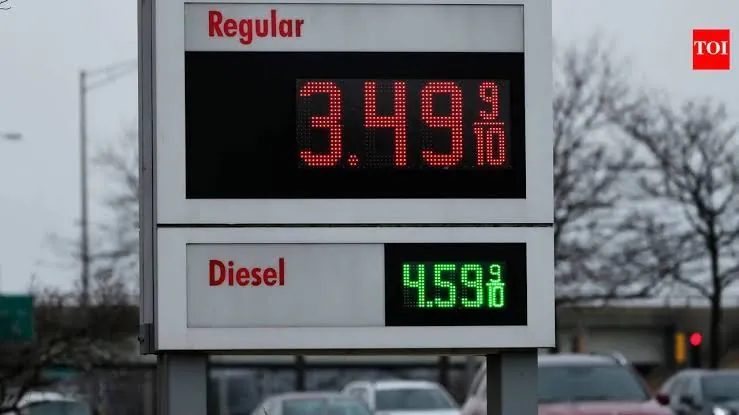
For Australia, the implications are severe. The country relies heavily on imported oil, and a sustained increase in prices could lead to significant price hikes at the pump.
The NRMA’s Peter Khoury noted that regional benchmark oil prices, including Tapis crude, have risen in the past 24 hours, and warned that petrol prices for motorists would increase if the “chaos continued”.”
Analysis: What This Means for Australia
The Middle East crisis has serious national security implications for Australia. The country’s reliance on imported oil makes it vulnerable to price shocks, which could have a significant impact on the economy.
The government must take steps to diversify its energy sources and reduce its reliance on imported oil to mitigate the risks.
Law enforcement and border control are also critical concerns.
The chaos in the Middle East could lead to an increase in asylum seeker arrivals and people smuggling, which would put a strain on Australia’s border security.
The economic consequences of the crisis are also significant. A sustained increase in oil prices could lead to higher production costs for businesses, which could be passed on to consumers.
The impact on Australian farmers, who rely on fertilizers and other oil-based products, could be particularly severe.
Security analysts say that the situation in the Middle East is a “perfect storm” of high fuel prices, low supplies, and regional chaos. “The Middle East is a powder keg, and Australia needs to be prepared for the worst,” said one analyst.
Law enforcement insiders warn that the crisis could lead to an increase in crime, particularly people smuggling and fuel theft. “The chaos in the Middle East is a recipe for disaster, and we need to be prepared to respond,” said one insider.
Industry observers believe that the crisis highlights the need for Australia to develop its own energy resources, particularly in the fields of solar and wind power.
“Australia needs to take control of its own energy future, rather than relying on imported oil,” said one observer.