
Melbourne’s War on Rogue E-Bikes: City Council Axes Lime Program Over ‘Dodgy Customers’ and ‘Dumped’ Cycles
- Melbourne’s City of Yarra has scrapped its shared e-bike program with Lime, citing the company’s refusal to take responsibility for dumped bikes and reckless riders.
- The council claims Lime’s failure to manage its customers has left taxpayers footing the bill to clean up abandoned bikes, sparking concerns over public safety and accessibility.
- The decision comes as New South Wales introduces a new approach to the shared e-bike problem, with designated parking zones and a rider surcharge to encourage responsible parking.
The City of Yarra’s decision to axe its shared e-bike program with Lime has sparked a heated debate over the role of private companies in managing public spaces.
At the heart of the controversy is the issue of dumped bikes, which have been a persistent problem in Melbourne’s inner city.
According to Mayor Stephen Jolly, Lime’s refusal to take responsibility for its customers’ actions has left the council with no choice but to cancel the six-year trial.
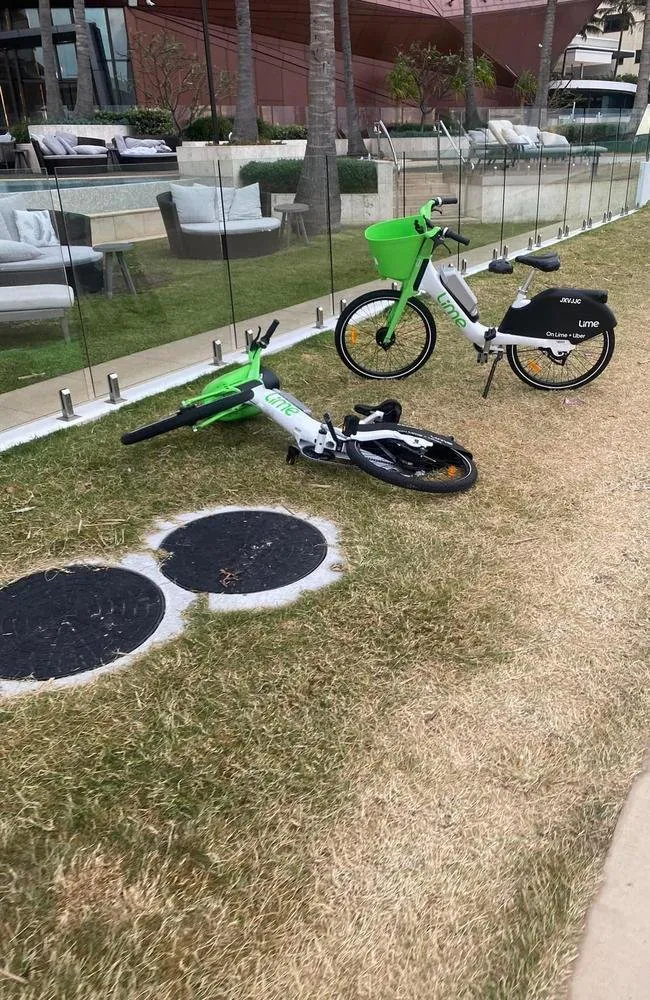
Despite supporting e-bikes as a sustainable transport option, Jolly said negotiations with Lime collapsed over the company’s inability to guarantee that it would properly manage its customers.
“They were unable to do a contract with us that would guarantee that they would look after their dodgy customers,” he told Sunrise.
“That minority of customers on Lime e-bikes that just dumped them on the street so people with prams and wheelchairs can’t go down the footpaths.”
The City of Yarra has been flooded with complaints about dumped bikes, with around 100 formal complaints lodged over the six-year trial. However, Jolly claims that this figure fails to reflect the true level of community frustration.
“If I had a dollar for every photograph that a resident in Yarra sent me of a dumped e-bike, I’d be a rich man,” he said.
The council’s concerns go beyond mere aesthetics, with dumped bikes creating obstacles for pedestrians, particularly those who use wheelchairs and mobility scooters or push prams. Jolly has proposed a “three strikes and you’re out” policy, which would permanently ban riders who repeatedly dump bikes in inappropriate locations.
However, Lime refused to adopt the measure, leading the council to question the company’s commitment to responsible business practices.
So, what does this mean for Australia? As cities grapple with the challenges of shared mobility, the debate over public safety and accessibility is set to intensify.
Security analysts say that the issue of dumped bikes highlights the need for greater accountability from private companies operating in public spaces. “Businesses must take responsibility for their customers’ actions,” one analyst noted.
“If they fail to do so, they risk damaging not only their reputation but also the communities they serve.”
Law enforcement insiders warn that the proliferation of shared e-bikes has created new challenges for authorities, from managing reckless riders to dealing with the aftermath of dumped bikes.
“It’s a complex issue that requires a coordinated approach from governments, private companies, and the community,” one insider said.
As the City of Yarra moves forward without Lime, it remains to be seen whether other councils will follow suit. One thing is clear, however: the debate over shared mobility is far from over.
With cities across Australia set to face similar challenges, the need for effective solutions has never been more pressing.
Industry observers believe that the introduction of designated parking zones and rider surcharges, as seen in New South Wales, may be a step in the right direction.
However, Jolly argues that the financial burden should fall on operators, not users. “I don’t think users should be paying for this,” he said.
“I think the company should be paying for it.”
Analysis: What This Means for Australia
The City of Yarra’s decision to axe its shared e-bike program with Lime has significant implications for Australia’s approach to shared mobility. As cities grapple with the challenges of public safety and accessibility, the need for effective solutions has never been more pressing.
The debate over who should bear the financial burden of managing shared e-bikes – operators or users – is set to intensify, with industry observers warning that the proliferation of shared mobility will only continue to grow.
As the Australian government considers its approach to shared mobility, it must weigh the benefits of sustainable transport options against the need for public safety and accessibility.
One thing is clear: the status quo is no longer tenable. With cities across Australia set to face similar challenges, the need for effective solutions has never been more pressing.
e-bikes shared mobility public safety accessibility City of Yarra Lime New South Wales Government