
Giant Earthworms: The Hidden Monsters of South Australia’s Soil
- Ecologist Kristen Messenger has spent 30 years tracking giant earthworm sightings across South Australia, despite the species not being formally recognised in the state.
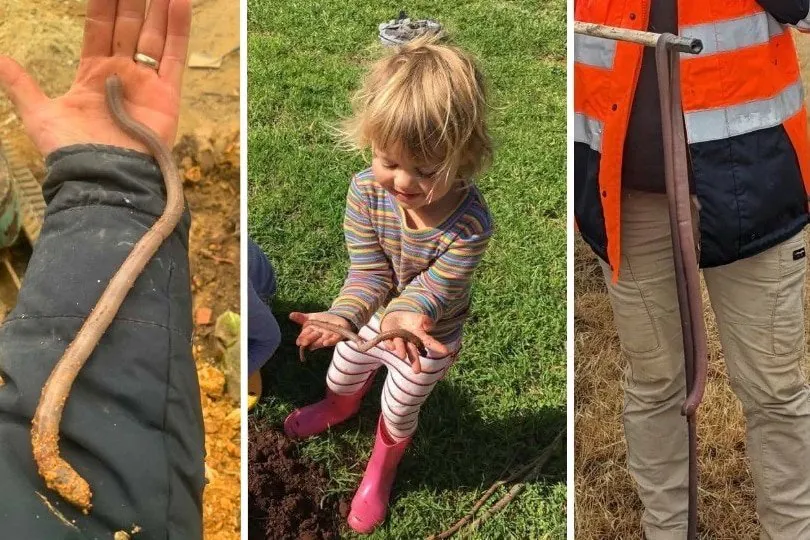
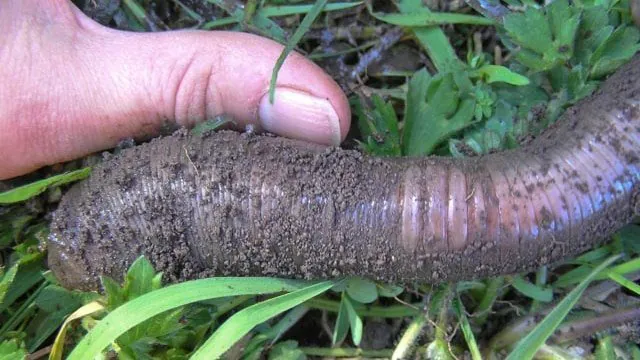
- Worms as long as 2 metres and as thick as a garden hose have been reported in semi-arid regions like the Flinders Ranges.
- Experts believe the giant earthworms may be an “almost certainly new” species, but recognition requires research and publication in a scientific paper.
Deep in the heart of South Australia’s semi-arid regions, a mysterious creature has been hiding in plain sight.
For 30 years, ecologist Kristen Messenger has been tracking sightings of giant earthworms, some of which have been reported to be as long as 2 metres and as thick as a garden hose.
Despite the enormity of these creatures, they remain unrecognised in the state, and experts believe they may be an entirely new species.
As an ecologist, Messenger is no stranger to receiving outlandish claims from the public. However, when it comes to the giant earthworms, she’s convinced that there’s truth to the tales.
“As an ecologist, you get a lot of people telling you things that can’t be true or that are probably a bit exaggerated,” she says.
“But then I found a few of the giant earthworms myself, and I had the photos to prove it.” Messenger’s reports have come from all around the state, although they’re concentrated in semi-arid regions like the Flinders Ranges.
South Australia is home to one recognised species of larger earthworm, the Giant Mount Lofty Earthworm, which was identified in 1887. However, Messenger’s findings suggest that there may be other, as-yet-undiscovered species lurking beneath the soil.
CSIRO visiting scientist and environmental consultant Geoff Dyne agrees, saying that some of the big worms found in South Australia are “almost certainly new” species. “We haven’t got any records really in those more arid regions,” Dr Dyne says.
“So anything that we come across that’s unusual and apparently not in the right sort of habitat, you … have a good chance of being an undiscovered or new species.”
So, why have these giant earthworms gone undiscovered for so long? According to Dr Dyne, it’s partly due to South Australia’s environment.
“South Australia has always been thought to be pretty depauperate as far as earthworm populations are concerned, because it is one of the driest states,” he says.
Messenger adds that the worms’ elusive and hidden nature has also contributed to their lack of recognition. “They’re hiding down in the soil, they’re doing all this incredible work, and no one sees them doing it.
They’re out of sight, out of mind.”
However, recent heavy rains may lead to daytime sightings of the giant earthworms.
“The only time you’ll see them in the day is if the soil is so saturated that it’s reached absolute saturation point, and then they have to come up because they’ll drown,” Messenger explains.
This could provide a unique opportunity for scientists to study the creatures and potentially discover new species.
Analysis: What This Means for Australia
The discovery of giant earthworms in South Australia has significant implications for the country’s ecosystem and biodiversity. As Dr Dyne notes, “We have our fair share of giant earthworms in Australia, but the trouble is that they’re rarely seen.
There are doubtless more that we don’t know about.
We need to know more about what we actually have before we lose it.” The loss of these creatures could have a ripple effect throughout the ecosystem, highlighting the importance of conservation efforts.
Furthermore, the discovery of new species can also have economic and social consequences. For example, the recognition of the giant earthworms could lead to increased tourism and eco-tourism in the regions where they’re found.
Additionally, the discovery could also have implications for agriculture and land management, as the giant earthworms play a crucial role in soil health and fertility.
Security analysts say that the discovery of the giant earthworms also highlights the need for increased funding for environmental research and conservation. “We need to understand the importance of these creatures and the role they play in our ecosystem,” says one analyst.
“By investing in environmental research, we can ensure that we’re protecting our unique biodiversity and preserving our natural heritage for future generations.”