
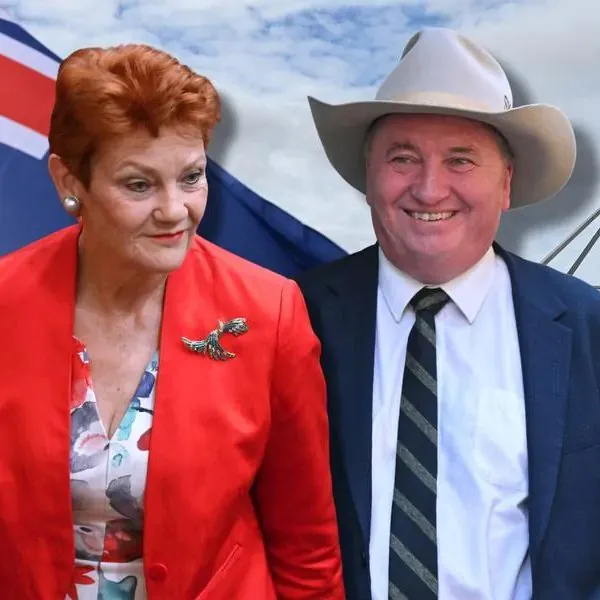
Pauline Hanson’s Desperate Attempt to Rewrite History: How One Nation’s Leader Tries to Distance Herself from Racist White Australia Policy Comments
- Pauline Hanson denies supporting the White Australia policy, despite saying it was a better system
- The One Nation leader’s comments sparked widespread backlash and accusations of racism
- Hanson’s own party members defend her, saying she was talking about migrant integration, not racism
- The heated Sunrise clash reveals deep divisions within Australian politics on immigration and multiculturalism
The latest controversy surrounding Pauline Hanson has left many Australians stunned, but not surprised. The One Nation leader’s attempt to rewrite her own comments on the White Australia policy has sparked outrage and accusations of racism.
Hanson’s denial of supporting the policy, despite her words to the contrary, has been met with fierce criticism from the Labor Party and others.
It all started when Hanson made comments during an interview with UK far-right activist Tommy Robinson, suggesting that the White Australia policy was a better system.
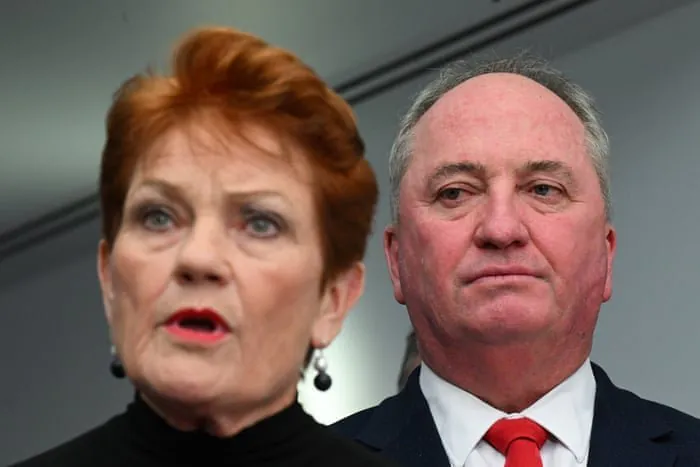
“Well, it started in 1973 with Gough Whitlam. So they opened up and got rid of the White Australia policy.
Then they started bringing in the different migrants,” Hanson said. Her words were widely shared online, prompting a backlash and accusations of racism.
In response, Hanson posted a video to social media denying she ever supported the White Australia policy. “Never ever have I advocated that, and I don’t believe in it as well,” she said.
However, her denial has been met with skepticism, with many pointing out that her words speak for themselves.
Social Services Minister Tanya Plibersek was quick to slam Hanson’s attempt to distance herself from her comments. “She very clearly said that the problem started after we got rid of the White Australia policy.
And she also backed in mass deportation and said that all of her members of Parliament support her in that call for mass deportation,” Plibersek said.
“I think it’s extraordinary that whenever she gets challenged on what she’s actually said, that we’ve all seen and we’ve all heard, she says, ‘No, no, never said it’.”
Plibersek accused Hanson of refusing to take responsibility for her own words whenever they attracted criticism.
“This is a woman who will say anything, and then when it is challenged, she wants to stick her head in the sand and pretend she never said it,” she said.
“It’s like watching a toddler do something wrong in front of you and then turn around to you and say ‘no, no never did it, wasn’t me’.”
One Nation MP Barnaby Joyce defended Hanson’s comments, saying she was referring to the importance of migrants integrating into Australian society.
“Over time, we got a section of people who didn’t want to really assimilate with Australia, didn’t work within the guardrails of Australia, and therefore we started moving away from an Australian culture to having to encompass a whole range of views, some of which are just not conducive to an egalitarian, easy-going society,” he said.
The clash got more heated as the discussion shifted to Hanson addressing the concept of mass deportations.
Joyce said there were about 75,000 people in Australia without the right to remain and argued they should be put on a plane and “sent back to where they’re supposed to be”.
Host Nat Barr noted some people had been living in Australia for “many, many years”, but Joyce said that did not change their status. “It’s a bit like saying, ‘I was involved in a crime years and years ago therefore it’s now to be forgotten’,” he said.
Analysis: What This Means for Australia
The controversy surrounding Hanson’s comments highlights deep divisions within Australian politics on immigration and multiculturalism. The debate has sparked a heated discussion about the role of immigration in shaping Australian society and the importance of migrant integration.
While some argue that Hanson’s comments are a reflection of a broader sentiment among Australians, others see them as a desperate attempt to cling to a outdated and racist ideology.
Security analysts say that the controversy surrounding Hanson’s comments is a symptom of a larger issue – the lack of a clear and cohesive immigration policy in Australia.
“The fact that Hanson can make comments like this and spark such a heated debate highlights the need for a more nuanced and informed discussion about immigration in this country,” said one analyst.
Law enforcement insiders warn that the controversy surrounding Hanson’s comments could have serious consequences for community relations and social cohesion. “When politicians make comments like this, it can create a sense of division and mistrust within the community,” said one insider.
“It’s essential that we promote a more inclusive and respectful dialogue about immigration and multiculturalism.”
Industry observers believe that the controversy surrounding Hanson’s comments is a reflection of a broader trend in Australian politics – the rise of populist and nationalist ideologies.
“Hanson’s comments are a symptom of a larger disease – the erosion of trust in institutions and the rise of populist sentiment,” said one observer.
As the debate continues, one thing is clear – the controversy surrounding Hanson’s comments has sparked a necessary discussion about the role of immigration in shaping Australian society.
While some may see her comments as a desperate attempt to rewrite history, others see them as a wake-up call for a more nuanced and informed discussion about the future of Australian multiculturalism.