
Baby Thea’s Tragic Death: Coroner’s Shocking Findings Reveal Undetected Heart Defect, Not Hospital Negligence, to Blame
- A coroner’s inquest into the death of baby Thea Flaskett has revealed her undiagnosed congenital heart defect, not hospital care, caused her tragic passing.
- The newborn’s parents had raised concerns about her post-birth care at Redcliffe Hospital, but the coroner found staff “did everything they could” to save her life.
- The inquest heard that antenatal detection rates for the condition are low, and missed detection is “not uncommon.”
- The coroner made two recommendations to improve neonatal care, including the use of live-streaming technology to enhance remote consultations.
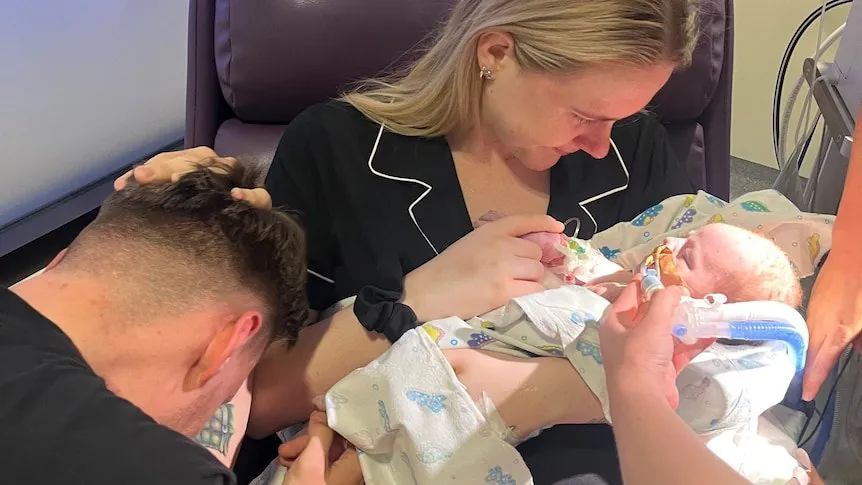
The death of baby Thea Flaskett at Redcliffe Hospital in 2023 sent shockwaves through the community, with her parents, James and Meg, left grappling with the devastating loss of their newborn daughter.
An inquest into her death has now revealed the heartbreaking truth: Thea’s undiagnosed congenital heart defect, Transposition of the Great Arteries (TGA), was the cause of her tragic passing, not any negligence on the part of hospital staff.
Thea died just four hours after she was born via vacuum-assisted delivery, with an autopsy later revealing the undetected cardiac abnormality. Her parents had raised concerns about her care post-birth, prompting the inquest into the circumstances surrounding her death.
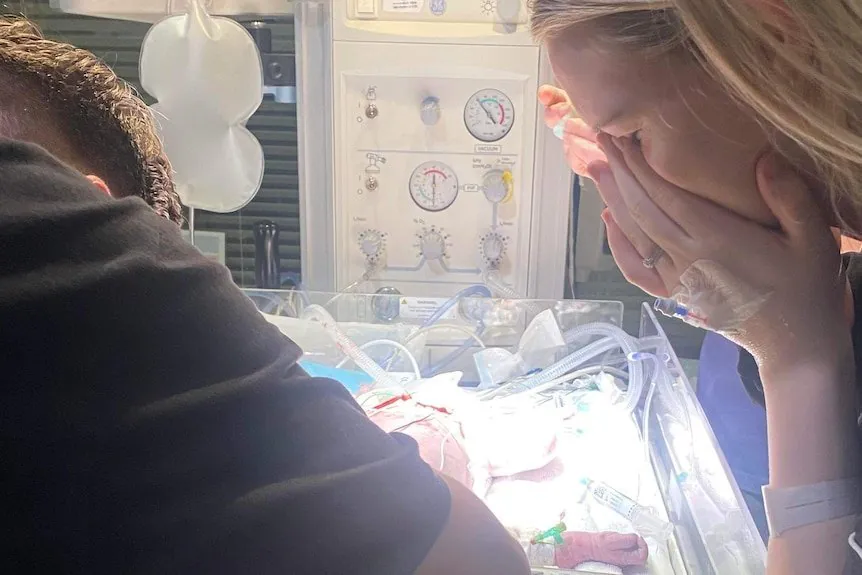
However, Deputy State Coroner Stephanie Gallagher found that staff at Redcliffe Hospital “did everything they could” to save Thea’s life, with the neonatal rescue team from the Royal Brisbane and Women’s Hospital (RBWH) also attending and providing specialist care.
So, why was Thea’s condition not detected during her mother’s pregnancy?
The inquest heard that antenatal detection rates for TGA are low, with experts explaining that missed detection is “not uncommon.” Coroner Gallagher found that the scanning during Meg’s pregnancy was done in a conventional way, adhering to prescribed methods and guidelines, and that the imaging was of sufficient quality that rescanning was not required.
However, the fact that Thea’s condition went undetected was “very clearly a consequence of the known limitations of antenatal screening.”
As the inquest delved deeper into the circumstances surrounding Thea’s death, it became clear that her underlying congenital cardiac abnormality was the determining factor in her outcome, not the standard of her post-delivery care.
Despite the best efforts of hospital staff, Thea’s condition was ultimately unsurvivable, with the coroner finding that even if it had been detected antenatally, the outcome may have been the same.
Analysis: What This Means for Australia
Thea’s tragic death highlights the complexities and limitations of antenatal screening in Australia. While advances in medical technology have significantly improved our ability to detect congenital abnormalities, there are still cases like Thea’s where conditions go undetected.
The coroner’s findings serve as a poignant reminder of the importance of continued investment in medical research and the development of more effective screening methods.
Moreover, the inquest’s recommendations to improve neonatal care, including the use of live-streaming technology to enhance remote consultations, are a step in the right direction.
As Australia’s healthcare system continues to evolve, it is crucial that we prioritize the development of innovative solutions to improve patient outcomes, particularly in high-pressure situations like neonatal resuscitation.
Security analysts say that while the coroner’s findings may provide some closure for Thea’s family, they also underscore the need for ongoing scrutiny of our healthcare system.
“The fact that Thea’s condition went undetected during her mother’s pregnancy is a stark reminder of the limitations of our current screening methods,” said one analyst.
“It’s essential that we continue to invest in medical research and development to improve patient outcomes and prevent similar tragedies in the future.”
Ultimately, Thea’s story serves as a powerful reminder of the importance of compassion, empathy, and understanding in the face of tragedy.
As we reflect on the events surrounding her death, we must also acknowledge the tireless efforts of healthcare professionals who work tirelessly to save lives every day.