
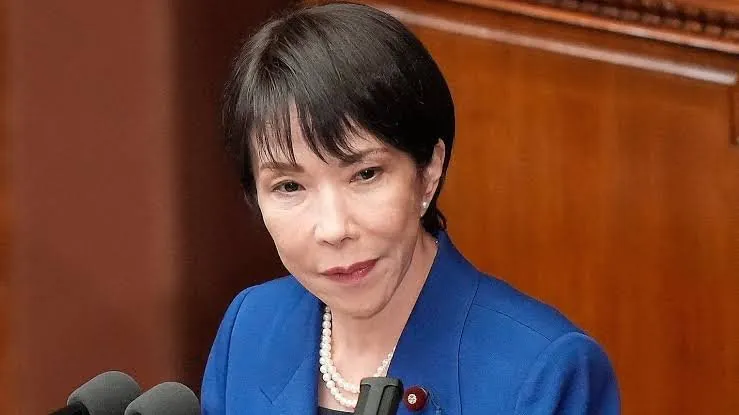
Is Japan’s Sleep-Deprived PM a Ticking Time Bomb? Sanae Takaichi’s Shocking Admission Sparks National Concern
- Japanese Prime Minister Sanae Takaichi reveals she’s been surviving on just 0-3 hours of sleep per night, sparking fears for her health and the country’s stability
- Ms Takaichi’s admission has set off a national debate about the dangers of burnout and the consequences of lack of sleep in the top job
- Experts warn that her sleep-deprived state could impair her cognitive function, emotional regulation, and decision-making abilities, posing a risk to Japan’s national security and global relationships
- Ms Takaichi’s schedule is not unique in Japan, where long working hours and extreme burnout are common, leading to hundreds of deaths each year
Japanese Prime Minister Sanae Takaichi has made a startling admission that has left her country reeling.
In a tweet about her public holiday weekend, she revealed that she managed to get a mere five hours of sleep for the first time in ages, an improvement from her usual 0-3 hours per night.
The prime minister’s sleep-deprived state has sparked a national debate about the dangers of burnout and the consequences of lack of sleep in the top job.
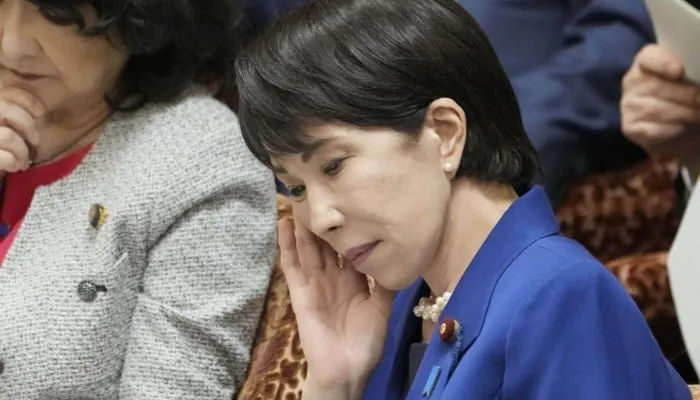
Ms Takaichi’s schedule is not unique in Japan, where long working hours and extreme burnout are common. The country has a notorious culture of overwork, with white-collar workers, known as “salarymen,” often putting in 12-hour days.
This has led to the coining of the term “karoshi,” or “death by overwork,” with hundreds of people dying each year from strokes, heart attacks, or taking their own lives as a result of overwork.
Official figures show that the problem is endemic, with reform only coming in 2022 after a doctor took his own life.
Ms Takaichi has faced criticism in the past for her demanding work schedule, which includes summoning her aides at 3am for meetings.
When she became prime minister, she announced that she would scrap her work-life balance and “work, work, work, work, work.” But experts warn that her sleep-deprived state could have serious consequences for her health and the country’s stability.
“She must feel miserable,” said Queensland Brain Institute researcher Bruno van Swinderen.
“When a brain has accrued an enormous amount of sleep debt, the first thing it wants to do is go into deep, slow wave sleep that repairs the brain.”
Dr van Swinderen explained that sleep deprivation can impair cognitive function, emotional regulation, and decision-making abilities, posing a risk to Japan’s national security and global relationships.
“It’s particularly concerning for a leader of a country, because you want to be emotionally regulated and have cognitive flexibility,” he said.
“I suspect most leaders around the world, starting with the US, are probably getting very little REM sleep and are not thinking about their sleep health in the way they should be.”
Ms Takaichi is not the first world leader whose poor sleep habits have drawn attention.
Former British prime minister Margaret Thatcher got as little as four hours sleep a night, while French President Emannuel Macron is known to get four to five hours per night and has a tendency to fire off messages to colleagues in the early hours of the morning.
Former German chancellor Angela Merkel called herself the “sleep camel” in reference to her time in office, when she would get about four hours of sleep a night.
Analysis: What This Means for Australia
Ms Takaichi’s sleep-deprived state is a wake-up call for Australia, which has its own issues with burnout and overwork. As a key player in the Asia-Pacific region, Japan’s stability and security are crucial to Australia’s interests.
If Ms Takaichi’s sleep deprivation is impairing her cognitive function and decision-making abilities, it could have serious consequences for Japan’s relationships with its allies, including Australia.
Security analysts say that Ms Takaichi’s sleep-deprived state could also pose a risk to Japan’s national security, particularly in the face of growing tensions with China.
“A leader who is not well-rested is more likely to make impulsive decisions, which could have serious consequences for regional stability,” said one analyst.
Law enforcement insiders warn that Ms Takaichi’s schedule could also make her more vulnerable to security threats, particularly if she is not able to think clearly and make rational decisions.
Industry observers believe that Ms Takaichi’s admission could be a turning point for Japan, highlighting the need for greater support for leaders and a cultural shift away from the country’s notorious work culture.
“This is a wake-up call for Japan to prioritize the health and wellbeing of its leaders,” said one observer. “If Ms Takaichi is not taking care of herself, how can she be expected to make decisions that affect the entire country?”