
Electric Storm: China’s Sudden Domination of Australia’s Car Market Spells Trouble for Japan, Europe, and America
- A record-breaking shipment of 5,000 Chinese-made electric vehicles arrives in Australia, signaling a seismic shift in the global auto industry.
- BYD, a Chinese automobile giant, narrows the sales gap with leader Toyota, threatening to become Australia’s most popular vehicle brand.
- The sudden rise of Chinese EVs leaves Japan, Europe, and America struggling to keep up, with Toyota and Volkswagen facing significant declines in sales.
- Experts warn that the world’s automobile establishment has been caught napping, with China’s strategic policy and investments in EV technology giving it a competitive edge.
The arrival of the BYD Zhengzhou, a purpose-built LNG-powered bulk carrier, at the Port of Melbourne in June marked a turning point in Australia’s car market.
On board were 5,000 newly built electric vehicles, the largest-ever single EV shipment to Australia.
This record-breaking delivery is a symbol of China’s rapid rise to dominance in the global auto industry, leaving Japan, Europe, and America struggling to keep up.

The shipment came at a time when momentum for EVs was building, with Tesla leading the charge. However, Australians had remained skeptical about the design and build quality of Chinese-made automobiles.
That’s no longer the case.
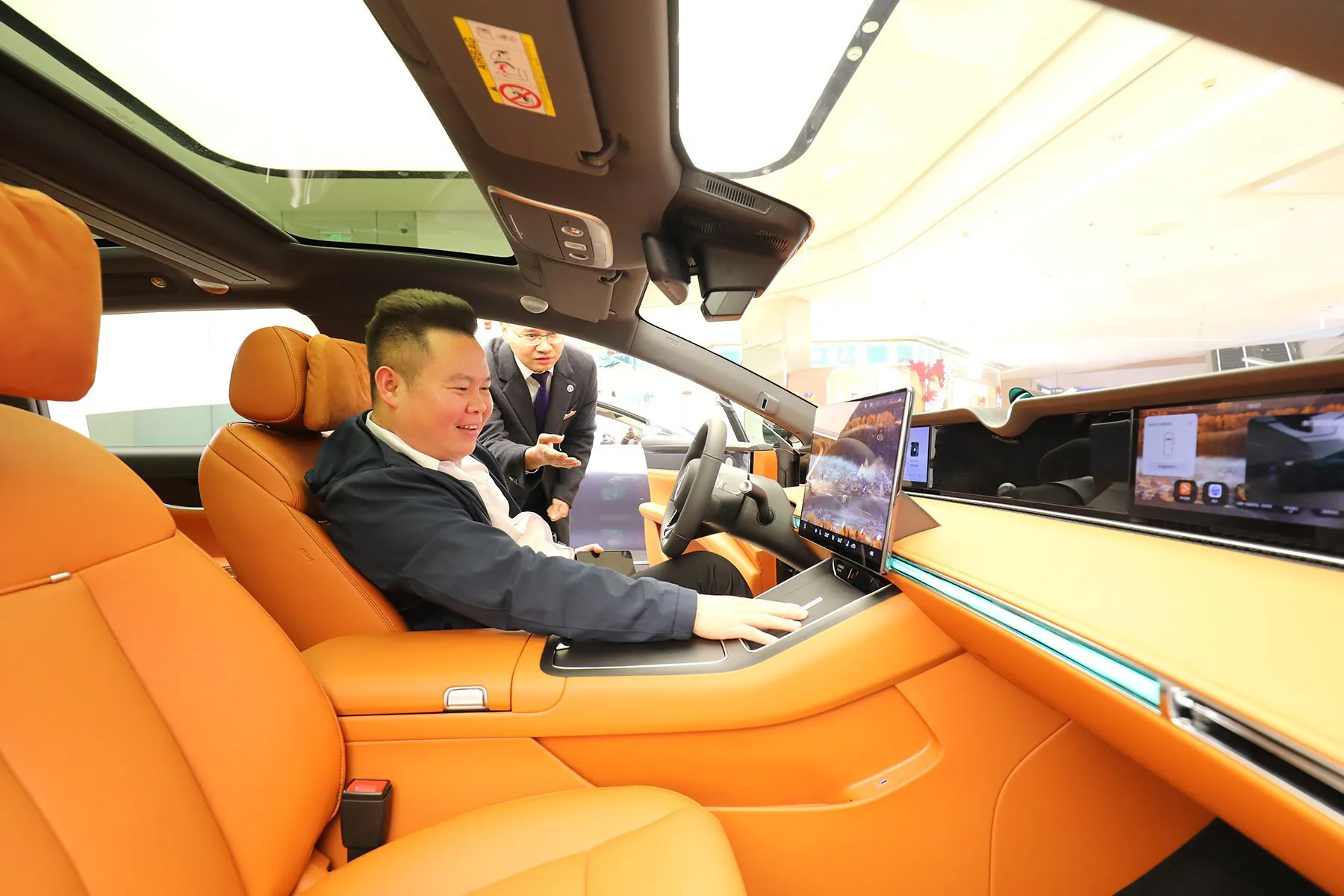
In the space of just a year, BYD has quickly narrowed the sales gap with leader Toyota, and is on the cusp of becoming the country’s most popular vehicle brand.
Riz Akhtar, the founder of research group carloop, is a testament to the changing times. “I’m driving one right now,” he says, referring to his BYD vehicle.
“It costs around $40,000.
It’s quiet, it’s comfortable, drives well and is loaded with technology.” The equivalent Japanese- or European-built vehicle would be more than 25% more expensive, he notes.
In the decades following World War II, Australians drove locally made American cars. However, with the decline of the Australian auto industry, Japanese cars, led by Toyota, captured the passenger car market.
But their positions are crumbling, with both losing ground as Chinese EVs – cheap and loaded with technology – bound ahead.
Analysis: What This Means for Australia
The sudden rise of Chinese EVs in Australia has significant implications for the country’s car market. With the global auto industry in a state of flux, Australia is an important litmus test for consumer taste.
The fact that Chinese EVs are gaining traction in Australia suggests that they will likely do well in other countries.
Security analysts say that China’s dominance in the EV market raises concerns about the country’s growing influence in the global auto industry. “China’s strategic policy and investments in EV technology have given it a competitive edge,” says one analyst.
“This could have significant implications for Australia’s national security, particularly in terms of our reliance on imported oil and our relationship with China.”
Law enforcement insiders warn that the rise of Chinese EVs also raises concerns about the potential for intellectual property theft and cyber espionage. “As China’s influence in the global auto industry grows, so too does the risk of IP theft and cyber attacks,” says one insider.
Industry observers believe that the sudden rise of Chinese EVs is a wake-up call for Australia’s car industry.
“The fact that Chinese EVs are gaining traction in Australia suggests that our car industry needs to adapt quickly to changing consumer preferences,” says one observer.
The global auto industry is suddenly in a panic. Toyota vice-chairman Koji Sato has called for greater cooperation between Japanese producers in a desperate bid to streamline production and lower costs.
But it’s too little too late, according to Akhtar, especially in Australia. “They have no product in the pipeline,” he says.
China’s EV dominance is no accident.
It forged a strategic policy as far back as 2000, poured cash and financial incentives into the project in 2009, and encouraged battery firms such as BYD and others to shift into automobiles.
Driving the initiative was a desire to reduce China’s reliance on imported oil, which made it captive to foreign powers, and reduce pollution.
But like many of its programs, China’s EV strategy has been almost too successful.
It now produces far more cars than it can consume, which has tightened profit margins at home and forced producers to shift into export markets aggressively.
The losses for American manufacturers have been staggering.
In the past two years, Ford, Buick, Dodge, Jeep, Honda, Nissan, and Acura have scrapped a series of US-built SUVs, pick-ups, and passenger cars.
The Trump government’s removal of Biden-era tax credits and tailpipe emissions standards are the root cause. Almost all have retreated to thirsty ICE pick-ups and SUVs.
High petrol prices are driving EV sales around the world, with the leading international authority predicting 30% of all new cars sold this year will be electric.
But America has all but abandoned them, now building less than 5% of global EVs, while China accounts for more than 75%.
Given the pioneering role that Elon Musk’s Tesla played in building high-end EVs, the shift has been nothing short of remarkable. Tesla still holds an exalted place in the world of electric cars.
But the technological edge that stood it apart from the competition is narrowing, while the cost of buying one has widened considerably.