
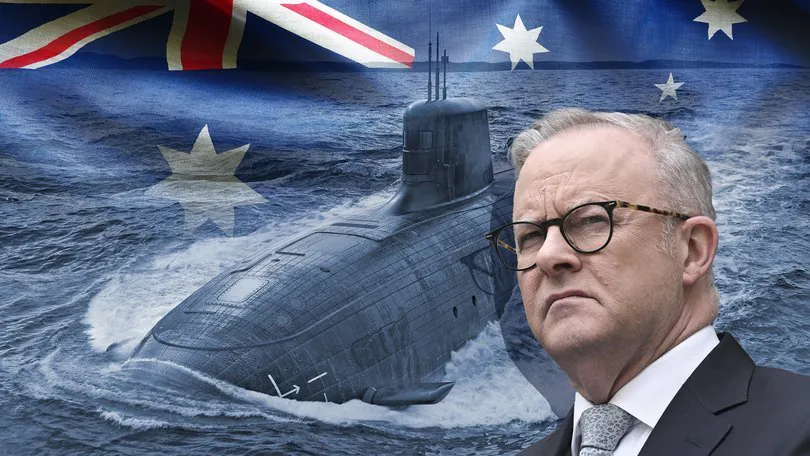
Australia’s Nuclear Submarine Dream Takes Shape: $4.6 Billion Boost to Adelaide Shipyard Sparks Hope for AUKUS Future
- Australia’s nuclear submarine ambitions have received a massive $4.6 billion injection, taking the total investment in the Osborne Naval Shipyard to a staggering $8.5 billion.
- The cash influx will fuel ongoing construction and development activities, solidifying Adelaide’s position as a hub for Australia’s future submarine fleet.
- Despite concerns over delays and budget blowouts, Deputy Prime Minister Richard Marles insists the AUKUS project is on track, with the first nuclear-powered submarines set to be built in the coming years.
- The project has sparked hopes of a jobs bonanza, with up to 1,100 workers currently employed at the shipyard and thousands more expected to join in the future.
The Osborne Naval Shipyard in Adelaide is abuzz with activity as the Australian government announces a massive $4.6 billion injection into the site. The cash boost brings the total investment to $8.5 billion, cementing the shipyard’s position as a critical component of Australia’s nuclear submarine ambitions.
The news is a significant shot in the arm for the AUKUS project, which has faced intense scrutiny over delays and budget concerns.
Deputy Prime Minister Richard Marles and South Australian Premier Peter Malinauskas will hold a press conference at the Fabrication Hall to reveal the details of the investment.

The pair will outline how the funds will be used to drive ongoing construction and development activities, paving the way for the construction of Australia’s future submarine fleet.
The project is expected to create thousands of jobs and stimulate local industry, with approximately 1,100 workers currently employed at the shipyard.
At the heart of the AUKUS deal is Australia’s acquisition of eight nuclear-powered submarines. The agreement includes the purchase of three second-hand Virginia-class submarines from the United States, with the option to buy up to two more.
The remaining five submarines will be next-generation SSN-AUKUS vessels, built at the Osborne Naval Shipyard. The project has sparked intense debate, with critics questioning the feasibility and cost of the deal.
However, Marles remains bullish, insisting that AUKUS is on track and will deliver significant benefits for Australia.
So, why is this project so crucial for Australia? The answer lies in the country’s strategic interests and the rapidly shifting global landscape.
As tensions rise in the Indo-Pacific region, Australia’s military capabilities are under intense scrutiny. The acquisition of nuclear-powered submarines is seen as a critical component of the country’s defense strategy, providing a significant boost to its military capabilities.
However, the project also raises concerns about Australia’s ability to manage the complex and sensitive technology involved.
Analysis: What This Means for Australia
The AUKUS deal has significant implications for Australia’s national security, law enforcement, and economic prospects.
The acquisition of nuclear-powered submarines will undoubtedly enhance Australia’s military capabilities, but it also raises concerns about the country’s ability to manage the complex technology involved.
The project will require significant investment in infrastructure, training, and personnel, posing significant challenges for the government.
Security analysts say the AUKUS deal is a critical component of Australia’s defense strategy, providing a significant boost to its military capabilities. However, they also warn that the project poses significant risks, including the potential for delays, budget blowouts, and technological challenges.
Industry observers believe that the project will stimulate local industry and create thousands of jobs, but they also caution that the benefits may be offset by the significant costs involved.
As the project moves forward, the Australian government will face intense scrutiny over its ability to manage the complex and sensitive technology involved.
The government must ensure that the project is delivered on time and on budget, while also addressing concerns about the country’s ability to manage the nuclear technology.
The success of the project will depend on careful planning, coordination, and management, but the potential benefits for Australia’s national security and economic prospects are significant.
With the AUKUS deal set to dominate the headlines in the coming years, one thing is certain – the project will be a defining feature of Australia’s military and economic landscape for generations to come.