

Australia’s Hidden Crisis: The 8,000 Stateless People Living in Limbo and Fighting for a Home
- More than 8,000 people in Australia are living without a nationality, struggling to access education and employment.
- The Rohingya minority, denied citizenship by Myanmar’s military regime, make up the world’s largest stateless population.
- Australia’s lack of a clear definition and protection for stateless people leaves them in a desperate situation.
- Experts call for a national framework to formally identify stateless people and provide a pathway to permanent residency.
Asma Nayim Ullah’s story is one of resilience and determination.
For most of her life, she was a citizen of nowhere, a stateless person living in Australia without the rights and freedoms that come with a nationality.
Born into a Rohingya family in Myanmar, Asma’s parents were denied citizenship, and she was forced to grow up without official identity documents, limited access to education and healthcare, and the constant fear of detention and deportation.
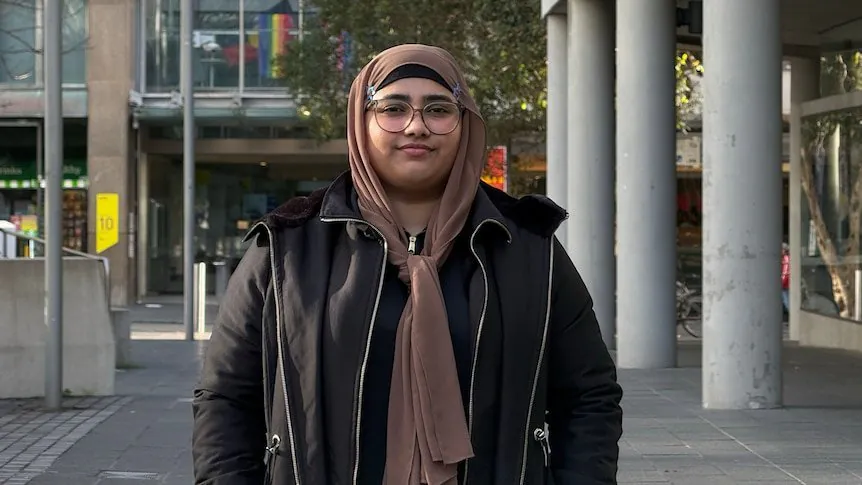
Asma’s family fled Myanmar in 2013, when she was just 10 years old, and made the perilous journey to Australia, where they were detained in an onshore facility before being resettled in Sydney.
But even in a new country, Asma’s statelessness followed her, making it impossible for her to access university as a domestic student, and forcing her to rely on bridging visas and temporary visas for years.
“I wasn’t able to study,” she said, her voice filled with emotion. “I wasn’t able to be who I wanted to be.”
The Rohingya minority, to which Asma belongs, represents the world’s largest stateless population, denied citizenship by Myanmar’s military regime since 1982.
The persecution of Rohingya has intensified in recent years, with security forces accused of mass rapes, killings, and the destruction of homes, leading to the displacement of over 1.2 million people.
Asma’s family was lucky to have made it to Australia, but their statelessness has left them in a desperate situation, struggling to make ends meet and fighting for a home.
Migration experts and refugee advocates are calling for a national framework to formally identify stateless people and provide them with a pathway to permanent residency. “We’re not talking about hundreds of thousands of people,” said Katie Robertson, associate director of the Peter McMullin Centre on Statelessness at Melbourne Law School.
“We’re talking about a relatively small population that can be addressed with a clear and coherent policy.”
Analysis: What This Means for Australia
Australia’s lack of a clear definition and protection for stateless people has serious implications for national security, law enforcement, and community safety. Stateless people are often forced to live in the shadows, without access to basic rights and services, making them vulnerable to exploitation and abuse.
By providing a pathway to permanent residency, Australia can not only fulfill its international obligations but also ensure that stateless people are able to contribute to society and build a better future for themselves and their families.
Security analysts say that stateless people can pose a security risk if left unaddressed, as they may be more susceptible to radicalization and recruitment by extremist groups.
“Stateless people are often desperate and disillusioned,” said one analyst. “If we don’t provide them with a sense of belonging and purpose, they may turn to other means to find it.”
Law enforcement insiders warn that the lack of a clear policy on statelessness can also lead to arbitrary detention and deportation, as well as the misuse of immigration powers.
“We need a clear framework that outlines the rights and responsibilities of stateless people,” said Sarah Dale, director of Refugee Advice and Casework Services. “Without it, we risk perpetuating a system that is unfair and unjust.”
Industry observers believe that addressing statelessness can also have economic benefits, as stateless people are often highly skilled and educated individuals who can contribute to the workforce.
“By providing a pathway to permanent residency, we can tap into the skills and talents of stateless people and boost our economy,” said one observer.
Asma’s story is a testament to the resilience and determination of stateless people. Despite the challenges she faced, she has gone on to graduate from university and become a successful artist and advocate for Rohingya women’s rights.
Her message is clear: statelessness is a solvable problem, and Australia has the power to make a difference. “I want to get to a position where I can make it impossible to ever make another person stateless again,” she said.
With a clear policy and a commitment to protecting stateless people, Australia can ensure that Asma’s dream becomes a reality.