
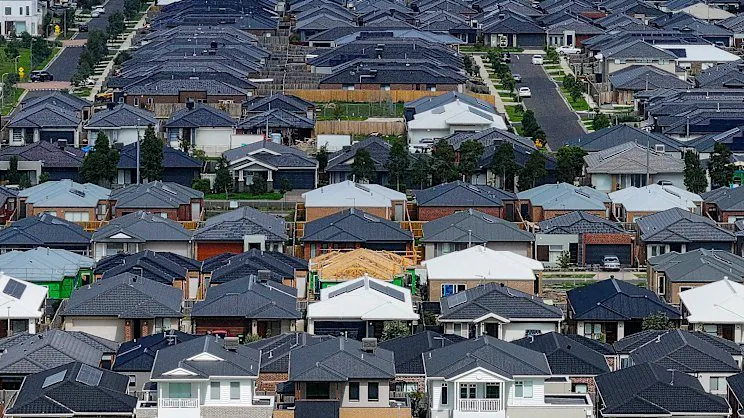
Australia’s Housing Market on Brink of ‘Sharpest Price Correction in 40 Years’: Experts Warn of 30% Crash as Market Enters ‘Perfect Storm’
- Australia’s housing market is facing its toughest test in decades, with prices falling in major cities and experts warning of a 30% crash.
- The nation’s households are among the most indebted in the world, making them vulnerable to a housing downturn.
- Australia has avoided major housing crashes in the past, but experts say this time may be different due to soaring inflation and interest rates.
- A 30% crash would wipe out years of price growth and leave many homeowners in a precarious financial position.
The Australian housing market is staring into the abyss, with prices falling in major cities and experts warning of a catastrophic 30% crash.
The nation’s households are among the most indebted in the world, making them vulnerable to a housing downturn that could have far-reaching consequences for the economy.
As the market enters a ‘perfect storm’ of soaring inflation and interest rates, experts are warning that this time may be different, and Australia’s luck may finally run out.
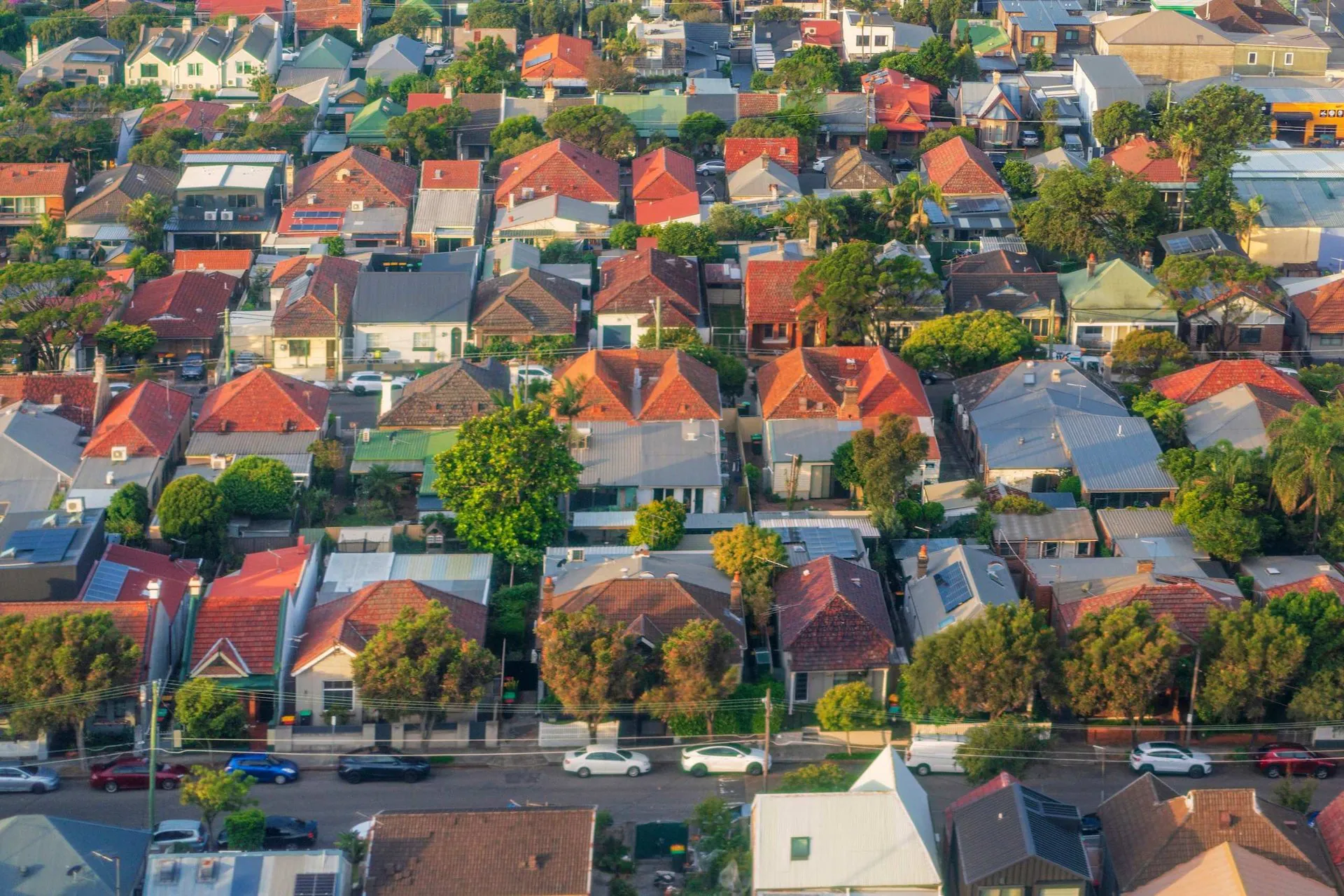
According to the latest data from property data provider Cotality, housing prices are falling on a rolling 30-day basis in Sydney, Melbourne, Adelaide, and Brisbane/Gold Coast, while price growth in Perth has moderated dramatically.
This has sparked a growing chorus of commentary from economists and commentators, who say house prices are in for a challenging road ahead.
Macrobusiness chief economist Leith van Onselen recently shared his view that there is historic downside ahead for the housing market, warning that Australia’s housing market is likely to experience its sharpest price correction in at least 40 years.
This would be a devastating blow to the nation’s households, who have become accustomed to ever-rising property values.
In the last 40 years, the largest decline in dwelling prices occurred between April 2022 and January 2023, during which time prices fell by 8.1% in the capitals and by 7.5% nationally.
But experts warn that this time may be different, with some predicting price falls of 10, 20, or even 30%.
Using data from Cotality, we explore what this would mean for the housing market, and how many years’ worth of price growth would be lost at a capital city aggregate level, regional aggregate level, and nationally.
But before we get into the numbers, it’s worth noting that Australia’s housing market has avoided the major downturns and crashes that have afflicted many other Anglosphere nations in recent decades.
However, this has come at a cost, with the nation’s households becoming increasingly indebted relative to their incomes and GDP.
In fact, according to the Reserve Bank, the house price to household income ratio in Australia is a staggering 8.9x, compared to 6.8x in the United States during the Global Financial Crisis.
So what would happen if the housing market were to experience a 30% crash? Using data from Cotality, we can see that nationally, prices would fall to $868,500, a level last seen in April 2025.
In the capital cities, the median dwelling would fall to $954,800, the same as May 2025, and in the regions to $709,600, last seen in September 2025.
This would wipe out years of price growth and leave many homeowners in a precarious financial position.
However, there is a silver lining.
According to a 2025 analysis from the Reserve Bank, around 90% of mortgage holders would remain in positive equity, even in the event of a 30% crash.
This is a far cry from the situation in the United States during the GFC, where over a quarter of mortgage holders were driven into negative equity.
But despite this, the road ahead for the nation’s housing prices is likely to be heavily defined by the actions of policymakers, both in the halls of government and within the RBA.
Historically, both have come to the rescue of the housing market in recent past, but this time inflation and circumstance may make that choice a significantly more complex and costly one.
Analysis: What This Means for Australia
The potential for a 30% crash in the housing market has significant implications for Australia’s national security and economic stability.
With households already among the most indebted in the world, a major housing downturn could lead to a surge in defaults and foreclosures, which could have a ripple effect throughout the economy.
Furthermore, the impact on consumer spending and confidence could be severe, leading to a broader economic slowdown.
Law enforcement insiders warn that a housing market crash could also lead to an increase in crime, as desperate homeowners turn to illicit activities to make ends meet.
Meanwhile, industry observers believe that a crash could lead to a surge in homelessness, as struggling households are forced to abandon their homes.
Security analysts say that the government must take decisive action to mitigate the risks of a housing market crash, including implementing policies to reduce household debt and increase affordable housing options.
However, with inflation and interest rates soaring, the options available to policymakers are limited, and the road ahead is likely to be fraught with challenges.