
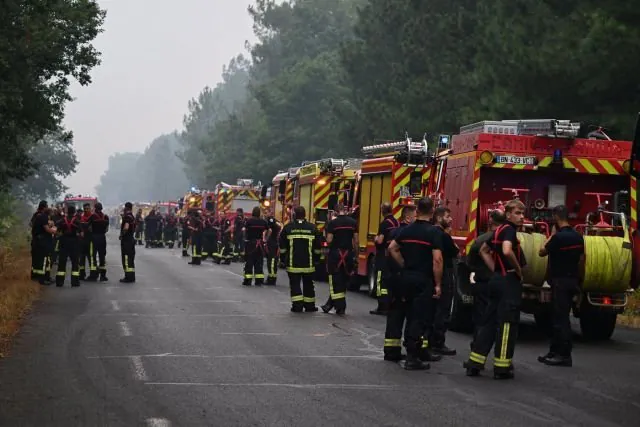
Europe Ablaze: ‘Unprecedented’ Wildfires Force Mass Evacuations as Death Toll Climbs to Three
- More than 300,000 people across France and Spain forced to flee their homes as wildfires ravage the continent
- Spain declares first-ever civil national emergency as fires encroach on Madrid, home to 6.8 million people
- France battles ‘erratic and unmanageable’ blaze in Gironde region, with two firefighters killed and dozens injured
- Scientists warn that global warming is increasing droughts and causing weather emergencies to become more extreme and frequent
The worst wildfires in European history have engulfed France and Spain, forcing more than 300,000 people to evacuate their homes and claiming at least three lives.
The infernos have whipped up whirlwinds, scorched parts of France, and threatened to merge into a single massive blaze just kilometers from Madrid.
The unprecedented disaster has prompted both countries to declare emergencies, with Spain’s government calling it a “complex” situation and France’s Prime Minister saying the fires are a level “never before seen.”
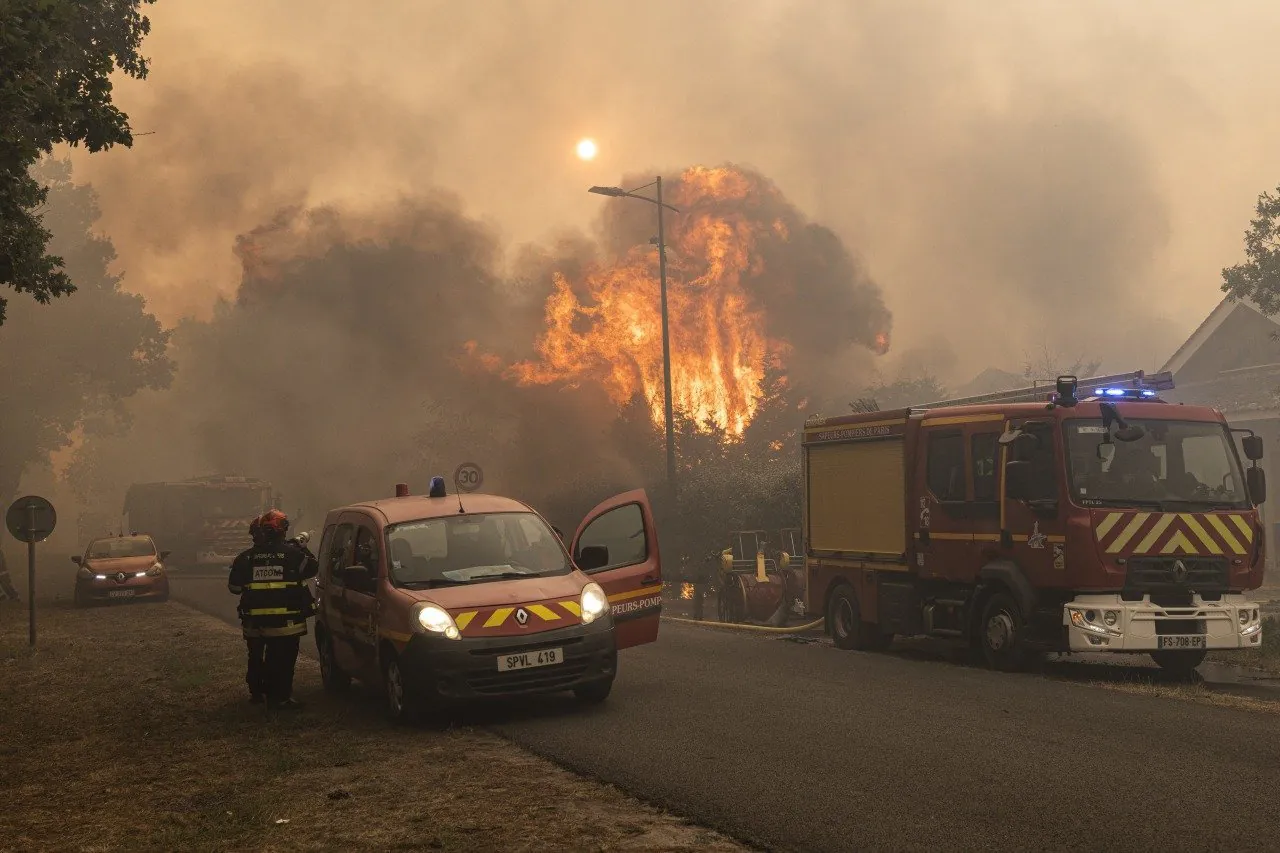
The crisis began on Saturday, with officials in both countries suggesting the intensity of the blazes had lessened. However, by evening, they were ordering more sweeping evacuations as the fire in the Gironde region of south-western France regained intensity.
The fire had created “its own winds — complete with whirlwinds,” firefighter Captain Nicolas Braz said, describing it as “erratic and unmanageable.” France’s Prime Minister Sébastien Lecornu described the fires as unprecedented, saying “our priority is clear: protecting human lives.”
The Gironde region, which includes the popular wine region of Bordeaux, has been particularly hard hit, with 197,000 people initially evacuated and a further 55,000 ordered to leave late on Saturday.
The total evacuated from Gironde alone topped 200,000, authorities said.
French authorities have deployed 1,500 soldiers and 1,700 security personnel to help firefighters near Bordeaux, and an A400M military transport aircraft has joined the fleet of smaller planes already dousing flames.
Spain’s government has declared a national emergency, with roughly 70,000 people forced to flee from villages west of Madrid. The Spanish Interior Ministry announced a series of new evacuations, including for parts of the province of Toledo south-west of the Spanish capital.
It is the first time Spain has declared a civil-protection national emergency, whereas constitutional national emergencies have been declared four times since Spain’s current constitution came into force in 1978.
Scientists say global warming is increasing droughts and causing weather emergencies to become more extreme and frequent.
Europe is the fastest-warming continent due to climate change, and more than 150 million Europeans are sweltering in “extreme heat,” which scientists say has been the worst the continent has ever recorded.
Analysis: What This Means for Australia
The devastating wildfires in Europe serve as a stark reminder of the growing threat of climate-related disasters. As the world grapples with the consequences of global warming, Australia must take heed and prepare for its own extreme weather events.
The country’s authorities must review their emergency response plans and ensure that they are equipped to deal with the increasing frequency and severity of natural disasters.
Furthermore, the Australian government must prioritize climate action, investing in renewable energy and reducing carbon emissions to mitigate the effects of climate change.
Security analysts say that the wildfires in Europe demonstrate the importance of international cooperation in responding to global threats.
The deployment of aerial assets from across Europe to aid overwhelmed brigades in Spain and France highlights the need for countries to work together to share resources and expertise in times of crisis.
Australia must continue to engage with its international partners to develop strategies for addressing the global challenges posed by climate change.
Law enforcement insiders warn that the evacuation of hundreds of thousands of people across Europe could have significant implications for public safety.
The displacement of large numbers of people can create social and economic challenges, and authorities must be prepared to address these issues in the aftermath of the disaster.
In Australia, emergency services must be equipped to respond to similar scenarios, with a focus on community outreach and support.
Industry observers believe that the wildfires in Europe will have significant economic consequences, particularly for the tourism and agriculture sectors. The destruction of infrastructure and property will require significant investment to repair, and the impact on local businesses will be felt for months to come.
In Australia, the government must consider the economic implications of climate-related disasters and develop strategies to support affected industries and communities.
As the situation in Europe continues to unfold, Australia must take note of the lessons being learned. The country must prioritize climate action, invest in emergency preparedness, and develop strategies for addressing the global challenges posed by climate change.
Only by working together can we hope to mitigate the effects of these devastating disasters and build a safer, more resilient future.