
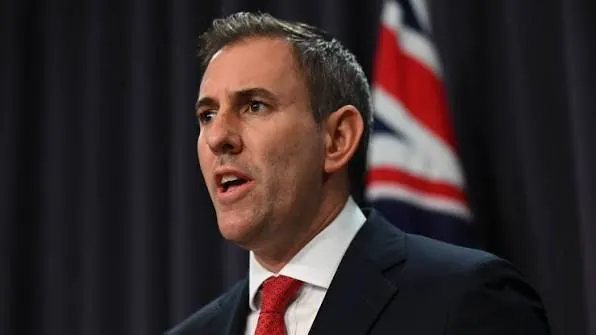
Boom or Bust? Treasurer Jim Chalmers’ Claims of Business Boom Under Fire as Experts Warn of ‘Artificial’ Trend
- Treasurer Jim Chalmers’ boasts of a business boom in Australia have been met with skepticism from experts, who claim the trend is ‘artificial’ and driven by tax restructuring.
- Despite a record number of new business registrations, experts warn that the surge may be due to individuals and companies seeking to avoid Labor’s new tax hikes.
- The Treasury’s claims of a business boom have been labelled ‘incredibly irresponsible’ by veteran investor Geoff Wilson, who believes the trend is purely a tax minimisation strategy.
- Experts warn that the changes to capital gains tax and negative gearing will unfairly disadvantage investors and drive money away from growth companies.
The Treasurer’s claims of a business boom in Australia have been met with stunned reactions from experts, who claim the trend is ‘artificial’ and driven by tax restructuring.
Despite a record number of new business registrations, experts warn that the surge may be due to individuals and companies seeking to avoid Labor’s new tax hikes.
According to the Treasury, 44,040 new companies were registered in July, following 43,393 registrations in June. However, experts believe that this surge is not a sign of a healthy economy, but rather a result of taxpayers fleeing Labor’s new tax hikes.
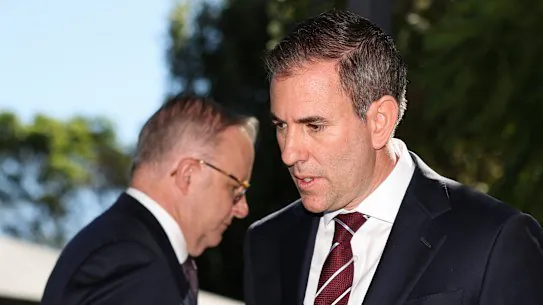
“The Treasurer is trying to gaslight the public again by saying the increase in company registrations is to do with an improving economy or more businesses being founded,” said Geoff Wilson, chairman of Wilson Asset Management.
“That is 100 per cent incorrect.
It’s people moving from trust structures, which will now be taxed at 30 per cent, to company structures, which — unless you have turnover over $50 million — are only taxed at 25 per cent.”
Experts warn that the changes to capital gains tax and negative gearing will unfairly disadvantage investors and drive money away from growth companies.
“The tax asymmetry on a portfolio of shares would drive people to set up company structures to allow them to offset the real losses against real gains,” said Wilson.
“It’s not to do with the health of the economy — the economy is getting sicker. It’s a reflection of the cost that Aussies have to bear because of the insane capital gains tax that is being imposed.”
The recent figures have also been slammed by other experts, who claim that the trend is not a sign of a healthy economy, but rather a result of individuals and companies seeking to avoid Labor’s new tax hikes.
“The sharp increase in company registrations is evidence that Australia’s tax system is changing business and investment behaviour,” said Wilson. “Rather than directing more capital into productive businesses, the legislation directs more effort into choosing the most tax-efficient legal structure.”
Analysis: What This Means for Australia
The debate over the business boom in Australia has significant implications for the country’s economy and tax system.
If the trend is indeed driven by tax restructuring, it raises questions about the effectiveness of Labor’s tax policies and the impact on small businesses and investors.
“The increase in tax — by the increased capital gains tax on Australian businesses — means fewer people are investing in Australian businesses,” said Wilson. “Small companies listed on the ASX are significantly underperforming.
Money is going away from growth companies, and ‘growth’ has now become a dirty word because of the new tax on success or aspiration that has been legislated by the current government.”
Experts warn that the changes to capital gains tax and negative gearing will have far-reaching consequences for the Australian economy.
“The tax asymmetry on a portfolio of shares would drive people to set up company structures to allow them to offset the real losses against real gains,” said Wilson.
“It’s not to do with the health of the economy — the economy is getting sicker. It’s a reflection of the cost that Aussies have to bear because of the insane capital gains tax that is being imposed.”
As the debate continues, one thing is clear: the business boom in Australia is not as clear-cut as the Treasury claims.
With experts warning of an ‘artificial’ trend driven by tax restructuring, it remains to be seen what the true impact of Labor’s tax policies will be on the Australian economy.