
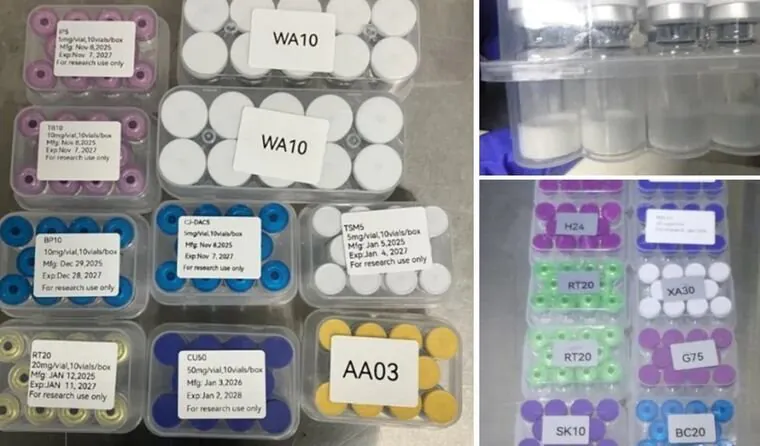
Deadly Peptide Epidemic: Australian Doctors Sound Alarm as Children as Young as 12 Are Lured into Unregulated Online Trade
- Doctors warn of a growing trend of children being offered unregulated peptides through online chat groups, with some as young as 12 being targeted
- Unregulated peptides have been found to contain unknown substances, posing serious health risks, including skin and soft tissue infections
- Young people using the products are experiencing worrying side effects, including hormonal changes and increased anger levels
- The long-term consequences of using unregulated peptides are unknown, leaving doctors unable to reassure patients of a safe recovery
The dark underbelly of the internet has become a breeding ground for a deadly peptide epidemic, with Australian doctors sounding the alarm over a growing trend of children as young as 12 being lured into the unregulated online trade.
Dr Tim Jones from the Royal Australian College of GPs has revealed that young patients have told him they’ve been offered the products through WhatsApp, with sellers promising to mail them directly to their homes.
While regulated peptides are being used legitimately for conditions like diabetes and medically assisted weight loss, doctors are increasingly concerned about the unregulated versions being peddled online.

These products have often only been studied in animals, or not tested at all, and have been found to contain unknown substances. The risks are real, with intercepted products posing serious health risks, including skin and soft tissue infections.
But it’s not just the immediate risks that are worrying doctors – it’s the unknown long-term consequences.
Because many of the unregulated products have not been adequately tested, doctors cannot confidently tell patients whether the side effects they experience will disappear once they stop using them.
Young people using the products are already experiencing worrying side effects, including hormonal changes and increased anger levels.
The warning comes just days after Isabella Boutin spoke out about the death of her brother Alex, who suffered a heart attack and died aged 33 after years of using body enhancement drugs, including peptides.
Boutin had no idea her brother was using peptides until a few years before his death, and has since become an advocate for raising awareness about the dangers of performance and image-enhancing drug use.
Analysis: What This Means for Australia
The peptide epidemic is a ticking time bomb for Australia’s youth, with the country’s medical community sounding the alarm over the growing trend. The lack of regulation and oversight in the online trade has created a Wild West scenario, where unscrupulous sellers are preying on vulnerable young people.
The consequences are devastating, with young lives being lost and families left to pick up the pieces.
Security analysts say the peptide trade is a classic example of a grey market, where the lack of regulation and oversight creates a lucrative opportunity for criminals to exploit.
“The peptide trade is a perfect storm of demand and supply, with young people desperate for a quick fix and unscrupulous sellers happy to oblige,” said one analyst.
Law enforcement insiders warn that the peptide trade is a complex issue, with multiple players and layers involved. “We’re dealing with a sophisticated network of sellers and distributors, who are using encrypted messaging apps and other tactics to evade detection,” said one insider.
Industry observers believe the peptide trade is just the tip of the iceberg, with a broader cultural issue at play. “We’re living in a society where body image and performance are increasingly valued, and young people are feeling pressure to conform,” said one observer.
“The peptide trade is a symptom of a deeper problem, and we need to address the root causes if we’re going to make a real difference.”
As the peptide epidemic continues to spread, one thing is clear: Australia’s medical community, law enforcement agencies, and policymakers must work together to tackle the issue head-on.
The lives of young Australians depend on it.