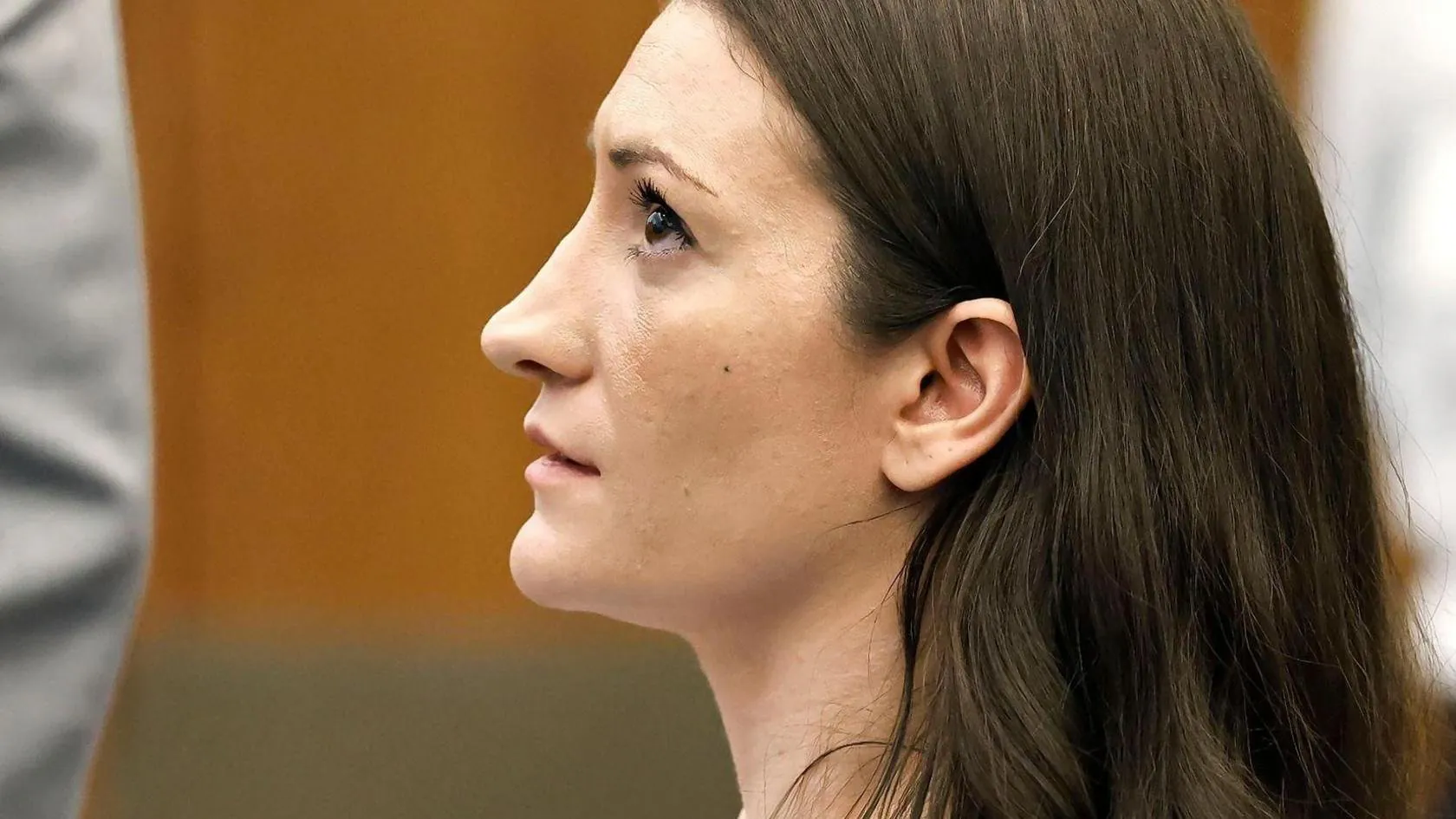
Tragic Descent into Madness: How a Loving Mother’s Desperate Cry for Help Ended in the Murder of Her Three Children
- Lindsay Clancy, a 32-year-old Massachusetts mother, was prescribed 13 psychiatric medications in five months, leading to a downward spiral of postpartum psychosis.
- Despite her desperate attempts to seek help, Clancy’s mental health continued to deteriorate, ultimately resulting in the tragic deaths of her three children.
- The case has sparked a conversation about postpartum psychosis, but experts warn that negative attention could lead to additional stigma and a lack of awareness about the condition.
- Clancy’s trial, which is ongoing, has heard from psychiatrists, doctors, first responders, and friends and family, who have unanimously described her as a loving mother whose mental health was deteriorating.
The birth of her third child, Callan, was supposed to be a joyous occasion for Lindsay Clancy. But as the days turned into weeks, her behavior became increasingly erratic.
She started waking up at 4am every day to exercise for hours, and her husband, Patrick, noticed a significant change in her mood. She was anxious, depressed, and struggling to sleep.
Despite her efforts to seek help, Clancy’s mental health continued to deteriorate, and she was prescribed a cocktail of psychiatric medications that would ultimately prove disastrous.

As the months went by, Clancy’s condition worsened. She became paranoid, hallucinating and hearing voices that told her to harm her children.
Her family and friends were shocked by her transformation, and her husband struggled to cope with the changes in her behavior. Despite his efforts to support her, Clancy’s mental health continued to spiral out of control.




On January 24, 2023, she snapped, killing her three children and attempting to take her own life.
The trial of Lindsay Clancy has sparked a national conversation about postpartum psychosis, a rare and severe mental health condition that affects approximately one in 1,000 women after giving birth.
Experts say that the condition is often misunderstood and stigmatized, and that women who experience it are often reluctant to seek help due to fear of being judged or labeled as “crazy.” Dr.
Nicole Highet, founder and executive director of the Centre of Perinatal Excellence, says that it’s essential to create awareness about the condition outside of tragedies like Clancy’s case.
“We need to educate all expectant new parents about the fact that we are all vulnerable to developing a mental health problem when having a baby, during pregnancy or the postnatal period,” Dr.
Highet said. “Your risk of developing a mental health problem at this time is higher than any other time in your life.”
Analysis: What This Means for Australia
The case of Lindsay Clancy serves as a stark reminder of the importance of prioritizing mental health support for new mothers. In Australia, postpartum psychosis affects approximately 1 in 1,000 women, and experts say that the condition is often misunderstood and stigmatized.
The case highlights the need for increased awareness and education about postpartum psychosis, as well as the importance of providing adequate support and resources for women who are struggling with their mental health.
Security analysts say that the case also raises concerns about the over-prescription of psychiatric medications, particularly in cases where patients are not adequately monitored. “The fact that Lindsay Clancy was prescribed 13 psychiatric medications in just five months is alarming,” said one expert.
“It highlights the need for more stringent regulations and monitoring of psychiatric medications, particularly in cases where patients are vulnerable to addiction or adverse reactions.”
Law enforcement insiders warn that the case also raises concerns about the ability of medical professionals to identify and respond to patients who are at risk of harming themselves or others.
“The fact that Lindsay Clancy’s mental health continued to deteriorate despite her efforts to seek help is a tragedy,” said one insider.
“It highlights the need for more training and resources for medical professionals to identify and respond to patients who are at risk of harming themselves or others.”
As the trial of Lindsay Clancy continues, it’s clear that the case will have far-reaching implications for mental health support and awareness in Australia.
It’s a stark reminder of the importance of prioritizing mental health support for new mothers and the need for increased awareness and education about postpartum psychosis.
postpartum psychosis mental health support Centre of Perinatal Excellence