
‘Maybe I Was Wrong’: Three-Metre Saltwater Crocodile Prowling Golf Course Metres From 2032 Olympic Rowing Venue Sparks Safety Fears and Political Firestorm
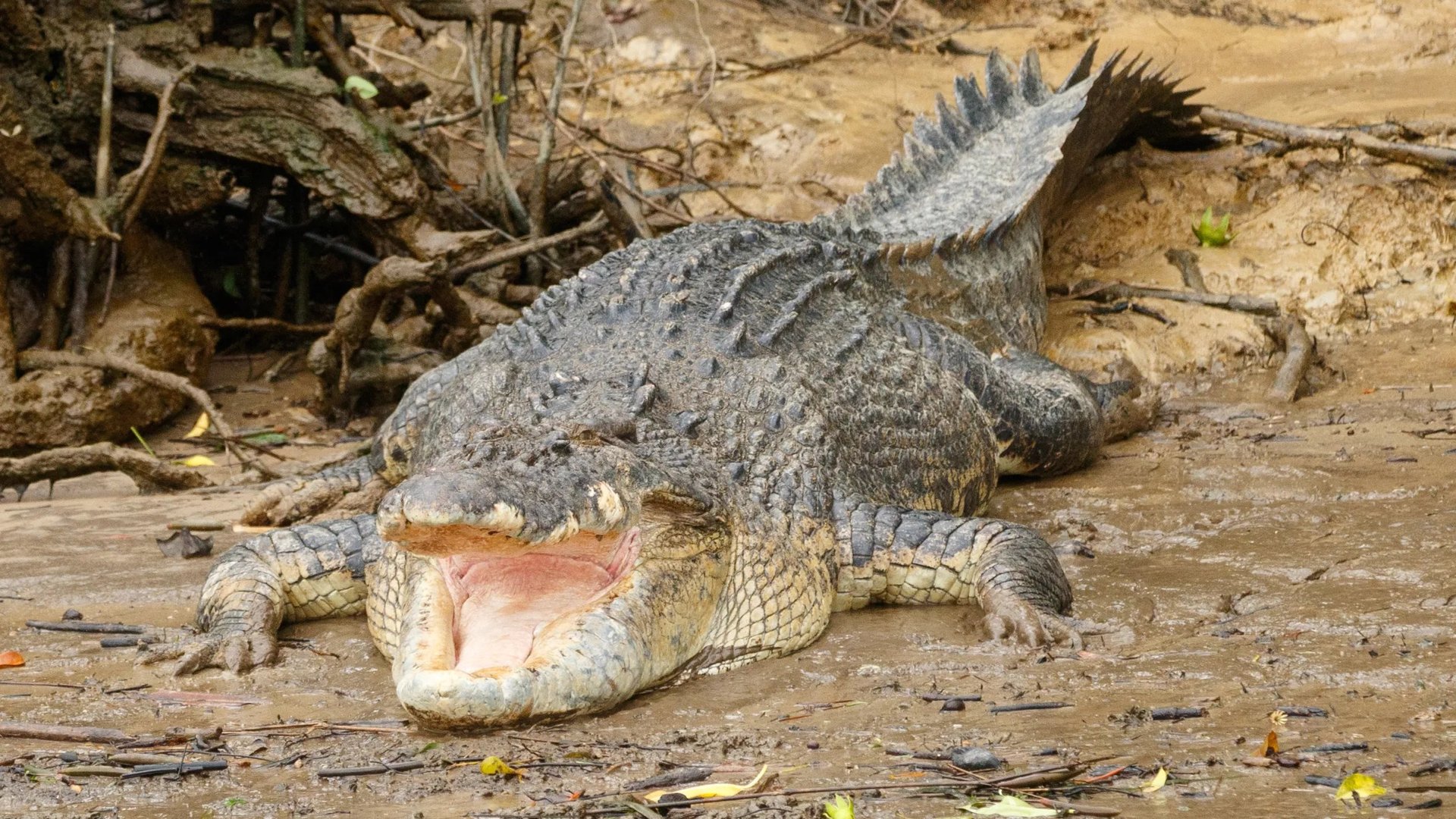
- A saltwater crocodile estimated at up to three metres long was photographed near the 11th hole of North Rockhampton Golf Club, just a few kilometres from the Fitzroy River course chosen for 2032 Olympic rowing.
- A Rowing Australia life member who once dismissed the reptile threat now admits he may have got it wrong, calling the encounter a genuine shock.
- A leading University of Queensland crocodile scientist has branded the decision to stage elite rowing in croc territory “foolish” and political.
- Premier David Crisafulli insists the venue is world-class, while the Opposition demands the secret technical report behind its selection be made public.
It was meant to be a quiet weekend round of golf. Instead, members at a central Queensland club found themselves sharing the fairway with one of the most lethal predators on Earth.
And the timing could hardly be worse for those who have staked Australia’s Olympic reputation on Rockhampton.
A saltwater crocodile, believed to measure as much as three metres, was spotted lurking near the 11th hole of North Rockhampton Golf Club, prompting the club to send an urgent warning to its members.
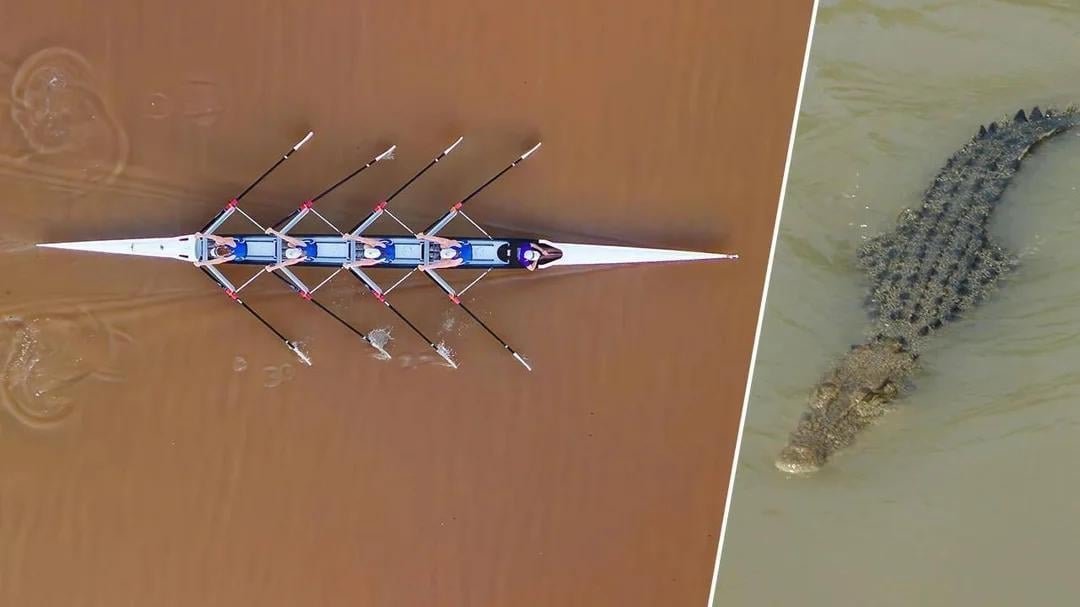
The animal was sighted within a few kilometres of the stretch of the Fitzroy River earmarked to host rowing and canoe sprint events at the 2032 Brisbane Olympic and Paralympic Games.
The appearance has reignited a bitter debate many in government had hoped was settled.
The state’s environment department, the Department of the Environment, Tourism, Science and Innovation, confirmed on Monday it had not received a formal report of the encounter but had since launched an investigation.
Wildlife officers are expected to assess whether the reptile poses a danger and whether it should be captured and relocated.
Local reptile authority John Lever, who runs the nearby Koorana Crocodile Farm, examined the photograph and judged the animal to be most likely a male. He believes rangers will need to study its behaviour before any removal decision is made.
Crucially, the area is not designated a Category A zone, the classification under which crocodiles are automatically targeted for removal.
Mr Lever said he personally felt any crocodile turning up near the future Olympic course should be dealt with, but stressed that call rests squarely with the government.
He also offered an explanation for the sudden activity.
Heavy downpours across central Queensland last week may have stirred the animal, he said, and it is currently mating season, when both males and females roam widely in search of partners.
Sightings in the Fitzroy, he noted, are hardly unusual.
That is precisely what worries critics.
The Fitzroy River has long been a proud rowing hub. State and national regattas have been staged on its waters, and Australian crews have used it for pre-Olympic training camps over many years.
But the river is also a known crocodile attacks habitat, a fact that dogged Rockhampton’s bid throughout months of fierce argument.
In September, Premier Crisafulli declared the venue had passed an independent technical assessment with flying colours, clearing it to host both rowing and canoe sprint. The announcement was meant to draw a line under the controversy.
Yet the official Queensland government sightings dashboard tells a more unsettling story.
On September 19 a saltwater crocodile was logged upstream of the rowing course, and two further sightings have since been recorded even closer to the proposed venue.
In December 2024, two more animals, roughly 2.5 metres and one metre in length, were also reported in the area.
International sporting bodies are now waiting on the next stage of venue planning, which will set out technical specifications and confirm the facilities and service standards required for 2032 Brisbane Olympics competition.
Analysis: What This Means for Australia
This is no longer simply a local wildlife story.
It is a test of whether Australia can guarantee the safety of hundreds of the world’s best athletes, officials, volunteers and spectators gathered on the banks of a river where apex predators live.
For the Rockhampton community, the stakes are enormous. Hosting Olympic events promises a once-in-a-generation injection of tourism dollars, infrastructure and global exposure for regional Queensland.
Losing the rowing to another venue would be a crushing blow to local pride and the regional economy.
But a single serious incident, whether during the Games or in the years of test events and training beforehand, could do far worse damage, both to human lives and to Australia’s standing as a safe host nation.
The episode also exposes uncomfortable questions about public transparency.
Opposition Leader Steven Miles has seized on the sighting to demand the Crisafulli government release the technical report underpinning Rockhampton’s selection, arguing it should spell out exactly how crocodile risks will be managed.
Without it, residents and rowers are being asked to take assurances on trust.
There are wider implications for wildlife management policy too. If the government expands removal zones around the venue, it may face pushback from conservationists.
If it does not, it risks being accused of gambling with safety for political convenience.
Premier Crisafulli, speaking in Hervey Bay, was quick to dismiss the alarm, pointing to decades of successful rowing on the Fitzroy as proof of its world-class credentials and praising Rockhampton as a magnificent community that would deliver the event superbly.
Not everyone shares his confidence.
Ray Ebert, a Rowing Australia life member who has long argued crocodiles were the least of the venue’s problems, made a striking admission on ABC News Breakfast.
Describing the sighting as a shock, he conceded he may have been wrong, something he pointedly noted no politician had been willing to say. He questioned whether the state government was treating the threat seriously and warned the encounter could fuel further doubts about the venue’s suitability.
Far sharper criticism came from emeritus professor Craig Franklin, a crocodile expert at the University of Queensland. He characterised the choice of the Fitzroy as a political decision rather than a common-sense one, going so far as to label it foolish.
Security analysts say that major international events increasingly require planners to account for environmental hazards alongside traditional threats, and that crocodile management around an Olympic course would demand constant surveillance, trapping programs and emergency response capability.
Law enforcement insiders warn that the public rarely appreciates how quickly a crowded riverbank can turn dangerous, and that clear, enforceable safety protocols must be published well ahead of time.
Industry observers believe international sporting federations will scrutinise the next phase of planning closely, and that Queensland’s handling of incidents like this one will shape global perceptions of its readiness.
For now, a sign at the golf club warning of crocodiles on the course stands as a stark reminder of the reality on the ground.
In the tropical north, the wildlife does not care about Olympic timetables, and with six years to go, the government’s promise of safety is about to be tested in full public view.