Australia Strikes Historic $10bn Free-Trade Deal with EU, But at What Cost to Aussie Farmers?
- After eight years of grueling negotiations, Australia and the EU have finally signed a landmark trade deal, slashing tariffs on goods going both ways.
- The agreement is worth $10bn to the Australian economy on an annual basis, but critics warn it may not be the boon for farmers that was promised.
- The deal opens up a market of around 450 million people, but Opposition trade spokesman Matt Canavan says it “doesn’t sound all that attractive right now.”
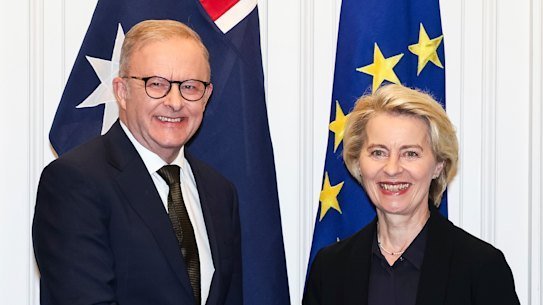
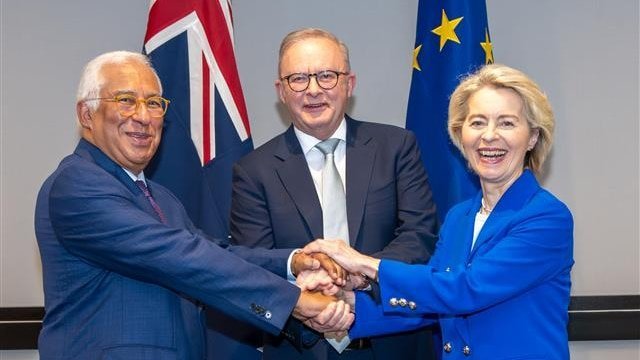
Prime Minister Anthony Albanese and European Commission President Ursula von der Leyen emerged from talks at Parliament House on Tuesday, hailing the breakthrough as a “landmark trade deal” that will “strengthen bilateral trade and investment, support economic growth, and reinforce the shared commitment of Australia and the European Union to open and rules-based trade.”
The Australia-Europe Free Trade Agreement will lower trade and investment barriers between Australia and the EU, making it easier for Australia to export to the European Union.
All Australian industrial goods exported to the European Union will become tariff-free, and Australian citizens will have more opportunities to provide their high-quality services to the European Union.
But not everyone is celebrating.
Senator Canavan, who has held his portfolio for less than a month, says he has not seen the details of the agreement, but it “doesn’t seem like we’re gonna get much.” He points to the fact that the deal may only offer a few 10,000 tonnes more of red meat access to the EU market, compared to the unlimited exports of beef, cheese, sugar, lamb, and wheat secured in the UK deal.

So, what does this mean for Australia? The deal is set to add almost $8bn to the country’s GDP, but at what cost to Aussie farmers?
Will they be forced to compete with cheaper EU imports, or will they reap the benefits of increased exports? Only time will tell.
Analysis: What This Means for Australia
Security analysts say that the deal will strengthen Australia’s economic ties with the EU, but may also increase the country’s reliance on European markets. Law enforcement insiders warn that the increased trade may also lead to an influx of counterfeit goods and illegal imports.
Industry observers believe that the deal will have a significant impact on Australia’s agricultural sector, with some farmers set to benefit from increased exports, while others may struggle to compete with cheaper EU imports.
The deal also raises questions about Australia’s national security. With the EU set to become an even more significant trading partner, will Australia’s sovereignty be compromised?
Will the country be forced to compromise on its laws and regulations to appease EU demands?
Only time will tell what the true implications of this deal will be, but one thing is certain – it marks a significant shift in Australia’s economic and trade landscape.