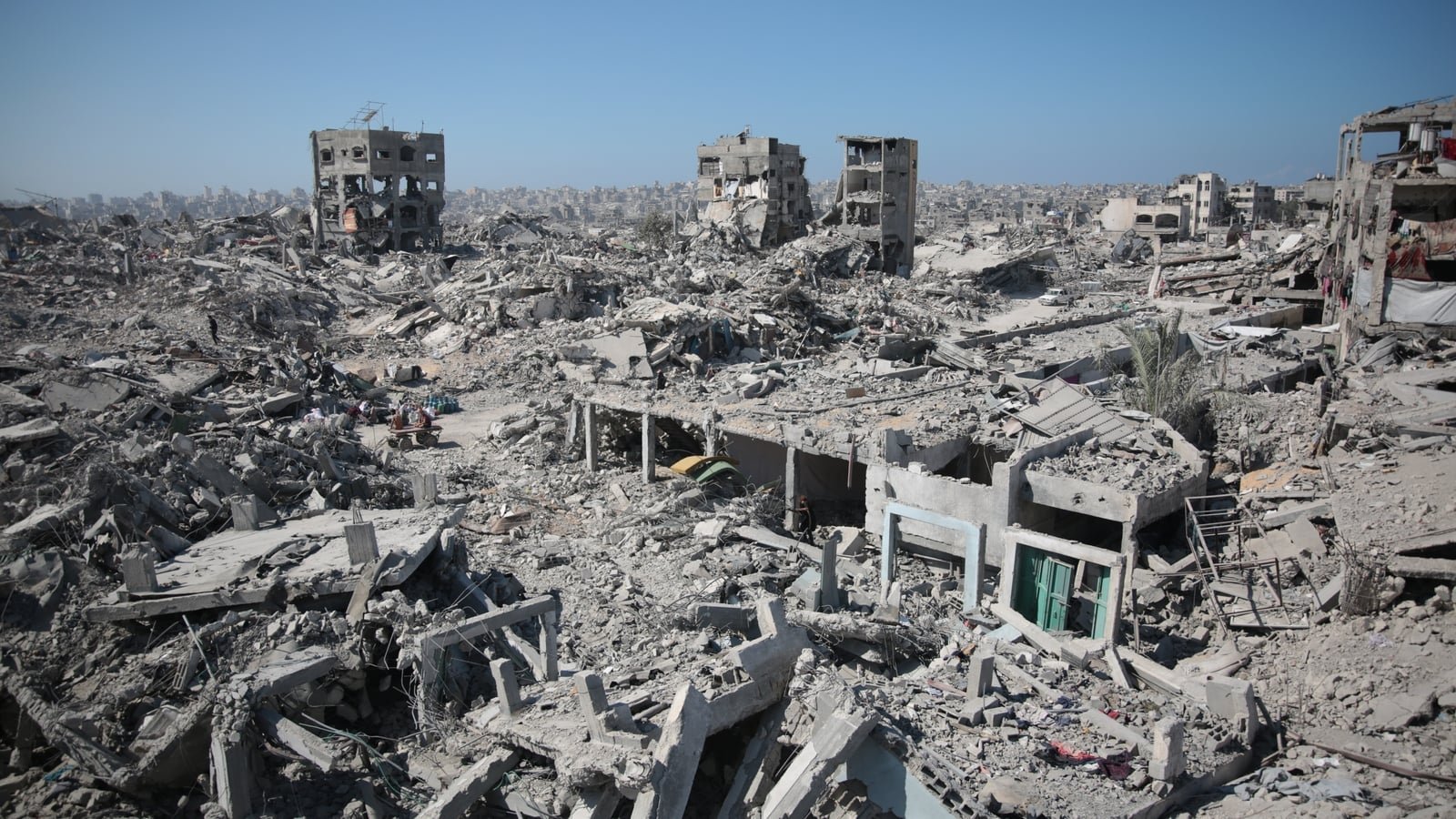
Gaza’s Devastating Reality: $99 Billion Needed for Recovery as 60% of Population Left Homeless and Living in Squalor
- A staggering 60% of Gaza’s population has been displaced, with over 1.2 million people forced to live in makeshift tents amidst squalid conditions.
- The European Union and United Nations estimate that $US71.4 billion ($99.4 billion) is needed for reconstruction over the next decade, with housing, health, education, commerce, and agriculture being the hardest-hit sectors.
- Humanitarian aid groups report that Israel has been blocking the entry of aid shipments and shelter materials, exacerbating the crisis, while Israel claims it is allowing adequate humanitarian aid into Gaza.
- The conflict has left Gaza’s health system shattered, with over 50% of hospitals non-functional, and the education sector severely damaged, with nearly all schools destroyed or damaged.
The Gaza Strip, once a thriving coastal region, has been reduced to a state of utter devastation. The recent conflict has left an estimated 60% of its population – over 1.2 million people – homeless and living in squalid conditions.
The European Union and United Nations have joined forces to assess the damage, and their report paints a dire picture of the Gaza Strip’s future.
The Gaza Rapid Damage and Needs Assessment (RDNA) report estimates that a staggering $US71.4 billion ($99.4 billion) will be needed for reconstruction over the next decade.
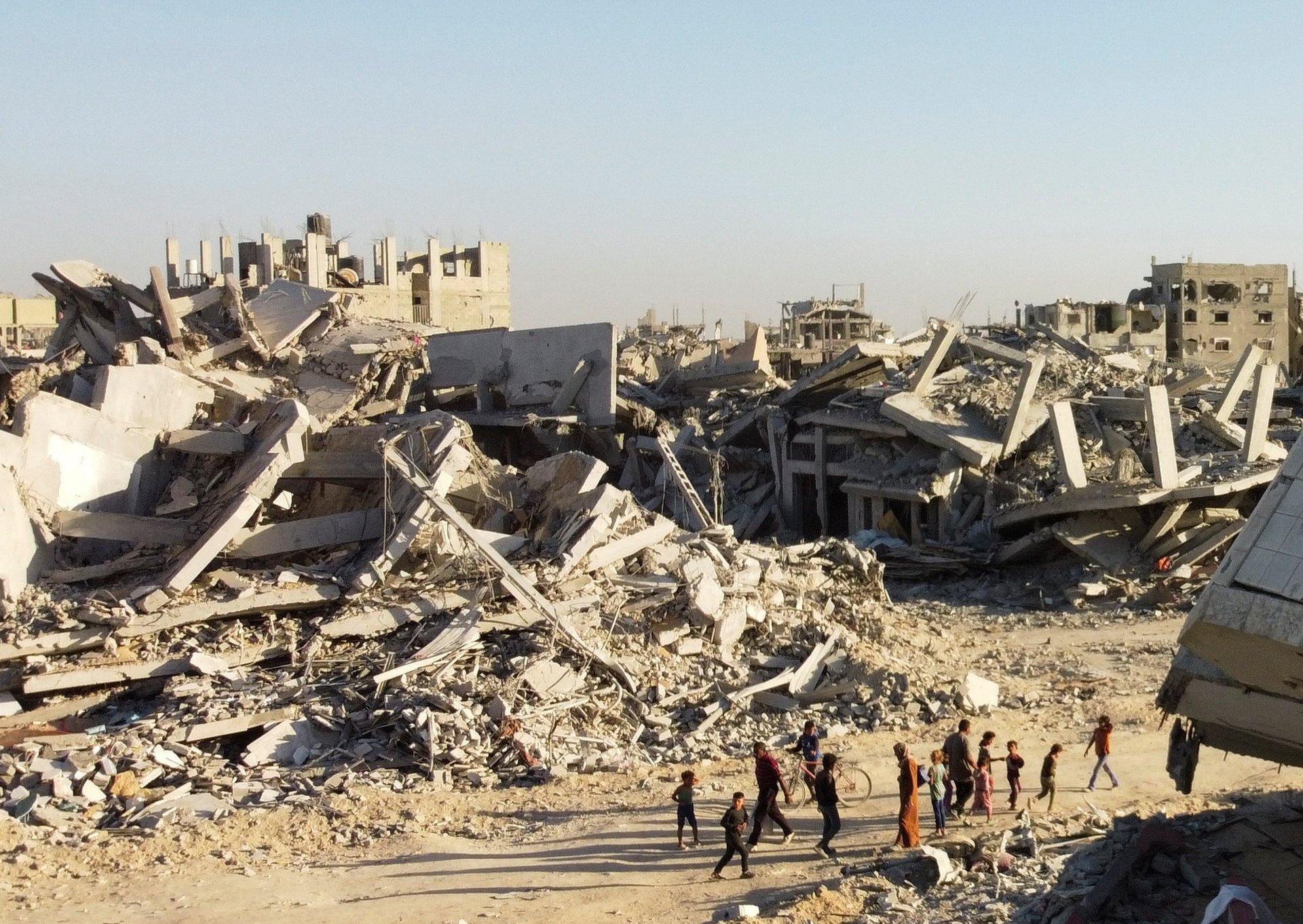
This amount is needed to rebuild the hardest-hit sectors, including housing, health, education, commerce, and agriculture. The report highlights the urgency of the situation, stating that a sustained ceasefire and adequate security are minimum conditions for recovery to begin.
However, the reality on the ground is far from meeting these conditions. Humanitarian aid groups report that Israel has been blocking the entry of aid shipments and shelter materials, exacerbating the crisis.



Israel claims it is allowing adequate humanitarian aid into Gaza, but the numbers tell a different story. The report notes that the entry of construction materials is essential for recovery, but Israel’s restrictions on these materials are hindering the process.
The conflict has also had a devastating impact on Gaza’s health system. Over 50% of hospitals are non-functional, and the remaining hospitals are overwhelmed and severely constrained.
The report estimates that $US1.39 billion is needed to rebuild the health sector, with 1,825 facilities partially or completely destroyed.
The situation is dire, with patients like Mohammed Wael Helles, a 14-year-old boy who suffered a spinal cord injury during an Israeli strike, still waiting for surgery months after the incident.
The education sector has also been severely damaged, with nearly all schools destroyed or damaged.
The report estimates that $US1.08 billion is needed to rebuild the education sector, with 728,000 children and youth left without formal schooling for two years.
The conflict has resulted in the deaths of thousands of students and many educators, leaving a generation of Palestinians without access to education.
Analysis: What This Means for Australia
The crisis in Gaza has significant implications for Australia’s foreign policy and humanitarian efforts. As a key player in the global community, Australia has a responsibility to contribute to the reconstruction efforts in Gaza.
The report’s call for a “Palestinian-led” recovery process, based on approaches that actively support the transition of governance to the Palestinian Authority, is a crucial step towards a sustainable peace.
Australia’s commitment to humanitarian aid and development is well-established, and the country has a significant role to play in supporting the international community’s efforts to rebuild Gaza.
However, the report’s findings also highlight the need for a more nuanced approach to the conflict, one that takes into account the complexities of the situation and the need for a sustained ceasefire and adequate security.
As the international community comes together to address the crisis in Gaza, Australia must be a key player in the efforts to rebuild and recover. The report’s findings are a stark reminder of the human cost of conflict and the need for a comprehensive and sustainable solution to the crisis.
Security analysts say that the crisis in Gaza is a stark reminder of the need for a comprehensive and sustainable solution to the conflict.
The report’s findings highlight the need for a sustained ceasefire and adequate security, as well as unimpeded humanitarian access and the immediate restoration of essential services.
Law enforcement insiders warn that the situation in Gaza is a powder keg waiting to ignite, with the potential for further conflict and instability in the region.
The report’s call for a “credible pathway” for the Palestinian Authority’s future governance across the entire Occupied Palestinian Territory, including Gaza, the West Bank, and East Jerusalem, is a crucial step towards a sustainable peace.
Industry observers believe that the crisis in Gaza is a significant challenge for the international community, requiring a comprehensive and coordinated response.
The report’s findings highlight the need for a sustained commitment to humanitarian aid and development, as well as a nuanced approach to the conflict that takes into account the complexities of the situation.