
Australia’s Fuel Crisis: Coalition’s $800 Million Plan to Boost Reserves Sparks Debate Over Cost and Effectiveness
- Australia’s fuel crisis deepens as the Coalition announces a plan to increase onshore fuel reserves to 60 days’ supply, but at a cost of $6 billion and an extra one cent per litre at the pump.
- The opposition’s energy security policy aims to reduce reliance on overseas supply lines, but Labor claims the plan is flawed and would add to the cost of fuel.
- Experts warn that Australia’s fuel stocks are critically low, with just 44 days’ worth of petrol, 33 days of diesel, and 30 days of jet fuel in reserve.
- The global oil crisis has exposed Australia’s vulnerability, with the Strait of Hormuz closure causing supply shocks and sparking fears of a national emergency.
The Coalition’s latest policy offering has sparked a heated debate over the cost and effectiveness of increasing Australia’s fuel reserves.
The opposition’s plan, announced by Opposition Leader Angus Taylor, aims to boost onshore fuel stocks to 60 days’ supply, but at a cost of $6 billion and an extra one cent per litre at the pump.
The move is designed to reduce Australia’s reliance on overseas supply lines and improve energy security, but Labor has slammed the plan as flawed and unnecessary.
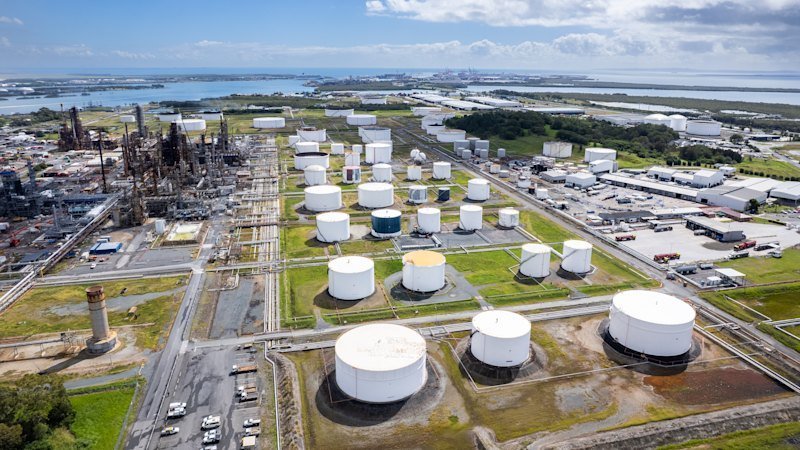
The global oil crisis has exposed Australia’s vulnerability to supply shocks, with the closure of the Strait of Hormuz causing widespread disruptions.
The country’s fuel stocks are critically low, with just 44 days’ worth of petrol, 33 days of diesel, and 30 days of jet fuel in reserve.




The Coalition claims that its plan would bring Australia closer to the 90-day storage target agreed to under International Energy Agency agreements, but Labor argues that the plan is too expensive and would add to the cost of fuel.
The Coalition’s energy security policy is the latest salvo in the ongoing debate over Australia’s fuel crisis.
The opposition claims that its plan would provide a “buffer to withstand global shocks” and ensure that Australians have access to fuel when they need it.
However, Labor has indicated that it will not support the plan, citing concerns over the cost and effectiveness of increasing fuel reserves. With the federal budget due to be released on May 12, the debate over Australia’s fuel crisis is set to intensify.
Analysis: What This Means for Australia
The Coalition’s plan to increase Australia’s fuel reserves has significant implications for national security and energy policy. The global oil crisis has exposed Australia’s vulnerability to supply shocks, and the opposition’s plan aims to address this by boosting onshore fuel stocks.
However, the plan is not without its critics, with Labor arguing that it is too expensive and would add to the cost of fuel.
As the debate over Australia’s fuel crisis continues, one thing is clear: the country’s energy security is a critical issue that requires a comprehensive and effective solution.
Security analysts say that the Coalition’s plan is a step in the right direction, but more needs to be done to address Australia’s energy security concerns.
“The plan is a good start, but it’s not enough to address the scale of the problem,” said one analyst.
“Australia needs a comprehensive energy security strategy that includes increasing fuel reserves, investing in renewable energy, and improving energy efficiency.” Law enforcement insiders warn that the fuel crisis has the potential to become a national emergency, with widespread disruptions to transportation and industry.
“The situation is critical, and we need to take immediate action to address it,” said one insider.
Industry observers believe that the Coalition’s plan is a positive step towards improving Australia’s energy security, but more needs to be done to support the development of new refineries and infrastructure.
“The plan is a good start, but we need to see more investment in new refineries and infrastructure to support the growth of the industry,” said one observer.
As the debate over Australia’s fuel crisis continues, it is clear that the country’s energy security is a critical issue that requires a comprehensive and effective solution.