Homeless Crisis Escalates: New Laws Allow Council to Seize Belongings of Rough Sleepers in St Kilda, Despite Widespread Community Opposition
- City of Port Phillip introduces harsh new laws allowing council officers to confiscate personal items of homeless people, including bedding, in response to anti-social behaviour
- More than 76% of residents surveyed by council oppose the changes, citing concerns over human rights and the potential for increased trauma
- Homeless advocates and social workers warn that the laws will only exacerbate the crisis, rather than addressing the root causes of homelessness
- Victoria Police support the proposal, promising to work with council and social service providers to deliver coordinated responses, but critics argue this is just a Band-Aid solution
The streets of St Kilda, once a hub of vibrant nightlife and cultural activity, have become a battleground in the war on homelessness.
The City of Port Phillip’s decision to introduce harsh new laws allowing council officers to seize the personal belongings of rough sleepers, including bedding, has sparked widespread outrage and concern among the community.
The amendment, passed by a narrow margin of five votes to three, is intended to address the rising rates of crime and anti-social behaviour in the area.
However, critics argue that it is a draconian measure that will only serve to further marginalize and traumatize those already struggling to survive on the streets.
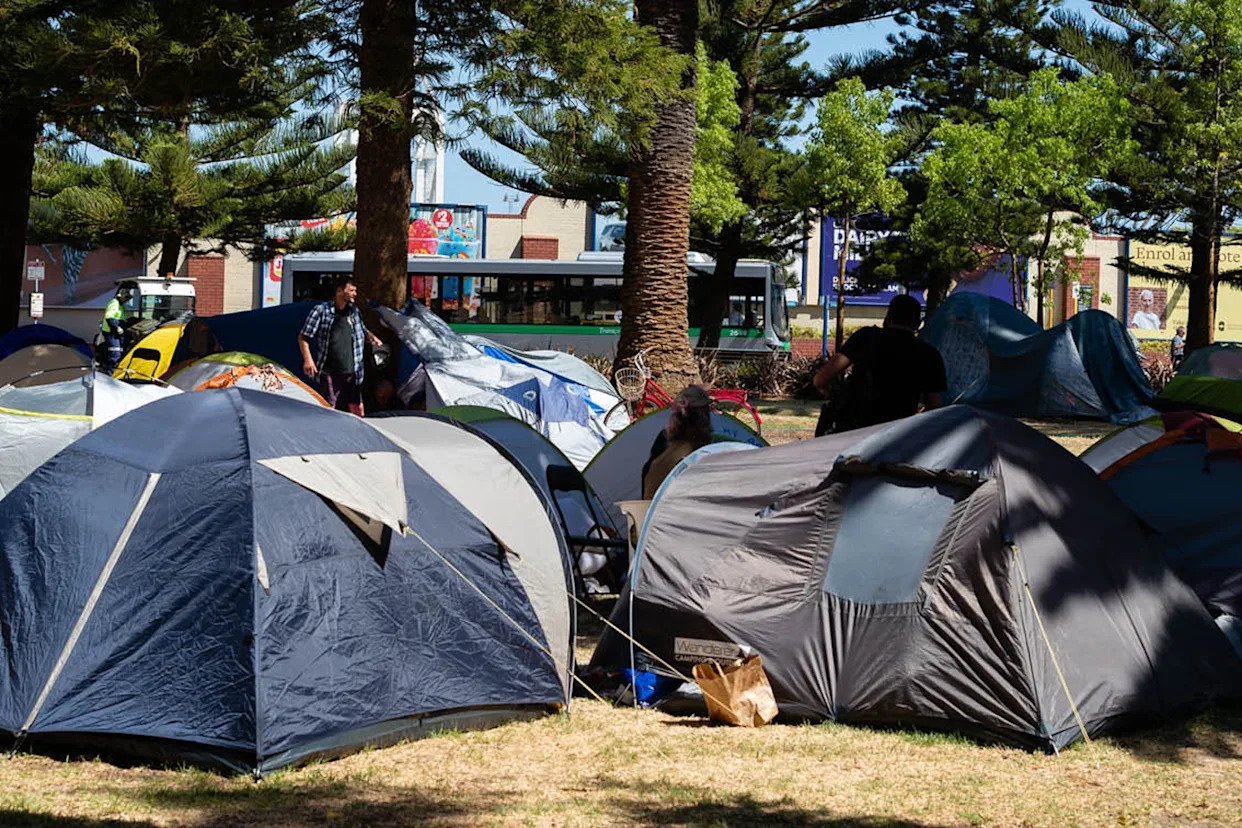
According to the council’s own survey, a staggering 76% of residents oppose the changes, citing concerns over human rights and the potential for increased trauma.



Homeless advocates and social workers have also spoken out against the laws, warning that they will only exacerbate the crisis, rather than addressing the root causes of homelessness.
The council’s report claims that the laws are necessary to address the rates of crime and improve community safety.
However, critics argue that this is a flawed approach, and that the real solution lies in providing adequate housing and support services to those in need.
As one resident, who also works as a social worker in Port Phillip, pointed out, “People don’t choose to live on the streets.
It’s due to systematic failures and the housing crisis.” She went on to describe the trauma that can be caused by removing a person’s belongings, saying, “I’ve seen how having belongings taken away from someone, everything they own, can be one of the most distressing and traumatic events a person can go through.”
Deborah Di Natale, CEO of the Council to Homeless Persons, has been a vocal critic of the laws, saying, “Policies like this dehumanise people sleeping rough.
The true anti-social behaviour is policy responses that blame people forced to live on the streets rather than offer them the support they desperately need.”
Victoria Police has expressed support for the proposal, promising to work with council and social service providers to deliver coordinated responses.
However, critics argue that this is just a Band-Aid solution, and that the real problem lies in the lack of funding and resources for homelessness services.
According to a report from the Council to Homeless Persons, Victoria needs almost five times as many outreach field workers to support people who are sleeping rough.
The report also highlights the need for increased funding for housing and support services, rather than relying on punitive measures to address the crisis.
Analysis: What This Means for Australia
The introduction of these laws in Port Phillip is part of a growing trend of councils across Australia using punitive measures to address homelessness. However, this approach is not only inhumane, but also ineffective.
As the City of Moreton Bay’s experience in Queensland has shown, such laws can lead to human rights violations and costly legal battles.
As a nation, we need to take a step back and re-examine our approach to homelessness. Rather than relying on punitive measures, we need to invest in housing and support services that address the root causes of homelessness.
This includes providing affordable housing, mental health services, and job training programs.
Only by taking a compassionate and evidence-based approach can we hope to address the homelessness crisis and ensure that everyone has access to a safe and secure place to call home.
As one resident pointed out, “Homelessness is not just a problem for the individual, it’s a problem for the community. We need to work together to find a solution that prioritizes compassion and dignity, rather than punishment and marginalization.”
It’s time for our politicians to take a stand and commit to real action on homelessness. The people of Port Phillip, and indeed all of Australia, deserve better than a system that prioritizes punishment over people.