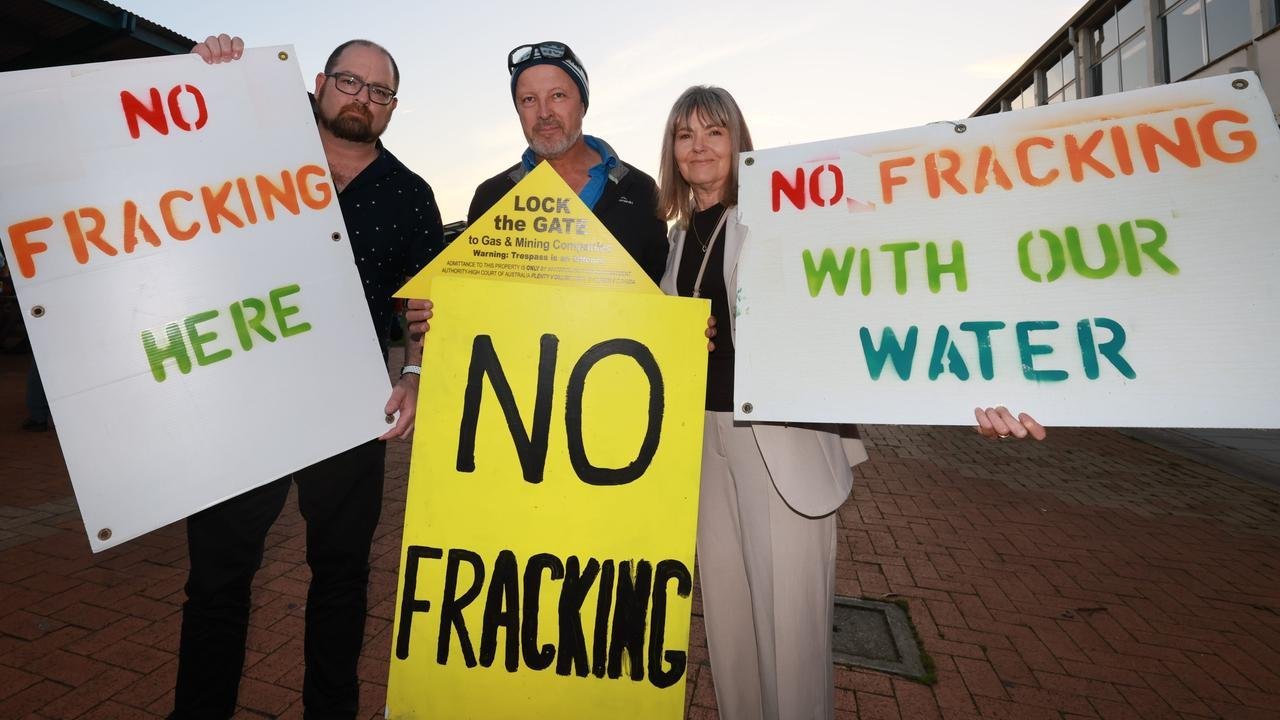
Fracking Frenzy: SA’s Controversial Plan to Drill into Prime Agricultural Land Sparks Outrage as Liberals and One Nation Vow to Block Legislation
- SA Premier Peter Malinauskas’s bid to lift a 10-year moratorium on fracking in the state’s South East two years early has been met with fierce opposition
- The Liberals and One Nation have vowed to block the legislation, rendering it all but dead in the water
- Fracking will still be permitted in the region from 2028, but the decision has sparked concerns over the impact on prime agricultural land and water tables
- The move has been slammed by local residents, who fear the risks of fracking outweigh any potential benefits
The South Australian government’s plan to lift a ban on fracking in the state’s South East has sparked outrage among local residents and opposition parties, with the Liberals and One Nation vowing to block the legislation.
The move, which would have allowed fracking to commence two years earlier than scheduled, has been met with fierce resistance from those concerned about the impact on prime agricultural land and water tables.
At the heart of the controversy is the Labor government’s bid to repeal a 10-year moratorium on fracking, which was introduced by the Liberal Marshall government in 2018.

The moratorium was put in place following community concerns over the use of hydraulic fracture stimulation, or fracking, in the region. Despite this, Premier Peter Malinauskas has argued that gas supply is a key reason for lifting the ban, sparking accusations of hypocrisy from the opposition.
The backlash against the plan has been swift and severe, with over 200 people attending a state government community cabinet meeting in Mount Gambier to express their opposition.


Local resident Brett Mashado was among those who spoke out against fracking, saying he believed the focus should be on renewable energy. “I thought we moved on from this.
I thought renewable energy was really taking the forefront with the Labor government,” he said.
“Gas is on the back-burner, I think.”
Security analysts say the move highlights the need for a more nuanced approach to energy policy, one that balances the need for gas supply with the risks associated with fracking.
“The government needs to take a more holistic approach to energy policy, one that takes into account the concerns of local communities and the potential risks to the environment,” said one analyst.
The debate over fracking in SA’s South East is not new, with the region’s prime agricultural land and water tables at the center of the controversy.
Hydraulic fracture stimulation, or fracking, involves injecting high-pressure fluids into underground rock formations to release oil and gas.
While proponents argue that it can provide a much-needed boost to the energy sector, opponents point to the risks of contamination and the impact on local ecosystems.
The state government’s plan to lift the moratorium has been slammed by the Liberals and One Nation, who argue that it would put prime agricultural land at risk.
“We’ve got no interest in punching holes in prime agricultural land,” said One Nation Upper House MP Carlos Quaremba. Liberal frontbencher Nicola Centofanti echoed these sentiments, saying her party “understood the importance of the prime agricultural land down in the South East”.
Analysis: What This Means for AustraliaThe controversy over fracking in SA’s South East highlights the need for a more nuanced approach to energy policy, one that balances the need for gas supply with the risks associated with fracking.
The decision by the Liberals and One Nation to block the legislation may be a victory for local residents, but it also raises questions about the future of Australia’s energy sector.
As the country seeks to reduce its reliance on fossil fuels and transition to renewable energy, the role of gas in the energy mix remains a contentious issue.
Law enforcement insiders warn that the decision to block the legislation may also have implications for the state’s economic development, particularly in the regions where fracking is proposed.
“The decision to block the legislation may have far-reaching consequences for the state’s economy, particularly in the regions where fracking is proposed,” said one insider.
“It may also have implications for the state’s ability to attract investment and create jobs.”
Industry observers believe that the controversy over fracking in SA’s South East is a symptom of a broader issue – the need for a more cohesive national energy policy.
“The debate over fracking in SA’s South East highlights the need for a more cohesive national energy policy, one that takes into account the concerns of local communities and the potential risks to the environment,” said one observer.
As the debate over fracking continues to rage, one thing is clear – the need for a more nuanced approach to energy policy that balances the need for gas supply with the risks associated with fracking.
The decision by the Liberals and One Nation to block the legislation may be a victory for local residents, but it also raises questions about the future of Australia’s energy sector and the role of gas in the energy mix.
The South Australian government’s plan to lift a ban on fracking in the state’s South East has sparked outrage among local residents and opposition parties, with the Liberals and One Nation vowing to block the legislation. The move, which would have allowed fracking to commence two years earlier than scheduled, has been met with fierce resistance from those concerned about the impact on prime agricultural land and water tables.
At the heart of the controversy is the Labor government’s bid to repeal a 10-year moratorium on fracking, which was introduced by the Liberal Marshall government in 2018. The moratorium was put in place following community concerns over the use of hydraulic fracture stimulation, or fracking, in the region. Despite this, Premier Peter Malinauskas has argued that gas supply is a key reason for lifting the ban, sparking accusations of hypocrisy from the opposition.
The backlash against the plan has been swift and severe, with over 200 people attending a state government community cabinet meeting in Mount Gambier to express their opposition. Local resident Brett Mashado was among those who spoke out against fracking, saying he believed the focus should be on renewable energy. “I thought we moved on from this. I thought renewable energy was really taking the forefront with the Labor government,” he said. “Gas is on the back-burner, I think.”
Security analysts say the move highlights the need for a more nuanced approach to energy policy, one that balances the need for gas supply with the risks associated with fracking. “The government needs to take a more holistic approach to energy policy, one that takes into account the concerns of local communities and the potential risks to the environment,” said one analyst.
The debate over fracking in SA’s South East is not new, with the region’s prime agricultural land and water tables at the center of the controversy. Hydraulic fracture stimulation, or fracking, involves injecting high-pressure fluids into underground rock formations to release oil and gas. While proponents argue that it can provide a much-needed boost to the energy sector, opponents point to the risks of contamination and the impact on local ecosystems.
The state government’s plan to lift the moratorium has been slammed by the Liberals and One Nation, who argue that it would put prime agricultural land at risk. “We’ve got no interest in punching holes in prime agricultural land,” said One Nation Upper House MP Carlos Quaremba. Liberal frontbencher Nicola Centofanti echoed these sentiments, saying her party “understood the importance of the prime agricultural land down in the South East”.
The controversy over fracking in SA’s South East highlights the need for a more nuanced approach to energy policy, one that balances the need for gas supply with the risks associated with fracking. The decision by the Liberals and One Nation to block the legislation may be a victory for local residents, but it also raises questions about the future of Australia’s energy sector. As the country seeks to reduce its reliance on fossil fuels and transition to renewable energy, the role of gas in the energy mix remains a contentious issue.
Law enforcement insiders warn that the decision to block the legislation may also have implications for the state’s economic development, particularly in the regions where fracking is proposed. “The decision to block the legislation may have far-reaching consequences for the state’s economy, particularly in the regions where fracking is proposed,” said one insider. “It may also have implications for the state’s ability to attract investment and create jobs.”
Industry observers believe that the controversy over fracking in SA’s South East is a symptom of a broader issue – the need for a more cohesive national energy policy. “The debate over fracking in SA’s South East highlights the need for a more cohesive national energy policy, one that takes into account the concerns of local communities and the potential risks to the environment,” said one observer.
As the debate over fracking continues to rage, one thing is clear – the need for a more nuanced approach to energy policy that balances the need for gas supply with the risks associated with fracking. The decision by the Liberals and One Nation to block the legislation may be a victory for local residents, but it also raises questions about the future of Australia’s energy sector and the role of gas in the energy mix.