‘Disgraceful’ Snub: Territory and Federal Ministers Fail to Attend Crisis Meeting on Aboriginal Housing Crisis as NT Residents Struggle with Overcrowding and Sub-Standard Living Conditions
- NT’s peak body for Aboriginal housing slams ministers for skipping conference on housing crisis, calling it ‘disgraceful’
- Aboriginal Housing and Homelands Conference brings together remote residents and organisations to discuss solutions to overcrowding and sub-standard housing
- NT Government commits funding for only 12 months, leaving uncertainty about the future of homelands and 10,000 residents
- Residents in Tennant Creek live in overcrowded makeshift shelters with no running water or electricity, waiting up to a decade for a home
The Northern Territory’s Aboriginal housing crisis has reached a boiling point, with overcrowding, sub-standard living conditions, and a severe lack of funding threatening the livelihoods of thousands of residents.
Despite the gravity of the situation, ministers from both the Territory and federal governments failed to attend a major conference aimed at addressing these issues, sparking outrage from the NT’s peak body for Aboriginal housing.
The Aboriginal Housing and Homelands Conference, held in Darwin this week, brought together remote residents, Aboriginal organisations, and experts to discuss solutions to the Territory’s housing crisis.

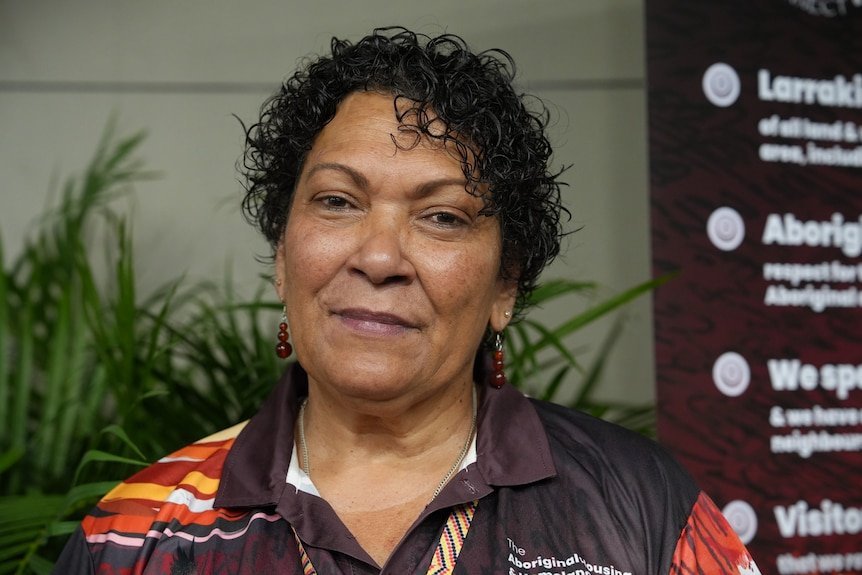
However, the absence of ministers from both levels of government was noticeable, with Aboriginal Housing NT chief executive Leeanne Caton slamming their decision as ‘disgraceful’.
Ms Caton revealed that all responsible ministers declined invitations to the conference, despite the NT’s housing situation being ‘in crisis’.



The conference comes just weeks after a national spotlight on the complexities and challenges surrounding housing conditions in Aboriginal town camps, and a landmark legal case alleging the NT government has failed to provide climate-safe public housing.
The NT Government has committed funding for the next 12 months, but Ms Caton warned that this was not enough to address the long-term needs of homelands residents.
‘We’re talking 10,000 people – where are they going to go if they don’t get funded after this 12-month mark?’ she asked. ‘The stock is ageing, the infrastructure is ageing, and they can’t get basic service provision.’
Rosslyn Weetra from the Kalano Community Association, who lives in the Katherine town camp, spoke about the struggles faced by families in her community. ‘There’s huge overcrowding within our houses at the moment,’ she said.
‘They’ve got little ones of their own and they’d like to live on their own and grow their little ones up like we did.’
Victorian Senator Lidia Thorpe, who was a replacement keynote speaker at the conference, called for a ‘real commitment’ to housing in the NT. ‘Stop and listen to the people in this room about solutions and start resourcing them,’ she told the audience.
‘I do show up and I’ll put my body on the line.’
Analysis: What This Means for Australia
The NT’s Aboriginal housing crisis has significant implications for Australia, particularly in terms of national security and law enforcement.
The lack of adequate housing and basic services in remote communities can lead to social unrest, increased crime rates, and a higher risk of domestic violence.
Furthermore, the failure of governments to address these issues can perpetuate the cycle of disadvantage and inequality faced by Aboriginal and Torres Strait Islander peoples.
Security analysts say that the NT’s housing crisis is a ticking time bomb, with the potential to destabilise entire communities and put a strain on already stretched law enforcement resources.
‘The NT Government’s failure to provide adequate housing and services to remote communities is a recipe for disaster,’ said one analyst. ‘It’s only a matter of time before we see a major incident or riot in one of these communities.’
Law enforcement insiders warn that the NT’s housing crisis is also having a profound impact on the mental health and wellbeing of residents, particularly children.
‘We’re seeing a growing number of young people being taken into care due to neglect and abuse, all because their families are living in sub-standard conditions,’ said one insider.
Industry observers believe that the NT Government’s commitment to funding for only 12 months is a Band-Aid solution that fails to address the long-term needs of homelands residents.
‘The NT Government needs to take a more holistic approach to addressing the housing crisis, one that involves significant investment in infrastructure, services, and community development,’ said one observer.
As the NT’s Aboriginal housing crisis continues to escalate, it’s clear that urgent action is needed to address the root causes of this issue.
The failure of governments to attend the Aboriginal Housing and Homelands Conference is a slap in the face to the thousands of residents struggling to access basic services and safe housing.
It’s time for real commitment and action, not just words.