Australia’s Gaza Flotilla Detainees Return Home to Tell Harrowing Tales of Israeli Abuse
- Australian activists detained by Israel reveal shocking allegations of physical and sexual abuse while in custody
- Israel denies all abuse allegations, despite widespread condemnation and diplomatic backlash
- Australian government faces criticism for not doing enough to condemn Israel’s treatment of flotilla detainees
- Detainees call for action to address the suffering of Palestinians in Gaza and the Israeli-Palestinian conflict
The first of 11 Australian activists detained by Israel while participating in the Gaza-bound Global Sumud Flotilla has returned home, bearing harrowing tales of abuse and mistreatment at the hands of Israeli authorities.
Gemma O’Toole, a 23-year-old student, was met with applause from a crowd of friends and family at Melbourne airport on Sunday evening, but her relief at being home was tempered by the trauma she experienced during her detention.
Ms O’Toole was among hundreds of international activists aboard the flotilla, which aimed to break Israel’s naval blockade on Gaza to deliver aid.
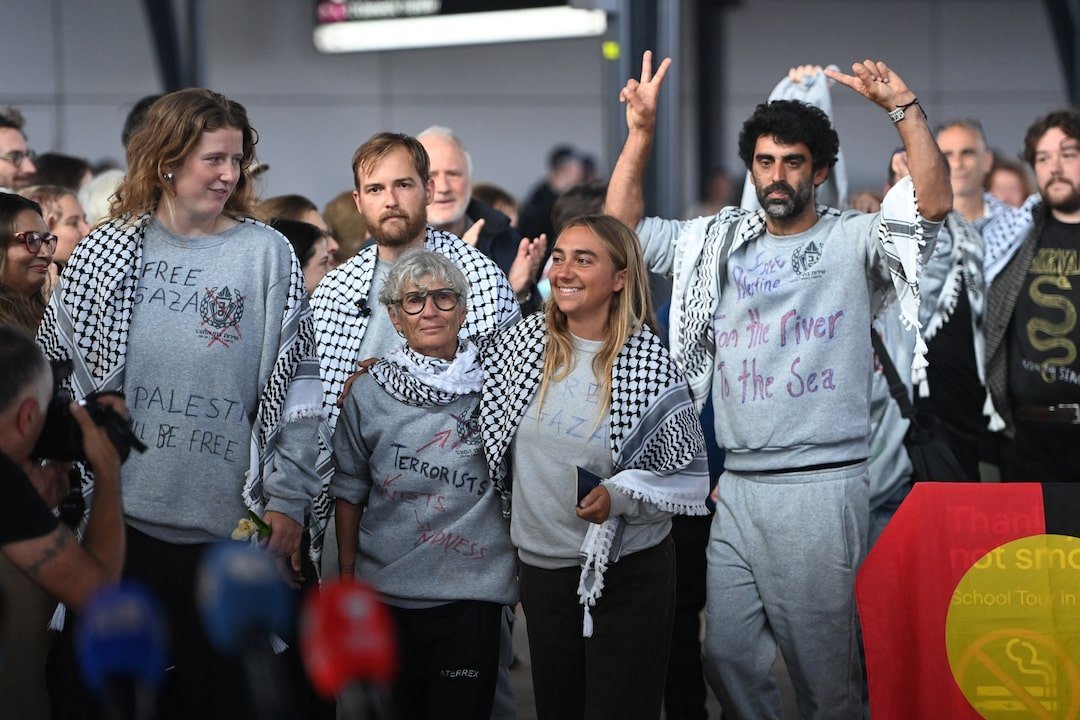
The flotilla was intercepted by the Israel Defense Forces (IDF) off the coast of Cyprus on May 18, and the activists were subsequently detained and deported to Türkiye.
During their detention, the activists allege they were subjected to physical abuse, sexual violence, and other forms of mistreatment.




The IDF has denied all allegations of abuse, stating that its orders require “respectful and appropriate treatment” of flotilla participants. However, the detainees’ accounts paint a very different picture.
Violet Coco, an environmental activist, described being “kidnapped from international waters” and subjected to “days of starvation, dehydration, extreme cold, stress positions at gunpoint in the blistering sun for hours, sleep deprivation and more.” Sam Woripa Watson, another detainee, said he had a fractured rib and bruises and cuts all over his body, but the worst part was “seeing and listening to my friends be punched and kicked and tasered and shot with bean bag bullets and have stun grenades thrown at them.”
The detainees’ experiences have sparked widespread condemnation and a diplomatic backlash, with the Australian government facing criticism for not doing enough to condemn Israel’s treatment of the flotilla detainees.
Deputy Greens leader Mehreen Faruqi accused the Labor government of being “ashamed” of calling Israel a friend and ally, given its treatment of Australians and its actions in the Israeli-Palestinian conflict.
Analysis: What This Means for Australia
The treatment of the Australian detainees by Israeli authorities has significant implications for Australia’s relationship with Israel and its stance on the Israeli-Palestinian conflict. The incident has highlighted the need for Australia to take a stronger stance on human rights abuses and to re-evaluate its alliance with Israel.
Security analysts say that Australia’s response to the incident will be closely watched by other countries and will have implications for its reputation as a champion of human rights.
Law enforcement insiders warn that the incident also highlights the need for greater scrutiny of Israel’s actions in the region and the need for Australia to take a more nuanced approach to the Israeli-Palestinian conflict.
The incident has also sparked concerns about the impact on Australian communities, particularly those with connections to the Middle East.
Industry observers believe that the incident will have economic and social consequences for Australia, particularly in terms of its trade relationships with Israel and other countries in the region.
The incident has also sparked a wider debate about the ethics of international activism and the role of governments in protecting their citizens abroad.
Experts say that the Australian government must take a stronger stance on human rights abuses and work to address the root causes of the Israeli-Palestinian conflict.
This includes supporting a two-state solution and promoting greater accountability for human rights abuses.
As the detainees continue to share their stories, it is clear that this incident will have far-reaching implications for Australia and its relationships with Israel and the wider region.
Israeli-Palestinian conflict human rights Australian Government Department of Foreign Affairs and Trade