Albanese’s Capital Gains Tax Backlash: Gina Rinehart Warns of ‘Devastating’ Consequences for Australian Economy
- Gina Rinehart, Australia’s richest woman, slams Albanese’s capital gains tax changes as ‘ill-considered’ and ‘bad for the economy’
- Changes could force business investment offshore, reducing future discoveries, jobs, and revenue for Australia
- Tech entrepreneurs mock Albanese with AI-generated photos, sparking calls for a ‘tweak’ to the tax reforms
- Government faces pressure to exempt start-ups from the tax hikes, with some MPs pushing for a more generous regime
As the Albanese Government prepares to introduce legislation for its contentious capital gains tax reforms, Australia’s richest woman, Gina Rinehart, has delivered a scathing assessment of the changes.
In a stinging rebuke, Rinehart warned that the tax hikes will have “devastating” consequences for the Australian economy, forcing business investment offshore and reducing future discoveries, jobs, and revenue.
The changes, which replace the 50 per cent tax discount on profits with an indexation model and a minimum 30 per cent tax rate, have been met with fierce resistance from entrepreneurs and industry leaders.
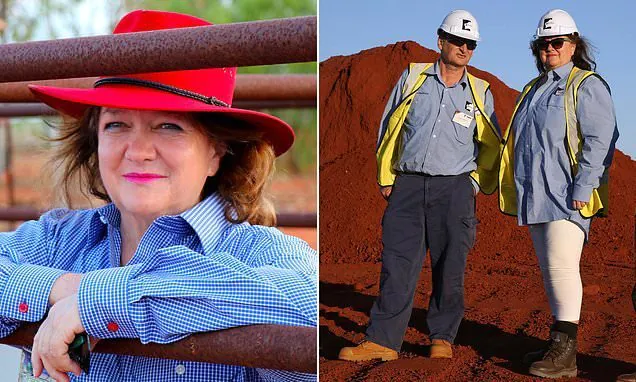
Rinehart, who has a personal net worth of over $41 billion AUD, told The Australian that the reforms are “ill-considered” and “bad for the economy”.
“If you reduce the incentive and ability for people to invest, you reduce future discoveries, future mines, future jobs, future revenue and future growth for Australia at a time when our country sure needs it,” she said.




Rinehart also pointed out that the tax changes overlook the fact that people are investing money they have already paid tax on, and that any profits made on that reinvestment will now be subject to even higher taxes.
New Zealand’s lack of capital gains tax has been cited as a potential haven for investors, with some entrepreneurs already suggesting that Aussies invest in New Zealand instead.
The backlash against the tax reforms has also been fueled by tech entrepreneurs, who have created AI-generated photos mocking Anthony Albanese as their new founder.
As MPs return to Canberra this week, the ALP caucus committee will hold talks on Monday to discuss the reforms, with some MPs pushing for a more generous regime to help start-ups and entrepreneurs.
The Treasurer, Jim Chalmers, has admitted that the situation is fluid and that the government hasn’t landed on a final position.
Security analysts say that the tax reforms could have significant implications for Australia’s national security, as they may drive investment away from the country and reduce economic growth.
“The government needs to carefully consider the potential consequences of these reforms and ensure that they do not inadvertently harm the economy or national security,” one analyst said.
Analysis: What This Means for Australia
The capital gains tax reforms have sparked a heated debate about the impact on Australia’s economy and national security.
While the government argues that the changes will help to address the country’s housing affordability crisis, critics warn that they will drive investment away and reduce economic growth.
Law enforcement insiders warn that the reforms could also have unintended consequences, such as driving investment into the black market or offshore tax havens. “The government needs to carefully consider the potential risks and ensure that the reforms are designed to prevent these types of outcomes,” one insider said.
Industry observers believe that the government should consider exempting start-ups from the tax hikes, as they are often the drivers of innovation and job creation.
“Start-ups are the lifeblood of the economy, and we need to ensure that they are not unfairly penalized by these reforms,” one observer said.
As the government continues to grapple with the fallout from the tax reforms, it remains to be seen whether they will make significant changes to the legislation.
One thing is certain, however: the stakes are high, and the consequences of getting it wrong could be devastating for the Australian economy.