One Nation Set to Shake Up Australian Politics: Pauline Hanson’s Shocking Rise to Power
- One Nation’s primary vote has surged to 31%, surpassing Labor’s 28% and the Coalition’s 20% in a shocking new poll.
- Pauline Hanson says she has the ability to lead the nation as prime minister, but admits she was shocked by the poll results.
- Treasurer Jim Chalmers accuses One Nation and the Coalition of seeking to “benefit” from people’s “legitimate concerns” about the economy.
- The poll has sparked a frenzy of responses from politicians, with some calling for a re-evaluation of the Coalition’s policies and others defending their party’s stance.
The Australian political landscape is on the brink of a seismic shift, as a new poll reveals One Nation’s primary vote has skyrocketed to 31%, surpassing Labor’s 28% and the Coalition’s 20%.
The shocking results have sent shockwaves through the nation’s capital, with politicians scrambling to respond to the sudden surge in support for Pauline Hanson’s party. At the center of the storm is Hanson herself, who has revealed she has the ability to lead the nation as prime minister.
The One Nation leader made the bold claim on ABC Radio Brisbane, citing her years of experience in politics and her commitment to changing the country for the better.
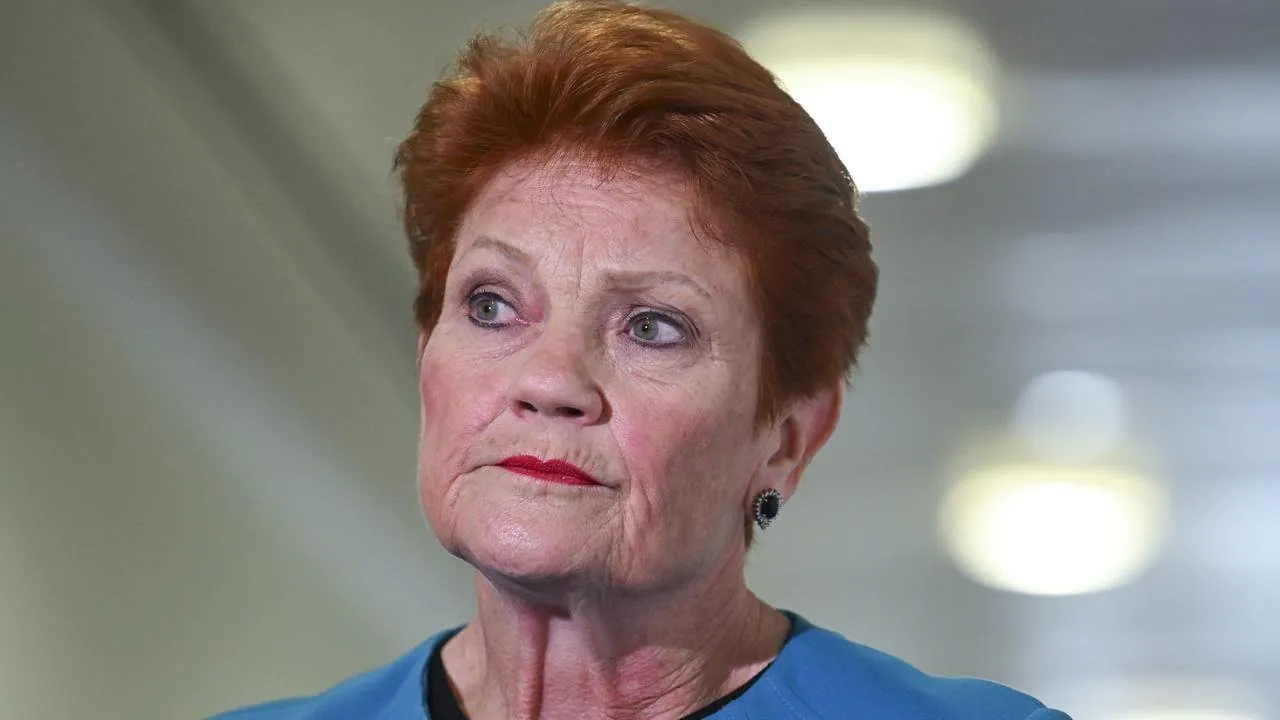
However, Hanson admitted she was shocked by the poll results, which suggest her party has pulled ahead of Labor in terms of primary vote.
The poll has sparked a war of words between politicians, with Treasurer Jim Chalmers accusing One Nation and the Coalition of seeking to “benefit” from people’s “legitimate concerns” about the economy.



Chalmers argued that while people have genuine fears about their economic security, the Coalition is exploiting these concerns without offering any real solutions. The surge in support for One Nation has also raised questions about the party’s policies and its ability to govern.
Nationals frontbencher David Littleproud argued that the Coalition can respond to the poll by putting forward “cogent” policies on energy, taxation, and immigration.
However, Shadow Treasurer Tim Wilson was more skeptical, suggesting that the Coalition needs to find ways to break through to voters and communicate its message more effectively.
As the nation grapples with the implications of the poll, one thing is clear: the Australian political landscape is more divided than ever.
With the next election still over a year away, the battle for the nation’s top job is set to be one of the most intense and unpredictable in recent history.
Analysis: What This Means for AustraliaThe rise of One Nation and the decline of the Coalition’s primary vote have significant implications for Australia’s national security, law enforcement, and social cohesion.
As the country becomes increasingly polarized, there are concerns that the next election could be decided by voters who are disillusioned with the major parties and seeking alternatives.
Security analysts say that the rise of One Nation could embolden extremist groups and lead to increased tensions between different communities. Law enforcement insiders warn that the party’s hardline stance on immigration and national security could lead to increased radicalization and social unrest.
Industry observers believe that the poll results could also have significant economic consequences, particularly if One Nation’s policies on trade and immigration are enacted. The party’s stance on climate change and energy could also have far-reaching implications for the nation’s environmental policies.
As the nation grapples with the implications of the poll, one thing is clear: the next election will be a defining moment in Australian history. Will the country continue down the path of division and polarization, or will voters choose a different path?
Only time will tell. Experts say that the key to understanding the poll results lies in the fact that voters are seeking authenticity and leadership.
“People are looking for someone who can give them hope and a sense of direction,” said one analyst.
“The major parties need to take a long, hard look at themselves and ask why they’re not connecting with voters.”
As the debate rages on, one thing is certain: the Australian people will have the final say.
With the next election still over a year away, the battle for the nation’s top job is set to be one of the most intense and unpredictable in recent history.
The Australian political landscape is on the brink of a seismic shift, as a new poll reveals One Nation’s primary vote has skyrocketed to 31%, surpassing Labor’s 28% and the Coalition’s 20%. The shocking results have sent shockwaves through the nation’s capital, with politicians scrambling to respond to the sudden surge in support for Pauline Hanson’s party.
At the center of the storm is Hanson herself, who has revealed she has the ability to lead the nation as prime minister. The One Nation leader made the bold claim on ABC Radio Brisbane, citing her years of experience in politics and her commitment to changing the country for the better. However, Hanson admitted she was shocked by the poll results, which suggest her party has pulled ahead of Labor in terms of primary vote.
The poll has sparked a war of words between politicians, with Treasurer Jim Chalmers accusing One Nation and the Coalition of seeking to “benefit” from people’s “legitimate concerns” about the economy. Chalmers argued that while people have genuine fears about their economic security, the Coalition is exploiting these concerns without offering any real solutions.
The surge in support for One Nation has also raised questions about the party’s policies and its ability to govern. Nationals frontbencher David Littleproud argued that the Coalition can respond to the poll by putting forward “cogent” policies on energy, taxation, and immigration. However, Shadow Treasurer Tim Wilson was more skeptical, suggesting that the Coalition needs to find ways to break through to voters and communicate its message more effectively.
As the nation grapples with the implications of the poll, one thing is clear: the Australian political landscape is more divided than ever. With the next election still over a year away, the battle for the nation’s top job is set to be one of the most intense and unpredictable in recent history.
The rise of One Nation and the decline of the Coalition’s primary vote have significant implications for Australia’s national security, law enforcement, and social cohesion. As the country becomes increasingly polarized, there are concerns that the next election could be decided by voters who are disillusioned with the major parties and seeking alternatives.
Security analysts say that the rise of One Nation could embolden extremist groups and lead to increased tensions between different communities. Law enforcement insiders warn that the party’s hardline stance on immigration and national security could lead to increased radicalization and social unrest.
Industry observers believe that the poll results could also have significant economic consequences, particularly if One Nation’s policies on trade and immigration are enacted. The party’s stance on climate change and energy could also have far-reaching implications for the nation’s environmental policies.
As the nation grapples with the implications of the poll, one thing is clear: the next election will be a defining moment in Australian history. Will the country continue down the path of division and polarization, or will voters choose a different path? Only time will tell.
Experts say that the key to understanding the poll results lies in the fact that voters are seeking authenticity and leadership. “People are looking for someone who can give them hope and a sense of direction,” said one analyst. “The major parties need to take a long, hard look at themselves and ask why they’re not connecting with voters.”
As the debate rages on, one thing is certain: the Australian people will have the final say. With the next election still over a year away, the battle for the nation’s top job is set to be one of the most intense and unpredictable in recent history.