Andrews’ Legacy in Tatters: New Premier Scraps $134,000 Statue Honouring Former Victorian Leader
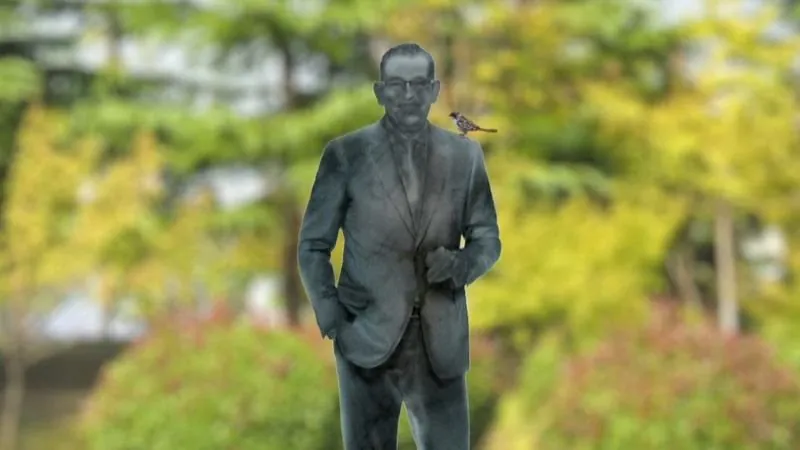
- A bronze statue of Daniel Andrews, Victoria’s 48th premier, has been cancelled by his successor Ben Carroll amid controversy over the $134,000 project.
- The decision comes as Victorians prepare to head to the polls in the November 28 state election, with the opposition pledging to scrap the statue if they win government.
- Former Liberal premier Jeff Kennett, who started the tradition of honouring long-serving premiers with statues, suggests a tribute to country music star Dolly Parton would be a more worthy addition to Melbourne’s Myer Music Bowl.
- Experts warn that cancelling the statue may be a retrograde step in marking the state’s political history, despite the “febrile” atmosphere surrounding Andrews’ governing record.
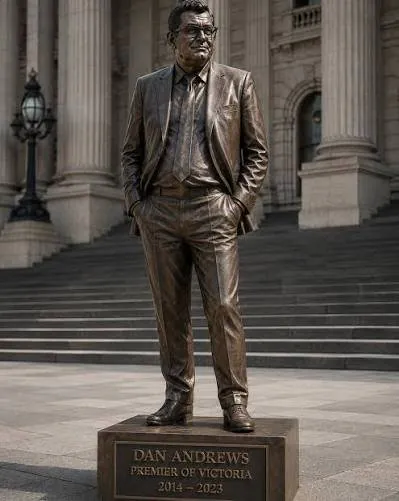
In a move that has sent shockwaves through Victorian politics, Premier Ben Carroll has announced the cancellation of a bronze statue honouring former premier Daniel Andrews.
The $134,000 project, which was commissioned by the previous government, has been scrapped amid controversy over its cost and the timing of its unveiling.
Andrews, who served as premier from 2014 to 2023, was set to be immortalised in bronze alongside other long-serving premiers, including Henry Bolte and Albert Dunstan.
However, the project has been the subject of heated debate since it was announced, with opposition leader Jess Wilson pledging to scrap the statue if the Coalition won government at the November state election.
Carroll, who was elected state Labor leader in July, has instead commissioned an independent panel to review how Victoria commemorates its former leaders.
The panel will examine the frequency, scale, and costs of state funerals and memorial services, as well as recommend an alternative subject and location for the commissioned work.
The decision to cancel the statue has been met with mixed reactions, with some experts warning that it may be a retrograde step in marking the state’s political history.
“Cancelling the statue altogether and breaking with the tradition of commemorating our long-serving premiers seems a retrograde step if we are interested in marking the state’s political history,” said Emeritus Professor of Politics at Monash University, Paul Strangio.
However, others have welcomed the move, citing the “febrile” atmosphere surrounding Andrews’ governing record. “The atmospherics around his governing record have become so febrile and there are threats that the statue would be defaced,” Strangio said.
Former Liberal premier Jeff Kennett, who started the tradition of honouring long-serving premiers with statues, has suggested that a tribute to country music star Dolly Parton would be a more worthy addition to Melbourne’s Myer Music Bowl.
“I think Dolly Parton would be a worthwhile addition near the music bowl as an inspiration to many musically,” Kennett said.
As Victorians prepare to head to the polls in the November 28 state election, the cancellation of the statue is likely to be a contentious issue.
The opposition has already pledged to scrap the statue if they win government, and the decision is likely to be seen as a test of Carroll’s leadership.
Analysis: What This Means for Australia
The cancellation of the statue is a significant development in Victorian politics, and has implications for the state’s political history and legacy. The decision to review how Victoria commemorates its former leaders is a prudent one, given the controversy surrounding the project.
However, it also raises questions about the role of politics in shaping the state’s history and the criteria used to determine who is worthy of commemoration.
Security analysts say that the decision to cancel the statue is a reflection of the increasingly polarised nature of Victorian politics.
“The cancellation of the statue is a symptom of a broader problem in Victorian politics, where politicians are more focused on scoring points than on serving the public interest,” said one analyst.
Law enforcement insiders warn that the decision may also have implications for public safety, particularly if the statue is seen as a symbol of Andrews’ legacy.
“The cancellation of the statue may be seen as a victory for those who oppose Andrews’ policies, but it may also create a sense of grievance among his supporters,” said one insider.
Industry observers believe that the decision to cancel the statue is a missed opportunity for Victoria to showcase its cultural and artistic heritage. “The statue would have been a significant addition to Melbourne’s cultural landscape, and its cancellation is a loss for the city,” said one observer.
As the November 28 state election approaches, the cancellation of the statue is likely to be a contentious issue. The decision is a test of Carroll’s leadership, and may have implications for the state’s political history and legacy.