
Nepal Floods: Australia’s Darkest Hour as 41 Citizens Remain Missing in Devastating Disaster That Has Claimed 626 Lives
- Australian families are in agony as 41 citizens, including a Sydney family of four, remain unaccounted for in Nepal’s worst floods in decades
- The death toll has risen to 626, with 1,924 people reported missing in Nepal and 554 in Tibet, as rescue efforts continue in the treacherous terrain
- Australians are among the missing, with families pleading for urgent action from authorities to locate their loved ones, as hopes of finding survivors dwindle
- The disaster has sparked an international response, with Australia deploying DFAT Crisis Response officials and Rapid Response Teams to aid in the search and rescue efforts
The devastating floods in Nepal have left a trail of destruction and despair in their wake, with 626 people confirmed dead and over 2,400 reported missing.
For Australian families, the agonizing wait for news of their loved ones continues, as 41 citizens remain unaccounted for in the disaster zone. Among them is a family of four from Sydney, who were on a spiritual journey to Mount Kailash when the floods struck.
The Muralitharan family, consisting of parents Shylaja and Chandrasekaran, and their two sons Ashwin and Aarush, were part of a tour group that included 11 other Australians who are also missing.
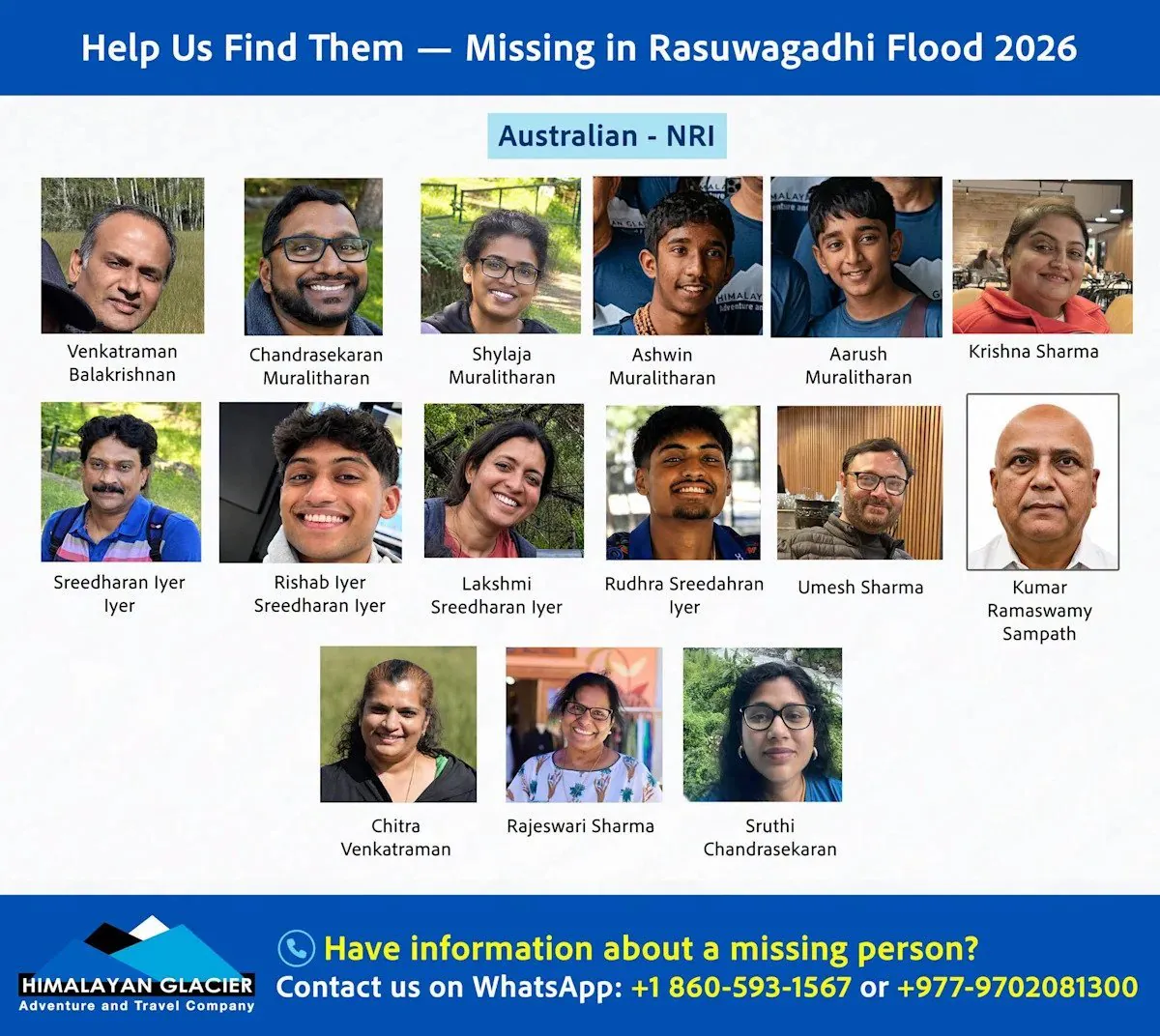
The family’s relatives have issued a desperate plea for authorities to intensify search efforts, as they cling to hope that their loved ones may still be alive.
“Every hour matters,” said Nava Pandey, the husband of missing woman Sumi Adhikari, who is also part of the group.



“We respectfully call upon the Chinese Government and local authorities to release all available verified information, provide regular updates about the search efforts, and establish direct communication with the affected families.”
The floods, which were triggered by heavy rainfall in the Himalayas, have caused widespread destruction in the mountainous regions of Nepal and Tibet.
The Trishuli River, which flows through the affected area, has been particularly hard hit, with entire villages and towns swept away by the raging waters. The United Nations Resident Coordinator in Nepal, Lila Pieters Yahia, described the scene as “unreal”, saying that the level of destruction is “just unreal”.
The Australian government has responded quickly to the disaster, deploying DFAT Crisis Response officials and Rapid Response Teams to aid in the search and rescue efforts.
Assistant Immigration Minister Matt Thistlethwaite said that the government is working closely with Nepalese authorities to locate the missing Australians, and that they have not given up hope of finding them.
“We’re doing everything we can to support the families and to try to locate those who are missing,” he said.
Analysis: What This Means for AustraliaThe Nepal floods have significant implications for Australia, both in terms of national security and community impact.
The fact that 41 Australian citizens are missing in the disaster zone highlights the risks faced by Australians traveling abroad, particularly in areas prone to natural disasters.
The Australian government’s response to the disaster will be closely watched, as families and communities await news of their loved ones. The disaster also raises questions about the preparedness of Australian travelers for such events.
While the government has issued travel warnings for Nepal, many Australians may not have been aware of the risks involved. The incident highlights the need for greater awareness and education among Australian travelers about the risks associated with traveling in areas prone to natural disasters.
Furthermore, the disaster has significant economic and social consequences for Australia.
The loss of life and property will have a profound impact on the families and communities affected, and the government will need to provide support and assistance to those affected.
The incident also highlights the need for greater international cooperation and coordination in responding to natural disasters, as well as the importance of disaster risk reduction and management strategies.
In the aftermath of the disaster, there will be a need for a thorough review of the response efforts, to identify areas for improvement and to ensure that lessons are learned.
The Australian government will need to work closely with international partners, including Nepal and China, to ensure that the response efforts are coordinated and effective. As the search and rescue efforts continue, Australians can only hope that the missing citizens will be found safe and sound.
However, the incident serves as a stark reminder of the risks and uncertainties associated with traveling abroad, and the need for greater awareness and preparedness among Australian travelers.
The devastating floods in Nepal have left a trail of destruction and despair in their wake, with 626 people confirmed dead and over 2,400 reported missing. For Australian families, the agonizing wait for news of their loved ones continues, as 41 citizens remain unaccounted for in the disaster zone. Among them is a family of four from Sydney, who were on a spiritual journey to Mount Kailash when the floods struck.
The Muralitharan family, consisting of parents Shylaja and Chandrasekaran, and their two sons Ashwin and Aarush, were part of a tour group that included 11 other Australians who are also missing. The family’s relatives have issued a desperate plea for authorities to intensify search efforts, as they cling to hope that their loved ones may still be alive. “Every hour matters,” said Nava Pandey, the husband of missing woman Sumi Adhikari, who is also part of the group. “We respectfully call upon the Chinese Government and local authorities to release all available verified information, provide regular updates about the search efforts, and establish direct communication with the affected families.”
The floods, which were triggered by heavy rainfall in the Himalayas, have caused widespread destruction in the mountainous regions of Nepal and Tibet. The Trishuli River, which flows through the affected area, has been particularly hard hit, with entire villages and towns swept away by the raging waters. The United Nations Resident Coordinator in Nepal, Lila Pieters Yahia, described the scene as “unreal”, saying that the level of destruction is “just unreal”.
The Australian government has responded quickly to the disaster, deploying DFAT Crisis Response officials and Rapid Response Teams to aid in the search and rescue efforts. Assistant Immigration Minister Matt Thistlethwaite said that the government is working closely with Nepalese authorities to locate the missing Australians, and that they have not given up hope of finding them. “We’re doing everything we can to support the families and to try to locate those who are missing,” he said.
The Nepal floods have significant implications for Australia, both in terms of national security and community impact. The fact that 41 Australian citizens are missing in the disaster zone highlights the risks faced by Australians traveling abroad, particularly in areas prone to natural disasters. The Australian government’s response to the disaster will be closely watched, as families and communities await news of their loved ones.
The disaster also raises questions about the preparedness of Australian travelers for such events. While the government has issued travel warnings for Nepal, many Australians may not have been aware of the risks involved. The incident highlights the need for greater awareness and education among Australian travelers about the risks associated with traveling in areas prone to natural disasters.
Furthermore, the disaster has significant economic and social consequences for Australia. The loss of life and property will have a profound impact on the families and communities affected, and the government will need to provide support and assistance to those affected. The incident also highlights the need for greater international cooperation and coordination in responding to natural disasters, as well as the importance of disaster risk reduction and management strategies.
In the aftermath of the disaster, there will be a need for a thorough review of the response efforts, to identify areas for improvement and to ensure that lessons are learned. The Australian government will need to work closely with international partners, including Nepal and China, to ensure that the response efforts are coordinated and effective.
As the search and rescue efforts continue, Australians can only hope that the missing citizens will be found safe and sound. However, the incident serves as a stark reminder of the risks and uncertainties associated with traveling abroad, and the need for greater awareness and preparedness among Australian travelers.