
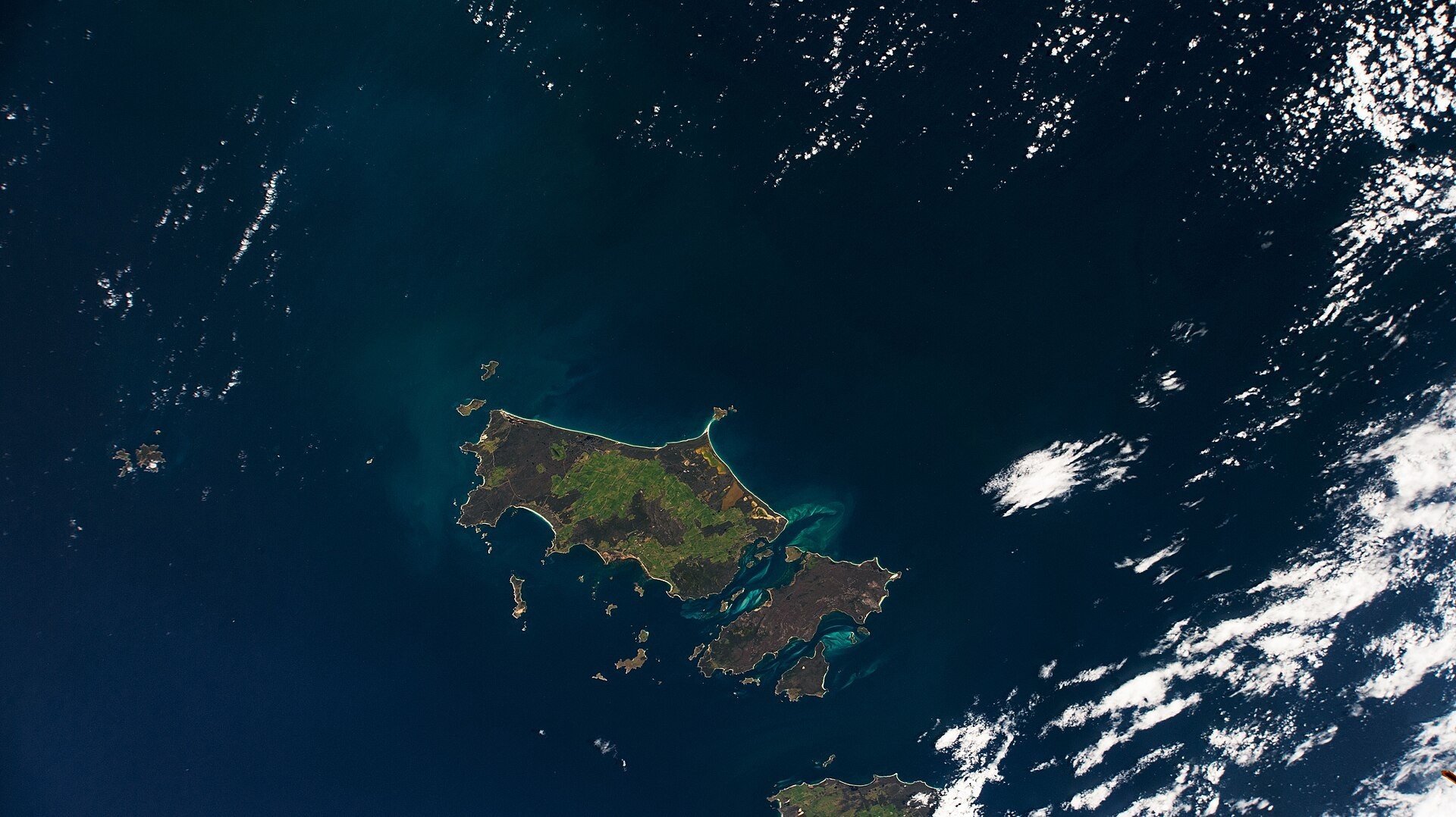
‘Targeted’ Ambush in Island Paradise: Wounded Police Sergeant Allegedly Shoots Dead His Attacker After Gunman Opens Fire Outside Remote Flinders Island Station
- A veteran sergeant, one of only three officers on an island of fewer than 1,000 people, was shot moments after finishing his shift outside Whitemark police station
- Despite his wounds, the officer allegedly returned fire several times. A man in his mid-20s was later found dead on a nearby street
- Tasmania’s deputy police commissioner believes the attack was deliberately “targeted”, and detectives are urgently hunting for CCTV and dashcam footage
- It is the second time in 18 months that an on-duty Tasmanian officer has been shot, reigniting fears over the safety of police in isolated outposts
He had done his job. The shift was over.
All that remained was the short walk from his patrol car.
Then the shots rang out.
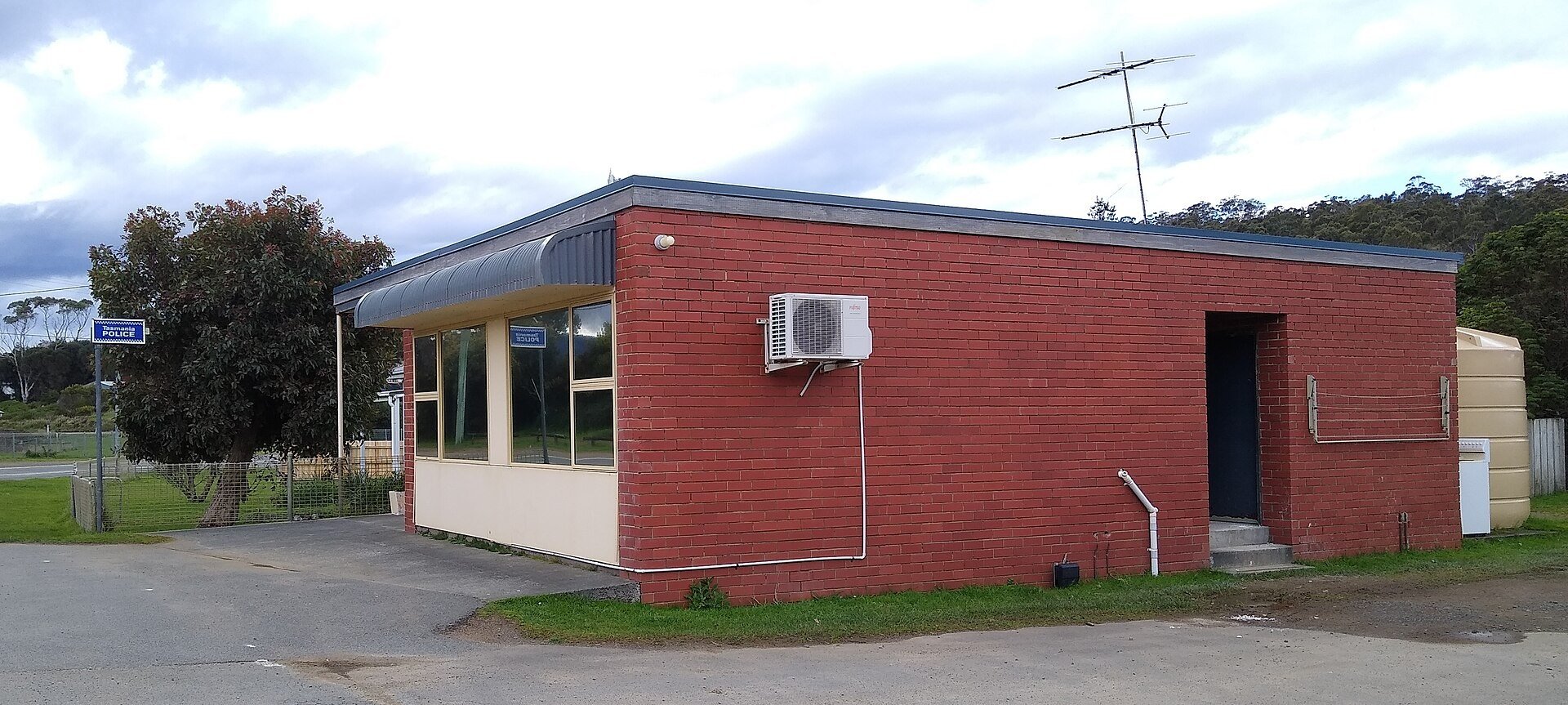
On a quiet Saturday night on one of Australia’s most isolated island communities, a long-serving Tasmanian police sergeant was gunned down outside his own station in what investigators now believe was a calculated, deliberate attack.
Within minutes, his alleged assailant was dead.
The violence has shattered the peace of Flinders Island, a windswept speck of land in Bass Strait where everyone knows everyone and serious crime is almost unheard of.
It has also exposed an uncomfortable truth about the officers sent to police Australia’s most remote corners: when trouble comes, help is a long way off.
The sergeant had pulled up at the Whitemark police station at about 9.45pm on Saturday. He had parked and stepped out of his vehicle when he was struck by gunfire.
Wounded, he allegedly drew his service weapon and fired back several times.
Officers who rushed to respond to the shooting soon made a grim discovery. A few hundred metres away, on Walker Street, lay the body of a man believed to be in his mid-20s.
Police allege the man was shot by the sergeant during the exchange.
Addressing reporters on Sunday, Tasmania Police Deputy Commissioner Jonathan Higgins said early indications pointed to the sergeant having been deliberately singled out. He described the shooting as a “targeted incident”, while stressing that the investigation remained in its infancy.
The injured officer was flown to the Royal Hobart Hospital, where he was undergoing surgery on Sunday afternoon. He remains in a serious but stable condition.
Police Commissioner Donna Adams travelled to the hospital as the sergeant was treated.
Premier Jeremy Rockliff, who has been in contact with the commissioner, described the shooting as a “horrific incident” and said his thoughts were with the officer, his family and his colleagues.
Mr Rockliff said the attack was “a stark reminder of the risks” police face in the line of duty.
Forensic specialists and additional uniformed officers have since been dispatched to the island. Detectives are appealing for anyone with information, particularly CCTV or dashcam vision captured around Walker Street, to come forward.
They are also seeking to speak with the dead man’s family.
To understand the scale of the shock, consider the setting. Whitemark, the island’s main settlement, had about 300 residents at the 2021 census, according to the Australian Bureau of Statistics.
The whole of Flinders Island is home to fewer than 1,000 people.
The wounded sergeant is one of just three police officers stationed there.
He has served the community for a number of years, long enough to be a familiar face at the shops, the footy and the local pub.
That familiarity cuts both ways. In a small town, an officer cannot simply disappear at the end of a shift.
Where he lives, what he drives and when he clocks off are common knowledge.
Mr Higgins acknowledged that threats from members of the public were “the nature of our work” for police. On Flinders Island, those threats come with no anonymity and very little backup.
The incident also follows a dark chapter for Tasmanian policing. In June 2025, an officer was shot dead in the state’s north-west while carrying out a court-issued warrant to repossess a home.
The man responsible was eventually convicted after admitting to the killing. That killing left the force reeling, and many officers had hoped it would remain a tragic aberration.
Instead, barely 18 months later, another officer has been shot.
Analysis: What This Means for Australia
The Flinders Island shooting goes well beyond a single act of violence.
It is a test of how Australia protects the officers who keep remote communities safe, and of whether those communities can be properly defended when things go wrong.
Across the country, from the Kimberley to the Torres Strait to Bass Strait, small police stations are staffed by a handful of officers who often work alone.
Reinforcements can be hours away by plane or boat. In a crisis, those officers are effectively on their own.
Two shootings of on-duty officers in a state the size of Tasmania within 18 months will inevitably raise questions about police safety, firearm access in regional areas and how threats against individual officers are assessed and managed.
The community impact is also profound. In a population this small, the dead man is unlikely to be a stranger.
Residents now face the double trauma of a wounded local officer and a young life lost, alongside the forensic teams, investigators and media now descending on their island.
There are wider consequences too. Recruiting and retaining officers for isolated postings is already a challenge for police forces nationwide.
An attack like this risks making those roles even harder to fill, leaving remote towns more exposed. The debate over gun laws and regional crime is likely to intensify as details emerge.
Law enforcement insiders warn that the “targeted” label is the most chilling element of the case.
An officer ambushed as he finishes work points to a premeditated threat, not a spontaneous confrontation, and forces agencies to rethink how they protect staff off duty as well as on.
Security analysts say remote stations often lack the safeguards city officers take for granted, such as secure parking, extensive CCTV coverage and immediate access to armed backup.
They expect pressure for urgent reviews of station security in isolated areas.
Policing observers also note that any death involving a police officer will rightly attract close independent scrutiny, and that the sergeant’s actions will be examined as part of the broader investigation.
Many point out, however, that he appears to have been fighting for his life.
Community advocates believe the coming weeks will be critical for Flinders Island, warning that small towns can carry the scars of a single night of violence for years.
For now, a sergeant lies in a Hobart hospital, a family is grieving on a remote island, and a state is once again asking how one of its police officers came to be shot.
Anyone with information is urged to contact Tasmania Police or Crime Stoppers.