
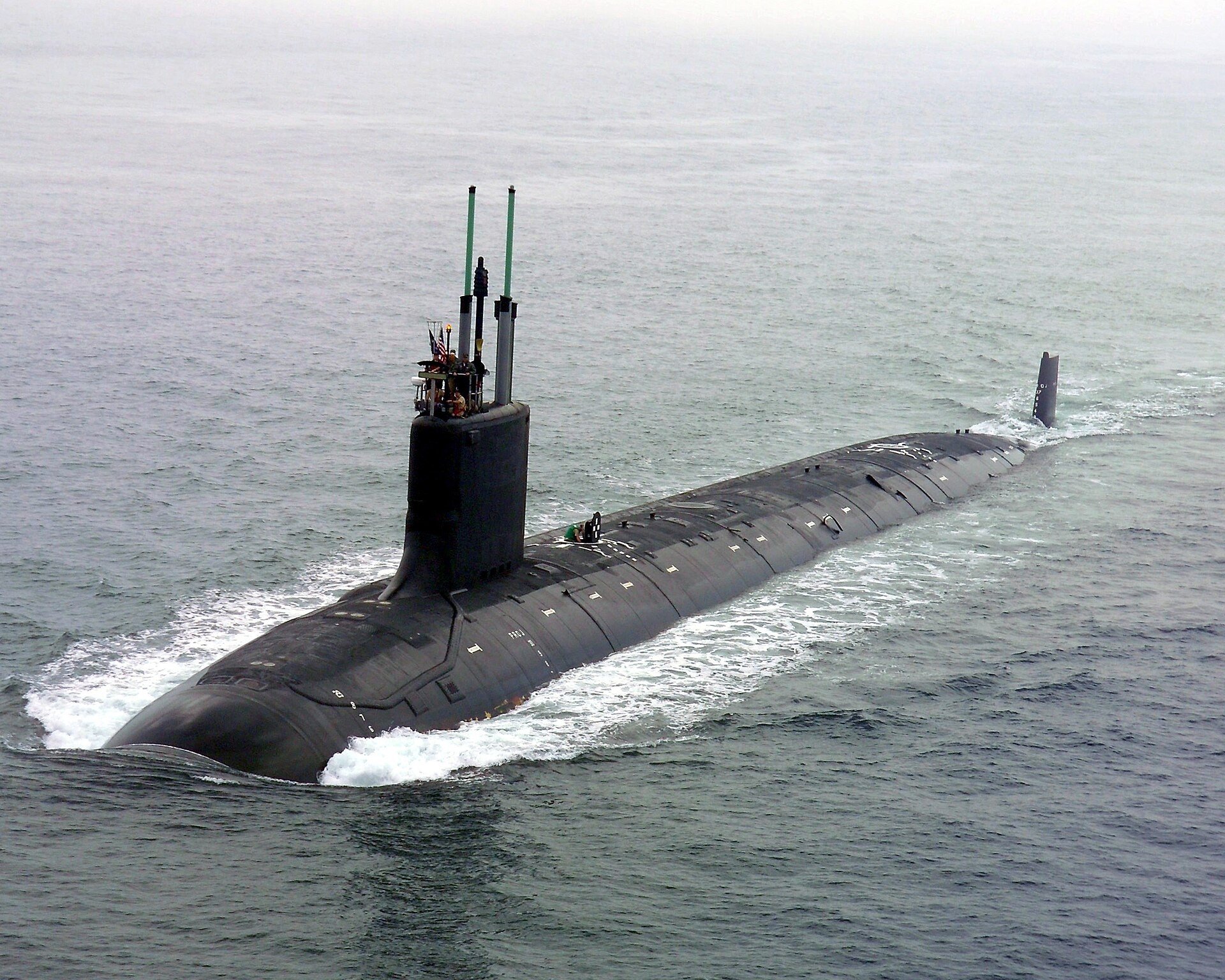
‘They Are Wrong’: Marles Defies Damning Washington Report Warning AUKUS Will Bleed America’s Submarine Fleet Dry, As ASIO Sounds the Alarm Over Foreign Spies Targeting Australia’s $35 Billion AI Data Centre Boom
- A US Congressional Budget Office report warns that selling nuclear-powered submarines to Australia would leave the American navy short of attack boats “for many years”.
- Defence Minister Richard Marles flatly rejected the findings on national television, insisting AUKUS is “very much happening”.
- Donald Trump has threatened “tremendous taxes” on American tech giants that build AI data centres abroad, putting a record investment wave in Australia at risk.
- ASIO chief Mike Burgess warns hostile foreign actors could use data centre construction to covertly reach sensitive information and critical infrastructure.
Australia has bet its future defence on a fleet of submarines it does not yet own, built in shipyards that cannot keep up, belonging to an ally that may not be able to spare them.
That is the uncomfortable picture now emerging from Washington. Canberra is refusing to blink.
On Sunday, Defence Minister Richard Marles went on the ABC’s Insiders program and dismissed a fresh assessment from America’s own budget watchdog. That assessment found the AUKUS deal would place even more pressure on a US Navy already struggling to field enough boats.
Asked directly by host David Speers whether the US Congressional Budget Office had it wrong, Mr Marles held firm. He said the American analysts were mistaken in suggesting submarine production had stalled, and argued output was in fact improving.
The report, published on Friday, was blunt. It found the US submarine industrial base was already failing to meet the navy’s demand.
Ramping up production to replace boats handed to Australia would only compound the problems facing shipyards and naval planners. The sale itself, it warned, would shrink America’s available attack submarine fleet for years.
Mr Marles said the report did not concern him. He predicted many more like it would surface over the coming decade.
He conceded that shipbuilding pace was critical to Australia receiving its Virginia-class submarines. But he argued it was only one piece of the puzzle.
Sustainment and maintenance, he said, mattered just as much if Australia was to take delivery of its first boat in the early 2030s.
The minister instead pointed to a nearer target: the launch of Submarine Rotational Force-West at HMAS Stirling, south of Perth, by around this time next year.
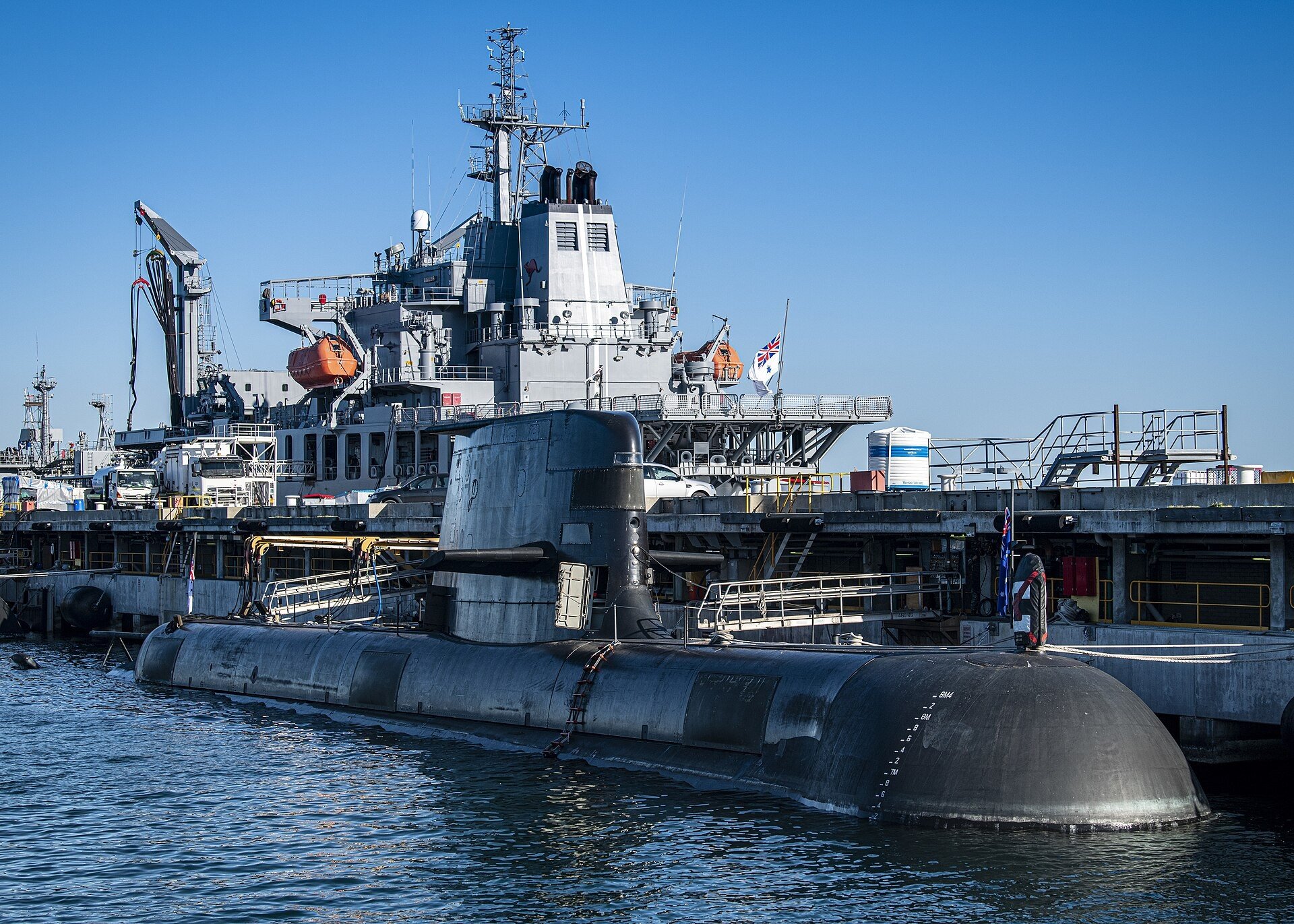
Under that arrangement, American and British nuclear-powered submarines will rotate through the Western Australian base, and Australian sailors will train aboard them to master nuclear propulsion.
Mr Marles said the project was well on track.
The tension is not new.
Since the AUKUS pact was unveiled in 2021, critics on both sides of the Pacific have questioned whether America’s stretched shipyards could ever supply Australia without weakening the United States itself.
A former senior White House official has previously said the partnership forced Washington to confront a submarine building and maintenance capacity described as “profoundly lacking”.
The stakes are enormous. Australia has committed up to $368 billion over coming decades to the AUKUS submarine program, the largest defence investment in the nation’s history.
And now a second front has opened in the same strategic contest: artificial intelligence.
Donald Trump, however, has vowed to stop US artificial intelligence firms from setting up data centres abroad, threatening crippling tax penalties for any company that goes ahead.
The threat lands in the middle of an extraordinary boom. Operators in Australia had raised a record sum of at least $35 billion as of September.
Mr Marles played down the threat. He said the government would keep talking to both the tech companies and Washington, arguing offshore investment was in America’s own interests.
Concentrating all of that infrastructure in the United States, he warned, would create a vulnerability. That was partly why companies were looking abroad, and why Australia was attracting so much attention.
He added a caveat: Australia wanted the investment, but not at any cost, and only on its own terms.
Only days earlier, Canberra put its signature to an American-led pact aimed at mapping weak points in supply chains and shielding critical AI technology from espionage and outside meddling. According to Mr Marles, the arrangement actively supports building data centre capacity beyond US shores.
Analysis: What This Means for Australia
Strip away the diplomatic language and a stark reality remains. Australia’s two most important strategic projects of the decade, nuclear submarines and AI infrastructure, both depend on decisions made in Washington.
Neither is fully in Canberra’s control.
On national security, any slip in submarine delivery risks a capability gap as the Collins-class fleet ages. That gap would arrive at a time of rising tension across the Indo-Pacific.
For law enforcement and intelligence agencies, the data centre boom presents a different danger.
Australian Security Intelligence Organisation Director-General Mike Burgess told 60 Minutes that foreign actors involved in building these facilities could attempt to covertly access sensitive information or critical infrastructure.
The Defence Minister conceded the President’s stance was worrying.
He said data centres opened a new avenue for foreign actors, even if the threat itself was not new, and stressed the government was mindful of cybersecurity.
Home Affairs Minister Tony Burke went further. He told News24 that housing such capability onshore made Australia a magnet for foreign interference, and that authorities must scrutinise ownership structures closely.
Economically, the stakes run to tens of billions of dollars, thousands of construction and technology jobs, and enormous demand on the electricity grid. A tariff war over offshore data centres could freeze that pipeline overnight.
Socially, communities hosting these facilities, along with the residents of Western Australia who will live alongside nuclear-powered submarines, deserve clarity the government has so far struggled to provide.
Security analysts say the Congressional Budget Office findings should not be brushed aside lightly. They note the report reflects longstanding structural problems inside American shipyards, rather than political posturing.
Defence industry observers believe Mr Marles’ focus on maintenance and the rotational force is strategically sound. They argue it builds Australian skills regardless of when the first Virginia-class boat arrives.
But they warn confidence alone will not weld steel faster in Connecticut or Virginia.
Law enforcement insiders caution that foreign interference in digital infrastructure is harder to detect than traditional espionage. Hostile influence, they say, can be buried in layers of investment, contractors and supply chains.
Technology industry observers believe Australia’s political stability and close alliance with the United States make it a natural home for AI investment. They add, however, that Mr Trump’s unpredictability has introduced a risk no business case can easily absorb.
For now, the Albanese government insists both projects remain on course. Whether Washington agrees may decide the shape of Australia’s security for a generation.