One Nation’s Sudden Surge: Can Pauline Hanson’s Party Upset the Balance of Power in Australian Politics?
- One Nation’s primary vote has surpassed Labor’s national primary vote, according to a new poll, leaving the major parties scrambling to respond.
- Pauline Hanson’s party is gaining traction with two distinct cohorts of voters: conservatives disillusioned with the Liberals and younger, working Australians struggling to make ends meet.
- The rise of One Nation poses a significant threat to both Labor and the Coalition, with the party’s economic policies encroaching on traditional Liberal territory.
- As the next federal election looms, Labor and the Coalition are bracing for a showdown with One Nation, with the party’s leader refusing to rule out a lower house tilt.
The latest polling numbers have sent shockwaves through Australian politics, with One Nation’s primary vote surging to unprecedented heights.
According to a recent poll conducted by Redbridge Group/Accent Research, One Nation has surpassed Labor’s national primary vote, leaving the major parties scrambling to respond.
But what does this sudden surge mean for the balance of power in Australian politics?
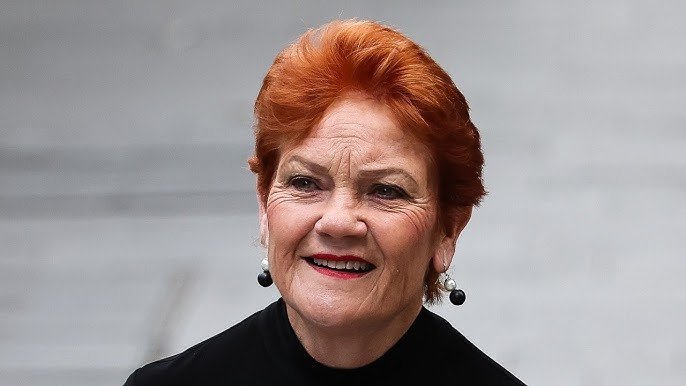
For Pauline Hanson, the leader of One Nation, the polling numbers are a welcome boost, but she remains cautious, refusing to get ahead of herself. “There’s a movement,” she told Melbourne radio station 3AW.
“There’s an unrest from [the] general public right across the whole country, that people have had enough of the major political parties and they desperately want change.” However, she also acknowledged that “it is only a poll” and that “the real poll is on election day.”




Despite her measured response, signs are emerging that Hanson is taking the polling numbers seriously.
In the same interview, she revealed that she is considering a lower house tilt, something widely viewed as a necessary step for anyone with prime ministerial aspirations.
“I am considering a lower house seat by all means, but nothing is set in concrete, and I haven’t made a final decision on it,” she said.
One Nation’s rise is being driven by two distinct cohorts of voters. The first group consists of conservatives who are disillusioned with the Liberals and are seeking an alternative.
These voters have witnessed the Liberals and Nationals implode at each attempt to defeat Prime Minister Anthony Albanese, and many now feel that One Nation has a better chance of success.
The second group comprises younger, working Australians who are struggling to make ends meet. After a pandemic, an inflation crisis, and now another war, these voters strongly feel that the economy is not working for them.
As the next federal election looms, Labor and the Coalition are bracing for a showdown with One Nation. The party’s economic policies are encroaching on traditional Liberal territory, and its leader is refusing to rule out a lower house tilt.
While Labor is not panicking, the party is taking the polling numbers seriously, with Treasurer Jim Chalmers deriding his conservative opponents as a “three-ring circus” who “want to benefit from people’s legitimate concerns without doing anything about them.”
Analysis: What This Means for Australia
The rise of One Nation poses significant implications for Australian politics. The party’s economic policies are resonating with voters who feel that the major parties are out of touch with their concerns.
If One Nation continues to gain traction, it could potentially upset the balance of power in Australian politics, forcing the major parties to rethink their strategies and policies.
Security analysts say that the rise of One Nation is a wake-up call for the major parties, highlighting the need for them to reconnect with voters and address their concerns.
“One Nation’s success is a symptom of a broader disaffection with the major parties,” said one analyst. “If they don’t take this seriously, they risk losing even more ground to minor parties.”
Law enforcement insiders warn that the rise of One Nation could also have implications for national security. “The party’s anti-immigration stance and hardline law and order policies could create tensions and divisions within the community,” said one insider.
“This could potentially create an environment in which extremist groups can thrive.”
Industry observers believe that the rise of One Nation is a reflection of a broader shift in Australian politics. “The major parties are no longer seen as representing the interests of ordinary Australians,” said one observer.
“One Nation’s success is a sign that voters are looking for alternatives and are willing to take risks to get what they want.”
As the next federal election approaches, one thing is clear: the rise of One Nation is a game-changer for Australian politics. Whether the party can sustain its momentum and translate its polling success into actual votes remains to be seen.
But one thing is certain: the major parties will be watching One Nation’s every move, eager to capitalize on any misstep and prevent the party from upsetting the balance of power in Australian politics.