Neo-Nazis Who Booed at Melbourne Anzac Day Ceremony Fined and Convicted, But Critics Warn of ‘Weak’ Sentencing
- Four neo-Nazis have been found guilty of offensive behaviour and fined for disrupting a Melbourne Anzac Day dawn service in 2025.
- The group, including notorious white supremacist Jacob Hersant, booed and yelled racist slogans during the ceremony, causing widespread outrage.
- Critics are now calling for tougher sentencing, arguing that the fines handed down do not reflect the severity of the offences.
- The incident has sparked a national debate about free speech, hate crime, and the limits of acceptable behaviour in public.
The Shrine of Remembrance in Melbourne is a place of reverence and reflection, where thousands gather each year to honour the nation’s fallen soldiers.
But on Anzac Day in 2025, the solemn atmosphere was shattered by a group of neo-Nazis who booed and yelled racist slogans during the ceremony.
The incident sparked widespread outrage, and now, four men have been found guilty of offensive behaviour and fined.
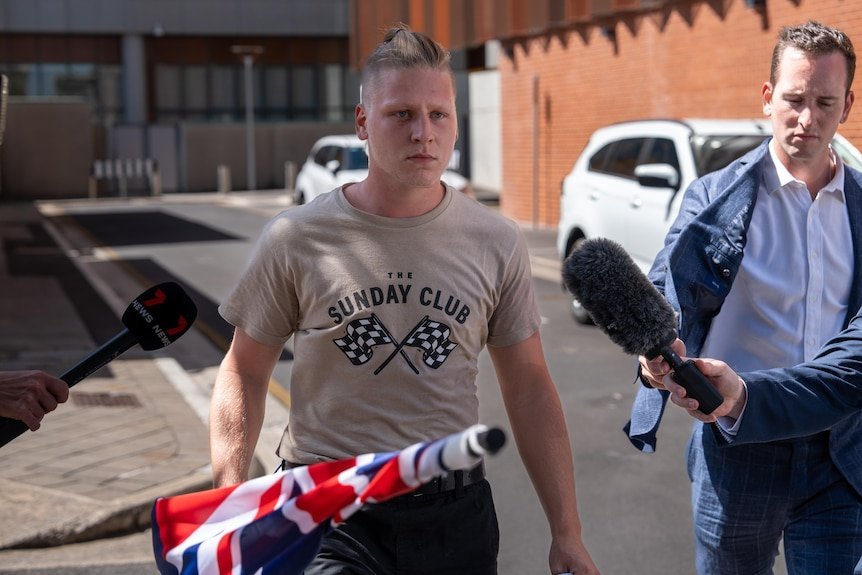
At the Melbourne Magistrates’ Court, Magistrate James FitzGerald handed down fines ranging from $800 to $1,900 to the four men, who were identified as Jacob Hersant, Nathan Bull, Michael Nelson, and Ian Lomax.
Hersant, a well-known white supremacist with a history of violent offending, was convicted and fined $1,900. Nelson received the same punishment, while Bull and Lomax were fined $1,000 and $800 respectively, and avoided conviction.



The incident was deeply disturbing, with eyewitnesses describing the scene as “chaotic” and “disgusting”. The booing and racist slogans were heard by thousands of people who had gathered at the shrine, including veterans, families, and children.
The behaviour was widely condemned, with many calling for tougher action against hate groups.
In his verdict, Magistrate FitzGerald said that the behaviour of the four men was “transgressive” and “would be likely to arouse significant anger, significant resentment, outrage, disgust, or hatred in the mind of a reasonable person”.
He also noted that the Shrine of Remembrance is a place of national significance, where people come to pay their respects to the fallen, and that the behaviour of the four men was a ” gross breach” of that sanctity.
However, critics are now arguing that the fines handed down do not reflect the severity of the offences. “These men disrupted a sacred ceremony, caused widespread outrage, and showed complete disrespect for the values of our country,” said one commentator.
“A fine of $1,900 is not enough. They should have been jailed.”
The incident has also sparked a national debate about free speech, hate crime, and the limits of acceptable behaviour in public.
While some argue that the men were simply exercising their right to free speech, others say that their behaviour was a clear example of hate crime.
Analysis: What This Means for Australia
The conviction of the four men is a significant moment in the national conversation about hate crime and free speech. It highlights the need for clear laws and strong sentencing to deal with behaviour that is designed to intimidate, harass, and offend.
But it also raises questions about the limits of acceptable behaviour in public, and how we balance the right to free speech with the need to protect vulnerable communities.
Security analysts say that the incident is a stark reminder of the ongoing threat posed by hate groups in Australia. “These groups are becoming increasingly brazen, and it’s only a matter of time before they escalate their behaviour,” said one expert.
“We need to take a strong stance against hate crime, and make it clear that this kind of behaviour will not be tolerated.”
Law enforcement insiders warn that the conviction is just the tip of the iceberg, and that there are many more hate groups operating in the shadows.
“We’re seeing a rise in hate crime across the country, and it’s not just limited to neo-Nazis,” said one source. “We need to take a holistic approach to dealing with hate crime, and that includes education, community engagement, and strong laws.”