Nurses and Midwives in Desperate Cry for Help: 24-Hour Strike Brings SA Hospital to a Standstill as Pay Dispute Reaches Boiling Point
- Nurses and midwives at Lyell McEwin Hospital walk off the job in a 24-hour strike over a pay dispute with the state government.
- The nursing union is seeking a 21 per cent pay increase over a three-year period, citing a need for nationally competitive wages.
- Patients in medical surgery inpatient units will be affected, but emergency services and intensive care areas will remain operational.
- The strike has sparked concerns about the long-term impact on the healthcare system, with many nurses and midwives considering leaving the profession or moving interstate.
The usually bustling corridors of Lyell McEwin Hospital in Elizabeth Vale fell silent on Thursday as nurses and midwives walked off the job in a desperate cry for help.
The 24-hour strike, which will end at 7am on Friday, is the latest escalation in a pay dispute with the state government that has left the healthcare system on the brink of crisis.
At the heart of the dispute is the nursing union’s demand for a 21 per cent pay increase over a three-year period.
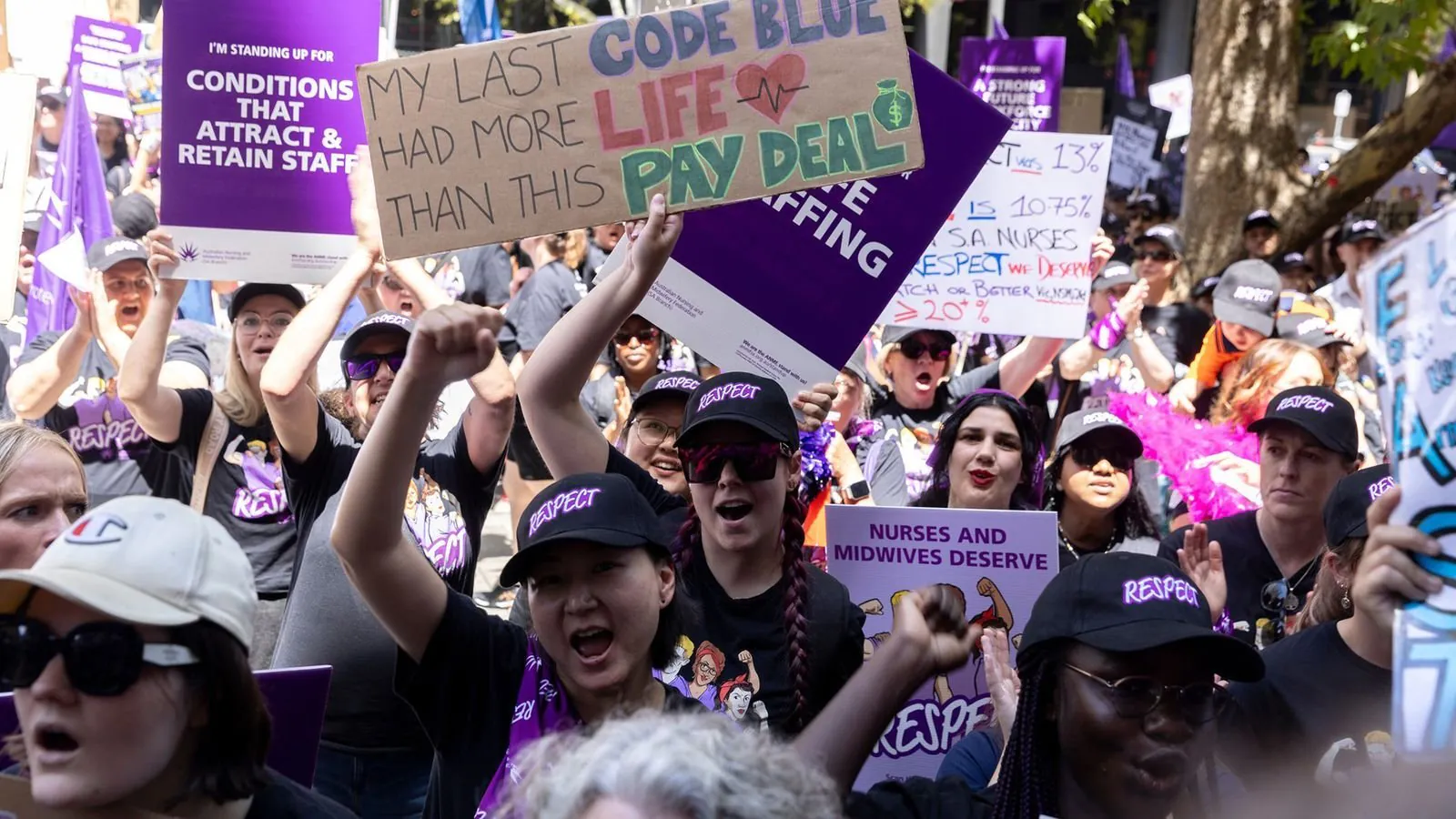
The Australian Nursing and Midwifery Federation (ANMF) argues that South Australian nurses and midwives are not nationally competitive in terms of wages, making it difficult to attract and retain staff in a tight labour market.
Registered nurse Tash Billing, who has worked at Lyell McEwin Hospital for eight years, said she felt “empowered” to join the strike. “We’re sick and tired,” she told ABC 891’s Breakfast program.


“We just want respect from the government. We deserve it.” Billing’s husband is also a nurse, and she said she was sacrificing a day’s pay to be a voice for her colleagues.
The ANMF’s Elizabeth Dabars said the union was seeking a nationally competitive offer that reflects the value, seniority, and experience of nurses and midwives. “If you want nurses and midwives by the bedside, you’ve got to have pay and conditions that respect them more broadly,” she said.
The strike has significant implications for the healthcare system, with many nurses and midwives considering leaving the profession or moving interstate in search of better pay and conditions.
Dabars said this was a “really concerning” trend that could have long-term consequences for patient care.
While the strike will not affect emergency services or intensive care areas, patients in medical surgery inpatient units will be impacted. The Northern Adelaide Local Health Network has put arrangements in place to maintain staffing levels and ensure patient safety, according to CEO Karen Puvogel.
Analysis: What This Means for Australia
The strike at Lyell McEwin Hospital is a symptom of a broader crisis in the healthcare system. With nurses and midwives in short supply, the government faces a critical decision: meet the union’s demands or risk exacerbating the staffing shortage.
Security analysts warn that a failure to address the pay dispute could have serious consequences for patient safety and the overall quality of care.
Law enforcement insiders point out that the strike highlights the need for a more sustainable workforce strategy, one that prioritises the recruitment and retention of skilled healthcare professionals.
Industry observers believe that the government’s response to the strike will be a crucial test of its commitment to the healthcare sector.
As the strike continues, the ANMF’s message to the Premier, Health Minister, and Treasurer is clear: respect and value the work of nurses and midwives, and provide them with the pay and conditions they deserve.
With the healthcare system at a crossroads, the government must act decisively to address the crisis and ensure that patients receive the care they need.