One Nation’s Shocking Rise to Power: Is Labor’s Tax Plan Playing into the Hands of Populist Parties?
- A second survey reveals One Nation has leapfrogged Labor to become the most popular party in the country, with a primary vote of 31 per cent.
- Entrepreneur Lachlan Harris warns that Labor’s tax changes are narrowing its appeal, making it vulnerable to an “electoral comeuppance”.
- The Greens are set to force the government to reconsider its plans to cut future NDIS spending, potentially derailing Labor’s tax reforms.
- As the opposition struggles to find its footing, Anthony Albanese’s mastery of parliamentary tactics has given him the upper hand over Angus Taylor.
The past fortnight in Parliament has been a masterclass in ruthless efficiency by Home Affairs Minister Tony Burke, who has shut down the opposition’s attempts to gain traction with ruthless efficiency.
From Angus Taylor’s bungled suspension motion to the Coalition’s hapless attempts to score points against the government, it’s clear that Labor is in the driver’s seat.
But beneath the surface, there are warning signs that Labor’s tax plan may be playing into the hands of populist parties like One Nation.
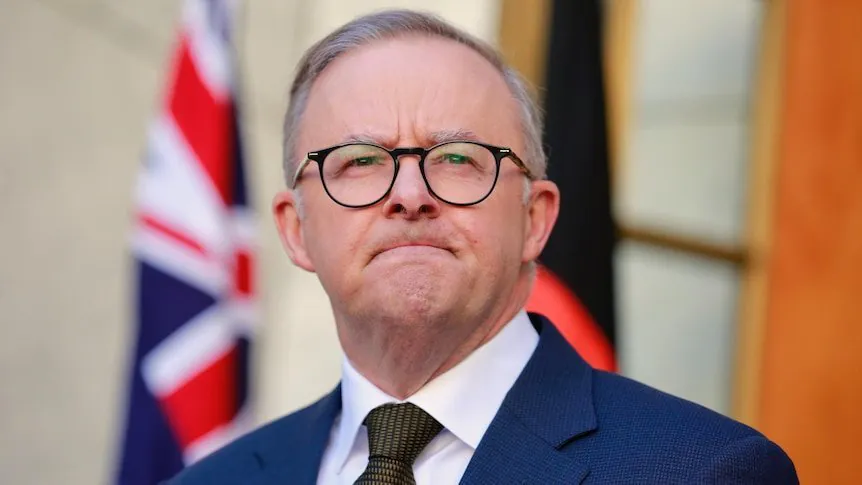
A second survey this week reveals that One Nation has leapfrogged Labor to become the most popular party in the country, with a primary vote of 31 per cent.
The Coalition trails behind with 20 per cent, while Labor is stuck on 28 per cent.

Entrepreneur Lachlan Harris, a former adviser to Kevin Rudd, is sounding the alarm bells.
Speaking to the ABC Insiders podcast, Harris warned that Labor’s tax changes are narrowing its appeal, particularly among young people aspiring to start a business or side investment.
“That’s the worst possible time to do that because now is a time to be broad,” he said.
“Now is a time to be stable, to basically appeal to a larger number of people, because these competitors, populist parties, are very formidable in the current environment.”
Harris’s concerns are echoed by the latest survey results, which show that 44 per cent of Australians think the country is “headed in the wrong direction”.
This is a worrying sign for Labor, which is struggling to connect with voters on a personal level. As Harris put it, “minor parties are like a volcano on the sea floor…
They don’t look that scary whilst they’re building up under the ocean, but the moment they crack above the ocean, above sea level, suddenly you understand how big and scary they are.”
Analysis: What This Means for Australia
The rise of One Nation has significant implications for Australia’s political landscape. As a populist party, One Nation is capitalizing on voter discontent with the major parties.
Labor’s tax plan, which targets non-property capital gains, may be seen as a further erosion of trust in the party’s ability to represent the interests of all Australians.
If Labor fails to address these concerns, it risks being squeezed out by One Nation and other minor parties.
Furthermore, the Greens’ decision to force the government to reconsider its plans to cut future NDIS spending could derail Labor’s tax reforms.
This would be a significant blow to the government’s plans to implement its budget, and could lead to a loss of confidence in the party’s ability to govern.
Security analysts say that the rise of populist parties like One Nation poses a significant challenge to Australia’s national security. As these parties gain traction, they may begin to influence policy decisions, potentially undermining the country’s ability to address global threats.
Law enforcement insiders warn that the fragmentation of the political landscape could also lead to a loss of cohesion in the country’s response to national security threats.
As the opposition struggles to find its footing, Anthony Albanese’s mastery of parliamentary tactics has given him the upper hand over Angus Taylor. But with the rise of One Nation and the Greens’ decision to block Labor’s tax reforms, the government’s grip on power is beginning to slip.
The coming weeks will be crucial in determining the future of Australian politics.