Shark Attack Nightmare: Why Your Next Ocean Adventure Could Be Deadly – and What Australia Must Do to Stop the Carnage
- A devastating shark attack has claimed the life of a 35-year-old father while spearfishing in Western Australia, sparking renewed warnings from marine experts about the dangers of common ocean activities.
- Senior marine life ranger David “Sharky” Baxter reveals the shocking truth about how spearfishing can attract sharks from up to 1km away, and why swimmers are also at risk from the ocean’s top predators.
- With three fatal shark attacks in less than a month, experts are calling for urgent action to prevent further tragedies – and it starts with a radical new approach to shark research and prevention.
- As winter migration patterns bring more sharks to Australian waters, the nation’s beaches are on high alert – but are we doing enough to protect ourselves from the jaws of death?
Daniel Turpin’s family will never forget the day their 35-year-old father and husband was torn from their lives in a brutal shark attack while spearfishing off the coast of Albany, Western Australia.
The tragedy has sent shockwaves through the community, and raised urgent questions about the safety of our oceans.
As the nation mourns the loss of another life to these apex predators, experts are warning that some common ocean activities may be inadvertently attracting sharks closer to people – with devastating consequences.
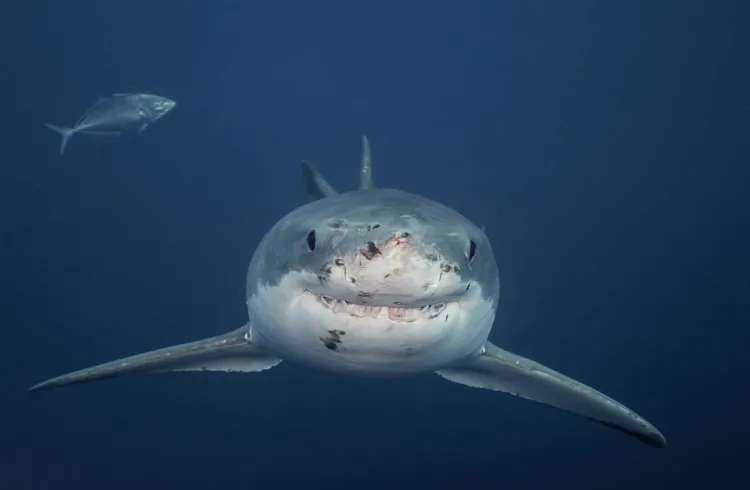
The facts are stark: three fatal shark attacks in less than a month, with Daniel Turpin’s death the latest in a string of tragedies that have left Australia reeling.
But what’s behind this sudden surge in shark attacks – and what can we do to stop it?




According to senior marine life ranger David “Sharky” Baxter, the answer lies in understanding the complex relationship between sharks, their prey, and human activity in the ocean.
When a fish is speared or hooked, it sends out a distress signal that can be detected by sharks from up to 1km away. It’s a phenomenon that’s been observed time and time again, and one that Baxter believes is a major contributor to the recent spate of attacks.
“What people don’t realise is that a shark can hear a speared, distressed fish up to a kilometre away,” he explained in a chilling interview. “So then, as it tunes in there, it goes through, and then it uses its other sensors.
And then it can pretty much investigate further.”
But it’s not just spearfishing that’s the problem – swimmers are also at risk from the ocean’s top predators.
Splashing in the water can create low-frequency vibrations that may prompt sharks to investigate, making even the most innocent of activities a potential recipe for disaster.
It’s a sobering thought, and one that’s left many wondering if it’s safe to enter the water at all. As authorities continue to examine the cluster of fatal shark attacks around the country, experts are pointing to seasonal shark movements as a major factor.
During the cooler months, sharks are more likely to venture closer to shore in search of food – putting them on a collision course with humans. But while shark attacks can never be completely eliminated, Baxter believes that Australia can do more to prevent them.
Analysis: What This Means for AustraliaThe recent spate of shark attacks has sent a chill through the nation, and raised urgent questions about our ability to protect ourselves from these deadly predators.
But what does it mean for Australia as a whole? The answer lies in our approach to shark research and prevention.
For too long, we’ve focused on tracking shark movements and reacting to attacks after they happen. But Baxter believes it’s time for a radical new approach – one that prioritises deterrents and prevention measures over simply monitoring shark activity.
“It’s not just about tagging sharks and knowing where they go,” he said. “We need to become more proactive.
We need to set up a federal shark research unit that focuses on developing technologies and strategies that can reduce the likelihood of shark bites.” It’s a call to action that’s long overdue, and one that could save countless lives in the years to come.
As the nation grapples with the aftermath of these tragedies, one thing is clear: we need to take action. We owe it to Daniel Turpin, his family, and the countless others who’ve lost their lives to these deadly predators.
By investing in shark research and prevention, we can reduce the risk of encounters in the water – and make our oceans safer for everyone. The question is, will we take the necessary steps to make it happen?
Daniel Turpin’s family will never forget the day their 35-year-old father and husband was torn from their lives in a brutal shark attack while spearfishing off the coast of Albany, Western Australia. The tragedy has sent shockwaves through the community, and raised urgent questions about the safety of our oceans. As the nation mourns the loss of another life to these apex predators, experts are warning that some common ocean activities may be inadvertently attracting sharks closer to people – with devastating consequences.
The facts are stark: three fatal shark attacks in less than a month, with Daniel Turpin’s death the latest in a string of tragedies that have left Australia reeling. But what’s behind this sudden surge in shark attacks – and what can we do to stop it? According to senior marine life ranger David “Sharky” Baxter, the answer lies in understanding the complex relationship between sharks, their prey, and human activity in the ocean.
When a fish is speared or hooked, it sends out a distress signal that can be detected by sharks from up to 1km away. It’s a phenomenon that’s been observed time and time again, and one that Baxter believes is a major contributor to the recent spate of attacks. “What people don’t realise is that a shark can hear a speared, distressed fish up to a kilometre away,” he explained in a chilling interview. “So then, as it tunes in there, it goes through, and then it uses its other sensors. And then it can pretty much investigate further.”
But it’s not just spearfishing that’s the problem – swimmers are also at risk from the ocean’s top predators. Splashing in the water can create low-frequency vibrations that may prompt sharks to investigate, making even the most innocent of activities a potential recipe for disaster. It’s a sobering thought, and one that’s left many wondering if it’s safe to enter the water at all.
As authorities continue to examine the cluster of fatal shark attacks around the country, experts are pointing to seasonal shark movements as a major factor. During the cooler months, sharks are more likely to venture closer to shore in search of food – putting them on a collision course with humans. But while shark attacks can never be completely eliminated, Baxter believes that Australia can do more to prevent them.
The recent spate of shark attacks has sent a chill through the nation, and raised urgent questions about our ability to protect ourselves from these deadly predators. But what does it mean for Australia as a whole? The answer lies in our approach to shark research and prevention. For too long, we’ve focused on tracking shark movements and reacting to attacks after they happen. But Baxter believes it’s time for a radical new approach – one that prioritises deterrents and prevention measures over simply monitoring shark activity.
“It’s not just about tagging sharks and knowing where they go,” he said. “We need to become more proactive. We need to set up a federal shark research unit that focuses on developing technologies and strategies that can reduce the likelihood of shark bites.” It’s a call to action that’s long overdue, and one that could save countless lives in the years to come.
As the nation grapples with the aftermath of these tragedies, one thing is clear: we need to take action. We owe it to Daniel Turpin, his family, and the countless others who’ve lost their lives to these deadly predators. By investing in shark research and prevention, we can reduce the risk of encounters in the water – and make our oceans safer for everyone. The question is, will we take the necessary steps to make it happen?