Alarming Collapse of Antarctic Sea Ice Sparks Fears of Devastating Consequences for Australia
- A massive section of winter sea ice in West Antarctica, roughly the size of France, has failed to form this year, alarming scientists and raising concerns about the impact on Australian ecosystems and coastlines.
- The loss of approximately 650,000 square kilometres of sea ice is consistent with a warming climate and could have major environmental consequences, including rising sea levels and disruptions to marine life.
- Researchers warn that the decline in sea ice could have a devastating impact on threatened penguin populations and the overall health of the Southern Ocean, which plays a critical role in regulating Australia’s climate.
The Southern Ocean, which surrounds Antarctica, is a critical component of Australia’s ecosystem, influencing everything from our climate and weather patterns to the health of our fisheries and coastal communities.
But a disturbing trend is emerging, with a massive section of winter sea ice in West Antarctica failing to form this year. The loss of approximately 650,000 square kilometres of sea ice is a stark reminder of the devastating impact of climate change on our planet.
According to satellite images, the Bellingshausen Sea, which is typically covered in ice by June, is largely ice-free this year.
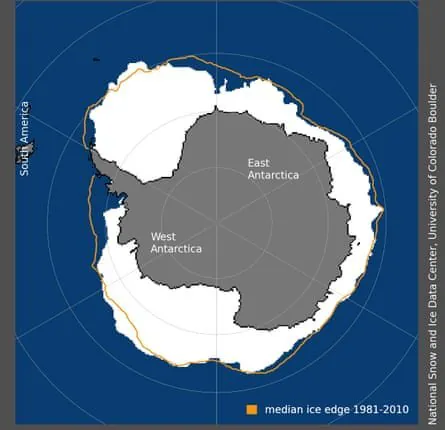
This is a worrying sign, as sea ice plays a crucial role in regulating the Earth’s climate, reflecting sunlight, and providing a habitat for marine life.
The loss of sea ice in this region is consistent with a warming climate, and scientists warn that it could have major environmental consequences, including rising sea levels and disruptions to marine life.




Dr Will Hobbs, a sea ice researcher at the University of Tasmania, has been monitoring the satellite images of the area daily since April and was not surprised to see this year’s decline.
“It’s a very unusual spot oceanographically,” he said.
“It’s relatively warm and it has an unusually close relationship with the warm ocean waters that are moving southwards, which is one of the reasons why there tends to be a lot of land ice lost there.” Dr Hobbs warned that while some ice may form later this year, it’s unlikely to be a significant amount.
The decline in sea ice in Antarctica has been a concern for scientists since 2023, which recorded 1.5 million square kilometres less ice than previous years.
Since then, each year has seen a different result, but the overall trend is clear: the Antarctic ice sheet is losing mass at an alarming rate.
Dr Hobbs described the 2023 ice cover as “shocking,” saying it was “really a very big deal for sea ice research” and “really extreme low sea ice cover in winter, which was unusual.”
The continued loss of sea ice in Antarctica will have significant implications for Australia, including rising sea levels, disruptions to marine life, and changes to our climate and weather patterns.
“Sea ice is part of the ocean, so it doesn’t directly contribute to sea level rise, but it acts as a protection on the ice shelves that do contribute to sea level,” Dr Hobbs explained.
Threatened penguin populations, which rely on sea ice for breeding and feeding, are also likely to be impacted by the decline in sea ice.
Analysis: What This Means for Australia
The collapse of sea ice in Antarctica is a wake-up call for Australia, highlighting the urgent need for action on climate change.
Rising sea levels, more frequent extreme weather events, and disruptions to marine ecosystems are just a few of the consequences that Australia can expect if the Antarctic ice sheet continues to decline.
The Australian government must take immediate action to reduce our carbon emissions and transition to renewable energy sources if we are to mitigate the worst impacts of climate change.
Security analysts say that the decline in sea ice in Antarctica also has significant implications for Australia’s national security. As the ice sheet continues to decline, it’s likely that we’ll see more frequent and intense extreme weather events, including heatwaves, droughts, and storms.
This will put a strain on our emergency services, infrastructure, and economy, making it essential that we take a proactive approach to preparing for the challenges ahead.
Law enforcement insiders warn that the decline in sea ice in Antarctica also has implications for Australia’s border security.
As the ice sheet continues to decline, it’s likely that we’ll see more frequent and intense storms, which could potentially disrupt our shipping lanes and coastal communities.
This makes it essential that we invest in our coastal defenses and emergency services to ensure that we’re prepared for the challenges ahead.
Industry observers believe that the decline in sea ice in Antarctica also has significant implications for Australia’s economy.
As the ice sheet continues to decline, it’s likely that we’ll see disruptions to our fisheries and tourism industries, which could have a significant impact on our economy.
This makes it essential that we take a proactive approach to diversifying our economy and investing in sustainable industries that are resilient to the impacts of climate change.