CFMEU ‘Shadow Financial Operations’ Exposed: Union’s Dark Strategy to Control Construction Industry Raises Alarms About Corruption and Crime
- Millions of dollars in “illegitimate” revenue generated through questionable workplace agreements
- Allegations of “shadow financial operations” to bolster union’s power and control
- Donations misused to pay fines for members and officials, including one for over $30,000
- Expert criminologists to testify on “illegitimate influence and control” in the construction industry
The inquiry into alleged misconduct and criminal links at the CFMEU’s Queensland branch has uncovered a web of financial irregularities, including the use of “shadow financial operations” to bolster revenue and control the construction industry.
The CFMEU’s state branch has been accused of running a “dark strategy” to generate millions of dollars through the “illegitimate” use of workplace agreements, concealed from members and contractors.
Counsel assisting the inquiry, Andrew Meagher KC, told the hearing that the union’s actions had a “far darker purpose” – to control the construction industry.
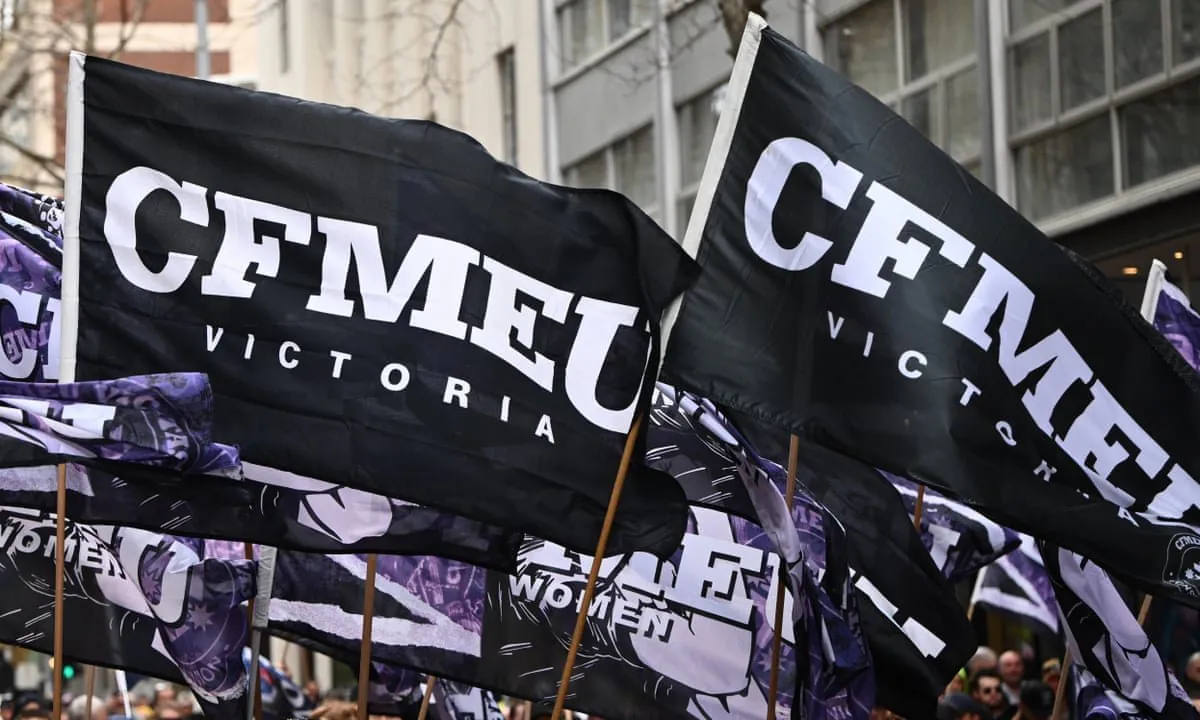
The union’s alleged misuse of donations to pay members’ and officials’ fines, including one for over $30,000, has raised concerns about corruption and the circumvention of the rule of law.
Mr Meagher said the funds came from a donation pool meant to help people with financial difficulties, and that investigations are ongoing to determine the full extent of the CFMEU’s actions.

The inquiry has heard that the CFMEU received $8.8 million in revenue in 2025 from the Queen’s Wharf Brisbane EBA, and that the union’s “shadow financial operations” delivered recurring annual income and occasional one-off payments.
The CFMEU’s influence in the construction industry has been described as “disproportionate” and “improper”, with the union’s adoption of the Best Practice Industry Conditions (BPIC) policy cited as an example.
Analysis: What This Means for Australia
The revelations of the CFMEU’s “shadow financial operations” and alleged misuse of donations raise serious concerns about corruption and the integrity of the construction industry. The union’s actions, if proven, demonstrate a blatant disregard for the law and a willingness to circumvent the rule of law to achieve its goals.
Security analysts say that the CFMEU’s actions could have far-reaching implications for national security, particularly in the context of large-scale infrastructure projects. The union’s alleged influence over the construction industry could compromise the integrity of these projects, potentially putting public safety at risk.
Law enforcement insiders warn that the CFMEU’s actions could be a symptom of a broader problem of corruption and crime in the construction industry.
The inquiry’s findings could have significant implications for law enforcement agencies, which may need to re-examine their approach to tackling corruption and crime in the sector.
Industry observers believe that the CFMEU’s actions could damage the reputation of the construction industry as a whole, potentially leading to increased scrutiny and regulation. This could have significant economic consequences for the industry, which is already facing challenges in the form of skills shortages and rising costs.
The inquiry’s findings will be closely watched by the public, who will be eager to see whether those responsible for the alleged misconduct are held to account.
The government will also be under pressure to take action to address the issues raised by the inquiry, and to ensure that the construction industry is subject to robust regulation and oversight.
As the inquiry continues, it is clear that the CFMEU’s “shadow financial operations” and alleged misuse of donations are just the tip of the iceberg.
The true extent of corruption and crime in the construction industry remains to be seen, but one thing is certain – the public deserves answers, and those responsible must be held accountable.
construction industry corruption CFMEU Australian Federal Police Fair Work Act